|
Search, browse, and study this dictionary to learn more about the early American, Christian language. 
1828.mshaffer.com › Word [con]
CON. A Latin inseparable preposition or prefix to other words. Ainsworth remarks that con and cum habe the same signification, but that cum is used separately, and con in composition. Con and cum may be radically distinct words. The Irish comh, or coimh, is equivalent to the Latin con; and the Welsh cym, convertible into cyv, appears to be the same word, denoting, says Owen, a mutual act, quality or effect. It is precisely equivalent to the Latin com, in comparo, compono, and the Latin com, in composition, may be the Celtic comh or cym. But generally it seems to be con, changed into com. Ainsworth deduces cum from the Greek; for originally it was written cyn. But this is probably a mistake. Con coincides in radical letters and in signification with the Teutonic gain, gen, gean, igen, igien, in the English again, against; Sax. Gean, ongean; sw. Igen; Dan. Igien. Whatever may be its origin or affinities, the primary sense of the word is probably from some root that signifies to meet or oppose, or turn and meet; to approach to, or to be with. This is the radical sense of most propositions of the like import. See the English with, again. So in Irish, coinne, a meeting; as coinne, opposite.Con, in compounds, is change into l before l, as in colligo, to collect, and into m before a labial, as in comparo, to compare. Before a vowel or h, the na is dropped; as in coalesco, to coalesce, to cooperate; cohibeo, to restrain. I denotes union, as in conjoin; or opposition, as in conflict, contend.CON, [abbreviated from Latin contra, against.] In the phrase, pro and con, for and against, con denotes the negative side of a question. As a noun, a person who is in the negative; as the pros and cons. CON, v.t. [to know, to be able, to be skillful or wise; and to bear or bring forth, Gr. To try, to attempt, to prove, L., whence cunning, skillful, experienced, or skill, experience; coincides in sense with to begin, to try to attempt. G. To know; to be able. The primary sense is, to strain or stretch, which gives the sense of strength, power, as in can, and of holding, containing, comprehending, as contain, from contineo, teneo, Gr., L. To beget or to bring forth. In the sense of know, con signifies to hold or to reach.] 1. To know.I conne no skill. I shall not conne answer. I shall not know or be able to answer.2. To make ones self master of; to fix in the mend or commit to memory; as, to con a lesson.To con thanks, to be pleased or obliged, or to thank.
|
Evolution (or devolution) of this word [con]
| 1828 Webster | 1844 Webster | 1913 Webster |
|---|
CON. A Latin inseparable preposition or prefix to other words. Ainsworth remarks that con and cum habe the same signification, but that cum is used separately, and con in composition. Con and cum may be radically distinct words. The Irish comh, or coimh, is equivalent to the Latin con; and the Welsh cym, convertible into cyv, appears to be the same word, denoting, says Owen, a mutual act, quality or effect. It is precisely equivalent to the Latin com, in comparo, compono, and the Latin com, in composition, may be the Celtic comh or cym. But generally it seems to be con, changed into com. Ainsworth deduces cum from the Greek; for originally it was written cyn. But this is probably a mistake. Con coincides in radical letters and in signification with the Teutonic gain, gen, gean, igen, igien, in the English again, against; Sax. Gean, ongean; sw. Igen; Dan. Igien. Whatever may be its origin or affinities, the primary sense of the word is probably from some root that signifies to meet or oppose, or turn and meet; to approach to, or to be with. This is the radical sense of most propositions of the like import. See the English with, again. So in Irish, coinne, a meeting; as coinne, opposite.Con, in compounds, is change into l before l, as in colligo, to collect, and into m before a labial, as in comparo, to compare. Before a vowel or h, the na is dropped; as in coalesco, to coalesce, to cooperate; cohibeo, to restrain. I denotes union, as in conjoin; or opposition, as in conflict, contend.CON, [abbreviated from Latin contra, against.] In the phrase, pro and con, for and against, con denotes the negative side of a question. As a noun, a person who is in the negative; as the pros and cons. CON, v.t. [to know, to be able, to be skillful or wise; and to bear or bring forth, Gr. To try, to attempt, to prove, L., whence cunning, skillful, experienced, or skill, experience; coincides in sense with to begin, to try to attempt. G. To know; to be able. The primary sense is, to strain or stretch, which gives the sense of strength, power, as in can, and of holding, containing, comprehending, as contain, from contineo, teneo, Gr., L. To beget or to bring forth. In the sense of know, con signifies to hold or to reach.] 1. To know.I conne no skill. I shall not conne answer. I shall not know or be able to answer.2. To make ones self master of; to fix in the mend or commit to memory; as, to con a lesson.To con thanks, to be pleased or obliged, or to thank. |
CON, n. [abbreviated from Latin contra, against.]In the phrase, pro and con, for and against, con denotes the negative side of a question. As a noun, a person who is in the negative; as, the pros and cons.
CON, prep. [CON-; with or against.]A Latin inseparable preposition or prefix to other words. Ainsworth remarks that con and cum have the same signification, but that cum is used separately, and con in composition. Con and cum may be radically distinct words. The Irish comh, or coimh, is equivalent to the Latin con; and the Welsh cym, convertible into cyv, appears to be the same word, denoting, says Owen, a mutual act, quality or effect. It is precisely equivalent to the Latin com, in comparo, compono, and the Latin com, in composition, may be the Celtic comh or cym. But generally it seems to be con, changed into com. Ainsworth deduces cum from the Greek συν; for originally it was written cyn. But this is probably a mistake.
Con coincides in radical letters and in signification with the Teutonic gain, gen, gean, igen, igien, in the English again, against; Sax. gean, ongean; Sw. igen; Dan. igien. Whatever may be its origin or affinities, the primary sense of the word is probably from some root that signifies to meet or oppose, or turn and meet; to approach to, or to be with. This is the radical sense of most prepositions of the like import. See the English with, again. So in Irish, coinne, a meeting; os coinne, opposite.
Con, in compounds, is changed into l before l, as in colligo, to collect, and into m before a labial, as in comparo, to compare. Before a vowel or h, the n is dropped; as in coalesco, to coalesce, to cooperate; cohibeo, to restrain. It denotes union, as in conjoin; or opposition, as in conflict, contend. Qu. W. gan, with.
CON, v.t. [Sax. cennan, connan, cunnan, to know, to be able, to be skillful or wise; and cennan, to bear or bring forth, Gr. γενναω; and cunnian, to try, to attempt, to prove, L. conor; whence cunning, skillful, experienced, or skill, experience; the latter word, cunnian, coincides in sense with Sax. anginnan, onginnan, to begin, to try, to attempt, L. conor. D. kennen, to know, understand, or be acquainted; kunnen, to be able, can, to know or understand, to hold or contain; the last signification coinciding with the W. ganu, to contain. G. kennen, to know; and können, to be able. Dan. kan, to be able, pret. kunde, whence kundskab, knowledge, skill, experience. Sw. känna, to know; kuna, to be able, to be skilled, to know. The primary sense is, to strain or stretch, which gives the sense of strength, power, as in can, and of holding, containing, comprehending, as contain, from contineo, teneo, Gr. τεινω, L. tendo. And this signification connects these words with gin, in its compounds, begin, Sax. beginnan, anginnan, &c., to strain, to try, to stretch forward and make an effort; also with the Gr. γενναω, L. gignor, to beget, or to bring forth. See Class Gn, No. 29, 36, 40, 42, 45, 58. In the sense of know, con signifies to hold or to reach.]- To know. [Obs.]
“I conne no skill.” – Spenser.
“I shall not conne answer.” I shall not know or be able to answer. – Chaucer.
- To make one's self master of; to fix in the mind, or commit to memory; as, to con a lesson. – Milton. Holder.
To con thanks, to be pleased or obliged, or to thank. [Obs.] – Chaucer. Shak.
|
Con-
- A prefix, fr. L. cum,
signifying with, together, etc. See Com-
.
- Against the affirmative side; in
opposition; on the negative side; -- The antithesis of
pro, and usually in connection with it. See
Pro.
- To know] to
understand; to acknowledge.
- To conduct, or superintend the steering of (a
vessel); to watch the course of (a vessel) and direct the
helmsman how to steer.
- To study in order to know; to peruse;
to learn; to commit to memory; to regard studiously.
|
| 1828 Webster | 1844 Webster | 1913 Webster |
|---|
Thank you for visiting!
- Our goal is to try and improve the quality of the digital form of this dictionary being historically true and accurate to the first American dictionary. Read more ...
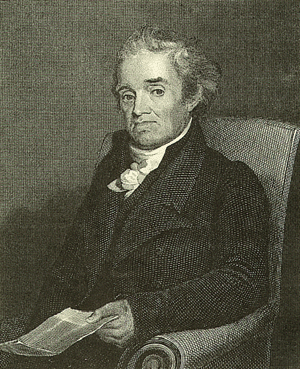
- Below you will find three sketches from a talented artist and friend depicting Noah Webster at work. Please tell us what you think.
Divine Study
 
Divine Study
|
Window of Reflection
 
Window of Reflection
|
Enlightening Grace
 
Enlightening Grace
|
164
|
955 |
126
|
1037 |
199
|
1078 |

|

|
| Hard-cover Edition |
385 |
 |
566 |
|
| Compact Edition |
369 |
 |
259 |
|
| CD-ROM |
326 |
 |
202 |
|
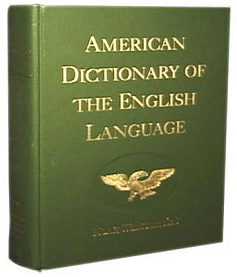
* As a note, I have purchased each of these products. In fact, as we have been developing the Project:: 1828 Reprint, I have purchased several of the bulky hard-cover dictionaries. My opinion is that the 2000-page hard-cover edition is the only good viable solution at this time. The compact edition was a bit disappointing and the CD-ROM as well. |
| [ + ] |
| Add Search To Your Site |
|
|
|