|
Search, browse, and study this dictionary to learn more about the early American, Christian language. 
1828.mshaffer.com › Word [term]
TERM, n. [L. terminus, a limit or boundary.] 1. A limit; a bound or boundary; the extremity of any thing; that which limits its extent. Corruption is a reciprocal to generation, and they two are as nature's two terms or boundaries.2. The time for which any thing lasts; any limited time; as the term of five years; the term of life.3. In geometry, a point or line that limits. A line is the term of a superficies, and a superficies is the term of a solid.4. In law, the limitation of an estate; or rather the whole time or duration of an estate; as a lease for the term of life, for the term of three lives, for the term of twenty one years.5. In law, the time in which a court is held or open for the trial of causes. In England,there are four terms in the year; Hilary term, from January 23d to February 12th; Easter term, from Wednesday, fortnight after Easter, to the Monday next after Ascension day; Trinity term, from Friday next after Trinity Sunday to the Wednesday, fortnight after; and Michaelmas term, from November 6th to the 28th. These terms are observed by the courts of king's bench, the common pleas and exchequer, but not by the parliament, the chancery or by inferior courts. The rest of the year is called vacation. In the United States, the terms to be observed by the tribunals of justice, are prescribed by the statutes of congress and of the several states.6. In universities and colleges, the time during which instruction is regularly given to students, who are obliged by the statutes and laws of the institution to attend to the recitations, lectures and other exercises.7. In grammar, a word or expression; that which fixes or determines ideas. In painting, the greatest beauties cannot be always expressed for want of terms.8. In the arts, a word or expression that denotes something peculiar to an art; as a technical term.9. In logic, a syllogism consists of three terms, the major, the minor, and the middle. The predicate of the conclusion is called the major term, because it is the most general, and the subject of the conclusion is called the minor term, because it is less general. These are called the extremes; and the third term, introduced as a common measure between them, is called the mean or middle term. Thus in the following syllogism. Every vegetable is combustible; Every tree is vegetable; Therefore every tree is combustible.Combustible is the predicate of the conclusion, or the major term; every tree is the minor term; vegetable is the middle term. 10. In architecture, a kind of statues or columns adorned on the top with the figure of a head, either of a man, woman or satyr. Terms are sometimes used as consoles, and sustain entablatures; and sometimes as statues to adorn gardens. 11. Among the ancients, terms, termini miliares, were the heads of certain divinities placed on square land-marks of stone, to mark the several stadia on roads. These were dedicated to Mercury, who was supposed to preside over highways. 12. In algebra, a member of a compound quantity; as a, in a+b; or ab, in ab+cd. 13. Among physicians, the monthly courses of females are called terms. 14. In contracts, terms, in the plural, are conditions; propositions stated or promises made, which when assented to or accepted by another, settle the contract and bind the parties. A engages to build a house for B for a specific sum of money, in a given time; these are his terms. When B promises to give to A that sum for building the house, he has agreed to the terms; the contract is completed and binding upon both parties. Terms of proportion, in mathematics, are such numbers, letters or quantities as are compared one with another. To make terms, to come to an agreement. To come to terms, to agree; to come to an agreement. To bring to terms, to reduce to submission or to conditions. TERM, v.t. To name; to call; to denominate. Men term what is beyond the limits of the universe, imaginary space.
|
Evolution (or devolution) of this word [term]
| 1828 Webster | 1844 Webster | 1913 Webster |
|---|
TERM, n. [L. terminus, a limit or boundary.] 1. A limit; a bound or boundary; the extremity of any thing; that which limits its extent. Corruption is a reciprocal to generation, and they two are as nature's two terms or boundaries.2. The time for which any thing lasts; any limited time; as the term of five years; the term of life.3. In geometry, a point or line that limits. A line is the term of a superficies, and a superficies is the term of a solid.4. In law, the limitation of an estate; or rather the whole time or duration of an estate; as a lease for the term of life, for the term of three lives, for the term of twenty one years.5. In law, the time in which a court is held or open for the trial of causes. In England,there are four terms in the year; Hilary term, from January 23d to February 12th; Easter term, from Wednesday, fortnight after Easter, to the Monday next after Ascension day; Trinity term, from Friday next after Trinity Sunday to the Wednesday, fortnight after; and Michaelmas term, from November 6th to the 28th. These terms are observed by the courts of king's bench, the common pleas and exchequer, but not by the parliament, the chancery or by inferior courts. The rest of the year is called vacation. In the United States, the terms to be observed by the tribunals of justice, are prescribed by the statutes of congress and of the several states.6. In universities and colleges, the time during which instruction is regularly given to students, who are obliged by the statutes and laws of the institution to attend to the recitations, lectures and other exercises.7. In grammar, a word or expression; that which fixes or determines ideas. In painting, the greatest beauties cannot be always expressed for want of terms.8. In the arts, a word or expression that denotes something peculiar to an art; as a technical term.9. In logic, a syllogism consists of three terms, the major, the minor, and the middle. The predicate of the conclusion is called the major term, because it is the most general, and the subject of the conclusion is called the minor term, because it is less general. These are called the extremes; and the third term, introduced as a common measure between them, is called the mean or middle term. Thus in the following syllogism. Every vegetable is combustible; Every tree is vegetable; Therefore every tree is combustible.Combustible is the predicate of the conclusion, or the major term; every tree is the minor term; vegetable is the middle term. 10. In architecture, a kind of statues or columns adorned on the top with the figure of a head, either of a man, woman or satyr. Terms are sometimes used as consoles, and sustain entablatures; and sometimes as statues to adorn gardens. 11. Among the ancients, terms, termini miliares, were the heads of certain divinities placed on square land-marks of stone, to mark the several stadia on roads. These were dedicated to Mercury, who was supposed to preside over highways. 12. In algebra, a member of a compound quantity; as a, in a+b; or ab, in ab+cd. 13. Among physicians, the monthly courses of females are called terms. 14. In contracts, terms, in the plural, are conditions; propositions stated or promises made, which when assented to or accepted by another, settle the contract and bind the parties. A engages to build a house for B for a specific sum of money, in a given time; these are his terms. When B promises to give to A that sum for building the house, he has agreed to the terms; the contract is completed and binding upon both parties. Terms of proportion, in mathematics, are such numbers, letters or quantities as are compared one with another. To make terms, to come to an agreement. To come to terms, to agree; to come to an agreement. To bring to terms, to reduce to submission or to conditions. TERM, v.t. To name; to call; to denominate. Men term what is beyond the limits of the universe, imaginary space. |
TERM, n. [Gr. τερμα; Fr. terme; It. termine; Sp. termino; L. terminus, a limit or boundary; W. terv, tervyn, from terv, extreme.]- A limit; a bound or boundary; the extremity of any thing; that which limits its extent.
Corruption is a reciprocal to generation, and they two are as nature's two terms or boundaries. Bacon.
- The time for which any thing lasts; any limited time; as, the term of five years; the term of life.
- In geometry, a point or line that limits. A line is the term of a superficies, and a superficies is the term of a solid.
- In law, the limitation of an estate; or rather the whole time or duration of an estate; as, a lease for the term of life, for the term of three lives, for the term of twenty-one years.
- In law, the time in which a court is held or open for the trial of causes. In England there are four terms in the year; Hilary term, from January 23d to February 12th; Easter term, from Wednesday, fortnight after Easter, to the Monday next after Ascension-day; Trinity term, from Friday next after Trinity Sunday to the Wednesday fortnight after; and Michaelmas term, from November 6th to the 28th. These terms are observed by the courts of king's bench, the common pleas and exchequer, but not by the parliament, the chancery or by inferior courts. The rest of the year is called vacation. In the United States, the terms, to be observed by the tribunals of justice, are prescribed by the statutes of congress and of the several states.
- In universities and colleges, the time during which instruction is regularly given to students, who are obliged by the statutes and laws of the institution to attend to the recitations, lectures and other exercises.
- In grammar, a word or expression; that which fixes or determines ideas.
In painting, the greatest beauties can not be always expressed for want of terms. Dryden.
- In the arts, a word or expression that denotes something peculiar to an art; as, a technical term.
- In logic, a syllogism consists of three terms, the major, the minor, and the middle. The predicate of the conclusion is called the major term, because it is the most general, and the subject of the conclusion is called the minor term, because it is less general. These are called the extremes; and the third term, introduced as a common measure between them, is called the mean or middle term. Thus in the following syllogism:
Every vegetable is combustible;
Every tree is a vegetable;
Therefore every tree is combustible;
Combustible is the predicate of the conclusion, or the major term; every tree is the minor term; vegetable is the middle term. Hedge's Logic.
- In architecture, a kind of statues or columns adorned on the top with the figure of a head, either of a man, woman or satyr. Terms are sometimes used as consoles, and sustain entablatures; and sometimes as statues to adorn gardens. Cyc.
- Among the ancients, terms, termini miliares, were the heads of certain divinities placed on square land-marks of stone, to mark the several stadia on roads. These were dedicated to Mercury, who was supposed to preside over highways. Cyc.
- In algebra, a member of a compound quantity; as, a, in a+b; or ab, in ab+cd. Day.
- Among physicians, the monthly uterine secretion of females is called terms. Bailey.
- In contracts, terms, in the plural, are conditions; propositions stated or promises made, which when assented to or accepted by another, settle the contract and bind the parties. A. engages to build a house for B. for a specific sum of money, in a given time; these are his terms. When B. promises to give to A. that sum for building the house, he has agreed to the terms; the contract is completed and binding upon both parties.
Terms of proportion, in mathematics, are such numbers, letters or quantities as are compared one with another.
To make terms, to come to an agreement.
To come to terms, to agree; to come to an agreement.
To bring to terms, to reduce to submission or to conditions.
TERM, v.t.To name; to call; denominate.
Men term what is beyond the limits of the universe, imaginary space. Locke. |
Term
- That which
limits the extent of anything; limit; extremity; bound; boundary.
- To apply a term to] to name; to call; to
denominate.
- The time for which anything lasts; any limited
time; as, a term of five years; the term of life.
- In universities, schools, etc., a definite
continuous period during which instruction is regularly given to students;
as, the school year is divided into three terms.
- A point, line, or superficies,
that limits; as, a line is the term of a superficies, and a
superficies is the term of a solid.
- A fixed period of time; a
prescribed duration
|
| 1828 Webster | 1844 Webster | 1913 Webster |
|---|
Thank you for visiting!
- Our goal is to try and improve the quality of the digital form of this dictionary being historically true and accurate to the first American dictionary. Read more ...
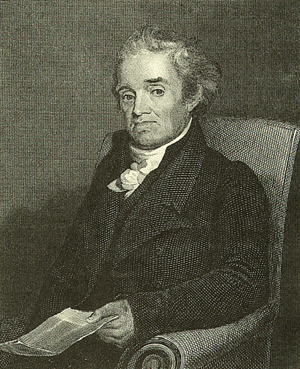
- Below you will find three sketches from a talented artist and friend depicting Noah Webster at work. Please tell us what you think.
Divine Study
 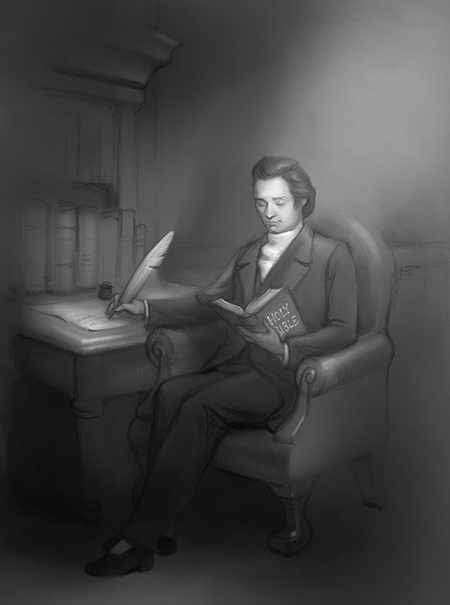
Divine Study
|
Window of Reflection
 
Window of Reflection
|
Enlightening Grace
 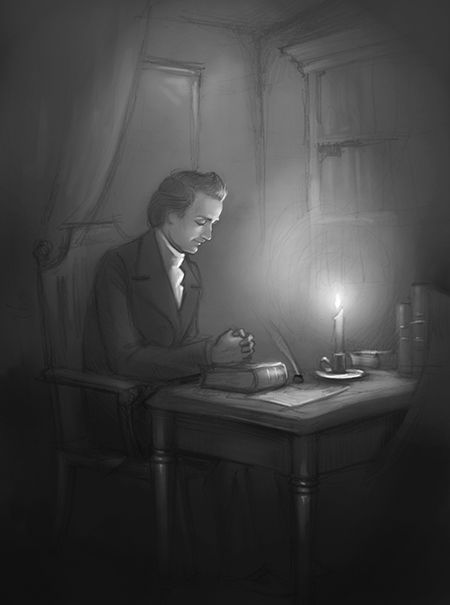
Enlightening Grace
|
164
|
953 |
126
|
1036 |
199
|
1076 |

Term TERM, noun [Latin terminus, a limit or boundary.] 1. A limit; a bound or boundary; the extremity of any thing; that which limits its extent. Corruption is a reciprocal to generation, and they two are as nature's two terms or boundaries. 2. The time for which any thing lasts; any limited time; as the term of five years; the term of life. 3. In geometry, a point or line that limits. A line is the term of a superficies, and a superficies is the term of a solid. 4. In law, the limitation of an estate; or rather the whole time or duration of an estate; as a lease for the term of life, for the term of three lives, for the term of twenty one years. 5. In law, the time in which a court is held or open for the trial of causes. In England, there are four terms in the year; Hilary term from January 23d to February 12th; Easter term from Wednesday, fortnight after Easter, to the Monday next after Ascension day; Trinity term from Friday next after Trinity Sunday to the Wednesday, fortnight after; and Michaelmas term from November 6th to the 28th. These terms are observed by the courts of king's bench, the common pleas and exchequer, but not by the parliament, the chancery or by inferior courts. The rest of the year is called vacation. In the United States, the terms to be observed by the tribunals of justice, are prescribed by the statutes of congress and of the several states. 6. In universities and colleges, the time during which instruction is regularly given to students, who are obliged by the statutes and laws of the institution to attend to the recitations, lectures and other exercises. 7. In grammar, a word or expression; that which fixes or determines ideas. In painting, the greatest beauties cannot be always expressed for want of terms. 8. In the arts, a word or expression that denotes something peculiar to an art; as a technical term 9. In logic, a syllogism consists of three terms, the major, the minor, and the middle. The predicate of the conclusion is called the major term because it is the most general, and the subject of the conclusion is called the minor term because it is less general. These are called the extremes; and the third term introduced as a common measure between them, is called the mean or middle term Thus in the following syllogism. Every vegetable is combustible; Every tree is vegetable; Therefore every tree is combustible. Combustible is the predicate of the conclusion, or the major term; every tree is the minor term; vegetable is the middle term 10. In architecture, a kind of statues or columns adorned on the top with the figure of a head, either of a man, woman or satyr. Terms are sometimes used as consoles, and sustain entablatures; and sometimes as statues to adorn gardens. 11. Among the ancients, terms, termini miliares, were the heads of certain divinities placed on square land-marks of stone, to mark the several stadia on roads. These were dedicated to Mercury, who was supposed to preside over highways. 12. In algebra, a member of a compound quantity; as a, in a+b; or ab, in ab+cd. 13. Among physicians, the monthly courses of females are called terms. 14. In contracts, terms, in the plural, are conditions; propositions stated or promises made, which when assented to or accepted by another, settle the contract and bind the parties. A engages to build a house for B for a specific sum of money, in a given time; these are his terms. When B promises to give to A that sum for building the house, he has agreed to the terms; the contract is completed and binding upon both parties. TERMs of proportion, in mathematics, are such numbers, letters or quantities as are compared one with another. To make terms, to come to an agreement. To come to terms, to agree; to come to an agreement. To bring to terms, to reduce to submission or to conditions. TERM, verb transitive To name; to call; to denominate. Men term what is beyond the limits of the universe, imaginary space. |

|
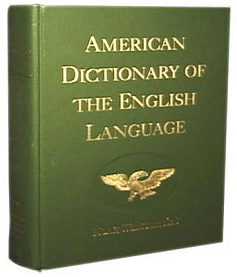
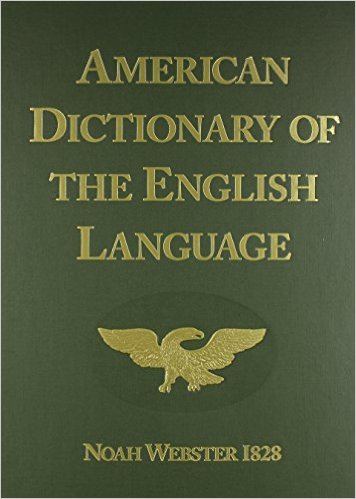
| Hard-cover Edition |
384 |
 |
565 |
|
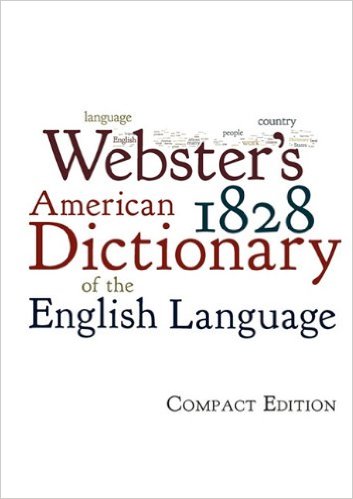
| Compact Edition |
369 |
 |
259 |
|
| CD-ROM |
326 |
 |
202 |
|
* As a note, I have purchased each of these products. In fact, as we have been developing the Project:: 1828 Reprint, I have purchased several of the bulky hard-cover dictionaries. My opinion is that the 2000-page hard-cover edition is the only good viable solution at this time. The compact edition was a bit disappointing and the CD-ROM as well. |
| [ + ] |
| Add Search To Your Site |
|
|
|