|
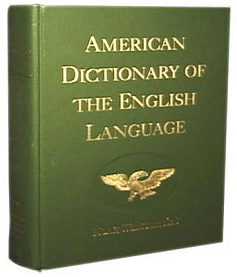
Search, browse, and study this dictionary to learn more about the early American, Christian language. 
1828.mshaffer.com › Word [scruple]
SCRU'PLE, n. [L. scrupulus, a doubt; scrupulum, the third part of a dram, from scrupus, a chess-man; probably a piece, a small thing, from scrapping, like scrap.] 1. Doubt; hesitation from the difficulty of determining what is right or expedient; backwardness; reluctance to decide or to act. A man of fashionable honor makes no scruple to take another's life, or expose his own. He has no scruples of conscience, or he despises them.2. A weight of twenty grains, the third part of a dram; among goldsmiths, the weight of 24 grains.3. Proverbially, a very small quantity.4. In Chaldean chronology, the 1/1080 part of an hour; a division of time used by the Jews, Arabs, &c..Scruple of half duration, an arch of the moon's orbit, which the moon's center describes from the beginning of an eclipse to the middle.Scruples of immersion or incidence, an arch of the moon's orbit, which her center describes from the beginning of the eclipse to the time when its center falls into the shadow.Scruples of emersion, an arch of the moon's orbit, which her center describes in the time from the first emersion of the moon's limb to the end of the eclipse.SCRU'PLE, v.i. To doubt; to hesitate. He scrupl'd not to eat, against his better knowledge.SCRU'PLE, v.t. To doubt; to hesitate to believe; to question; as, to scruple the truth or accuracy of an account or calculation.
|
Evolution (or devolution) of this word [scruple]
| 1828 Webster | 1844 Webster | 1913 Webster |
|---|
SCRU'PLE, n. [L. scrupulus, a doubt; scrupulum, the third part of a dram, from scrupus, a chess-man; probably a piece, a small thing, from scrapping, like scrap.] 1. Doubt; hesitation from the difficulty of determining what is right or expedient; backwardness; reluctance to decide or to act. A man of fashionable honor makes no scruple to take another's life, or expose his own. He has no scruples of conscience, or he despises them.2. A weight of twenty grains, the third part of a dram; among goldsmiths, the weight of 24 grains.3. Proverbially, a very small quantity.4. In Chaldean chronology, the 1/1080 part of an hour; a division of time used by the Jews, Arabs, &c..Scruple of half duration, an arch of the moon's orbit, which the moon's center describes from the beginning of an eclipse to the middle.Scruples of immersion or incidence, an arch of the moon's orbit, which her center describes from the beginning of the eclipse to the time when its center falls into the shadow.Scruples of emersion, an arch of the moon's orbit, which her center describes in the time from the first emersion of the moon's limb to the end of the eclipse.SCRU'PLE, v.i. To doubt; to hesitate. He scrupl'd not to eat, against his better knowledge.SCRU'PLE, v.t. To doubt; to hesitate to believe; to question; as, to scruple the truth or accuracy of an account or calculation. |
SCRU'PLE, n. [Fr. scrupule, from L. scrupulus, a doubt; scrupulum, the third part of a dram, from scrupus, a chessman; probably a piece, a small thing, from scraping, like scrap. Scrupulus was primarily a little stone or piece of gravel; and as one of such in a shoe hurts the foot, it is supposed that this, like a short stop or flinching, gave rise to the sense of doubting, which gives pain. Encyc.]- Doubt; hesitation from the difficulty of determining what is right or expedient; backwardness; reluctance to decide or to act. A man of fashionable honor makes no scruple to take another's life, or expose his own. He has no scruples of conscience, or he despises them.
- A weight of twenty grains, the third part of a dram.
- Proverbially, a very small quantity.
- In Chaldean chronology, the 1/1080 part of an hour; a division of time used by the Jews, Arabs, &c. – Encyc.
Scruple of half duration, an arch of the moon's orbit, which the moon's center describes from the beginning of an eclipse to the middle.
Scruples of immersion or incidence, an arch of the moon's orbit, which her center describes from the beginning of the eclipse to the time when its center falls into the shadow.
Scruples of emersion, an arch of the moon's orbit, which her center describes in the time from the first emersion of the moon's limb to the end of the eclipse. Encyc.
SCRU'PLE, v.i.To doubt; to hesitate.
He scrupl'd not to eat, / Against his better knowledge. – Milton.
SCRU'PLE, v.t.To doubt; to hesitate to believe; to question; as, to scruple the truth or accuracy of an account or calculation. |
Scru"ple
- A weight of twenty grains; the third part of a
dram.
- To be reluctant or to hesitate, as regards
an action, on account of considerations of conscience or
expedience.
- To regard with suspicion] to hesitate at; to question.
- Hence, a very small quantity; a
particle.
- To excite scruples in; to cause to
scruple.
- Hesitation as to action from the difficulty
of determining what is right or expedient; unwillingness, doubt, or
hesitation proceeding from motives of conscience.
|
| 1828 Webster | 1844 Webster | 1913 Webster |
|---|
Thank you for visiting!
- Our goal is to try and improve the quality of the digital form of this dictionary being historically true and accurate to the first American dictionary. Read more ...
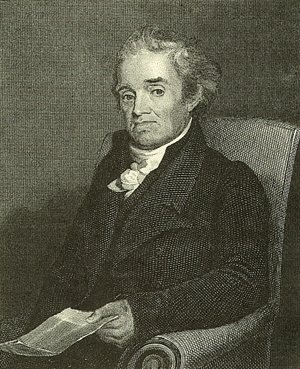
- Below you will find three sketches from a talented artist and friend depicting Noah Webster at work. Please tell us what you think.
Divine Study
 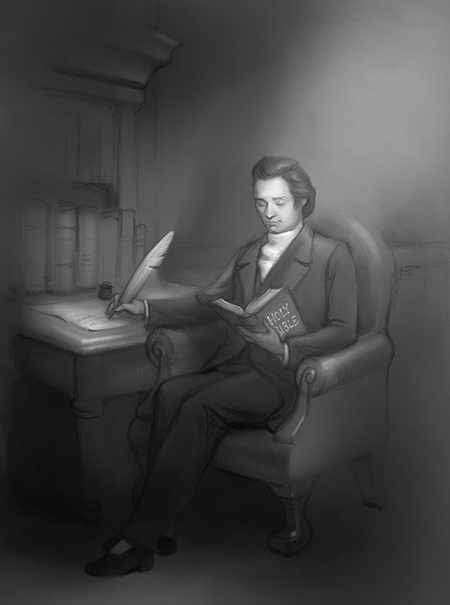
Divine Study
|
Window of Reflection
 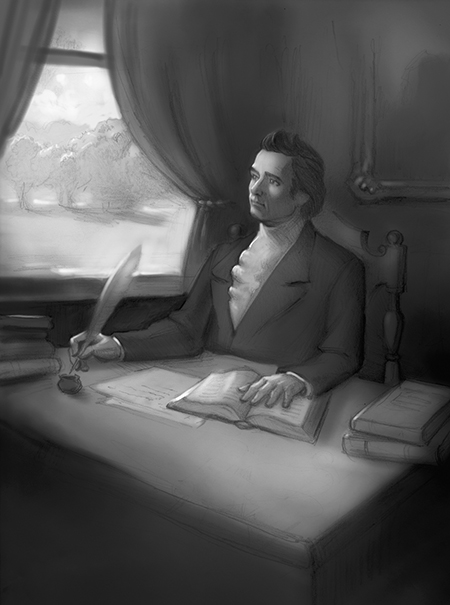
Window of Reflection
|
Enlightening Grace
 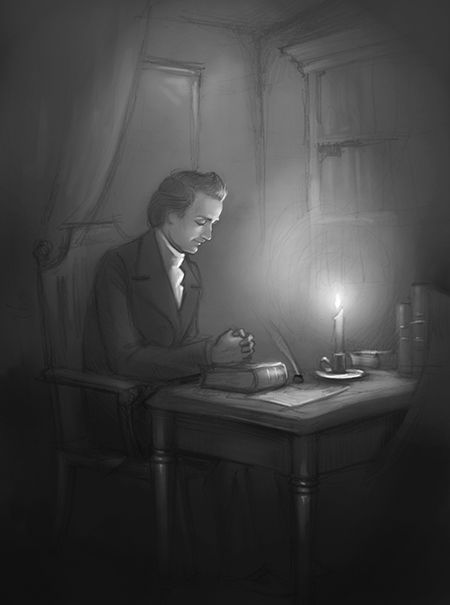
Enlightening Grace
|
164
|
953 |
126
|
1036 |
199
|
1076 |

Scruple SCRU'PLE, noun [Latin scrupulus, a doubt; scrupulum, the third part of a dram, from scrupus, a chess-man; probably a piece, a small thing, from scrapping, like scrap.] 1. Doubt; hesitation from the difficulty of determining what is right or expedient; backwardness; reluctance to decide or to act. A man of fashionable honor makes no scruple to take another's life, or expose his own. He has no scruples of conscience, or he despises them. 2. A weight of twenty grains, the third part of a dram; among goldsmiths, the weight of 24 grains. 3. Proverbially, a very small quantity. 4. In Chaldean chronology, the 1/1080 part of an hour; a division of time used by the Jews, Arabs, etc.. Scruple of half duration, an arch of the moon's orbit, which the moon's center describes from the beginning of an eclipse to the middle. Scruples of immersion or incidence, an arch of the moon's orbit, which her center describes from the beginning of the eclipse to the time when its center falls into the shadow. Scruples of emersion, an arch of the moon's orbit, which her center describes in the time from the first emersion of the moon's limb to the end of the eclipse. SCRU'PLE, verb intransitive To doubt; to hesitate. He scrupl'd not to eat, against his better knowledge. SCRU'PLE, verb transitive To doubt; to hesitate to believe; to question; as, to scruple the truth or accuracy of an account or calculation. |

|
| Hard-cover Edition |
383 |
 |
564 |
|
| Compact Edition |
369 |
 |
257 |
|
| CD-ROM |
325 |
 |
202 |
|
* As a note, I have purchased each of these products. In fact, as we have been developing the Project:: 1828 Reprint, I have purchased several of the bulky hard-cover dictionaries. My opinion is that the 2000-page hard-cover edition is the only good viable solution at this time. The compact edition was a bit disappointing and the CD-ROM as well. |
| [ + ] |
| Add Search To Your Site |
|
|
|