|
Search, browse, and study this dictionary to learn more about the early American, Christian language. 
1828.mshaffer.com › Word [sake]
SAKE, n. [Heb. to press or oppress. The primary sense is to strain, urge, press or drive forward, and this is from the same root as seek, essay and L. sequor, whence we have pursue and prosecute. We have analogous words in cause, thing, and the L. res.] 1. Final cause; end; purpose; or rather the purpose of obtaining. I open a window for the sake of air, that is, to obtain it, for the purpose of obtaining air. I read for the sake of instruction, that is, to obtain it. Sake then signifies primarily effort to obtain, and secondarily purpose of obtaining. The hero fights for the sake of glory; men labor for the sake of subsistence or wealth.2. Account; regard to any person or thing. I will not again curse the ground any more for man's sake. Gen. 8.Save me for thy mercies' sake. Ps. 6.
|
Evolution (or devolution) of this word [sake]
| 1828 Webster | 1844 Webster | 1913 Webster |
|---|
SAKE, n. [Heb. to press or oppress. The primary sense is to strain, urge, press or drive forward, and this is from the same root as seek, essay and L. sequor, whence we have pursue and prosecute. We have analogous words in cause, thing, and the L. res.] 1. Final cause; end; purpose; or rather the purpose of obtaining. I open a window for the sake of air, that is, to obtain it, for the purpose of obtaining air. I read for the sake of instruction, that is, to obtain it. Sake then signifies primarily effort to obtain, and secondarily purpose of obtaining. The hero fights for the sake of glory; men labor for the sake of subsistence or wealth.2. Account; regard to any person or thing. I will not again curse the ground any more for man's sake. Gen. 8.Save me for thy mercies' sake. Ps. 6. |
SAKE, n. [Sax. sac, saca, sace, sacu, contention, discord, a suit or action at law, cause in court, hence the privilege which a lord had of taking cognizance of suits in his own manor; sacan, to contend, to strive; Goth. sakan, to rebuke, chide, upbraid; D. zaak, cause, case, thing, business, affair; G. sache, matter, thing; eines sache führen, to plead one's cause; ursache, cause, reason, motive; Sw. sak and orsak, id.; Dan. sag, cause, thing, affair, matter, case, suit, action; Ch. עםק, to contend, to strive, to seek; Heb. עשק, to press or oppress; Ch. to accuse, to criminate. Class Sg, No. 46, 92. The primary sense is to strain, urge, press, or drive forward, and this is from the same root as seek, essay, and L. sequor, whence we have pursue and prosecute. We have analogous words in cause, thing, and the L. res. Its Saxon sense is no longer in use, that is, cause, action, suit, a seeking or demand in court; but we use it in a sense nearly similar, though differently applied.]- Final cause; end; purpose; or rather the purpose of obtaining. I open a window for the sake of air, that is, to obtain it, for the purpose of obtaining air. I read for the sake of instruction, that as, to obtain it. Sake then signifies, primarily, effort to obtain, and secondarily, purpose of obtaining. The hero fights for the sake of glory; men labor for the sake of subsistence or wealth.
- Account; regard to any person or thing.
I will not again curse the ground any more for man's sake. – Gen. viii.
Save me for thy mercies' sake. – Ps. vi.
|
Sake
- Final cause; end;
purpose of obtaining; cause; motive; reason; interest; concern;
account; regard or respect; -- used chiefly in such phrases as, for
the sake of, for his sake, for man's sake, for
mercy's sake, and the like; as, to commit crime for the
sake of gain; to go abroad for the sake of one's
health.
|
| 1828 Webster | 1844 Webster | 1913 Webster |
|---|
Thank you for visiting!
- Our goal is to try and improve the quality of the digital form of this dictionary being historically true and accurate to the first American dictionary. Read more ...
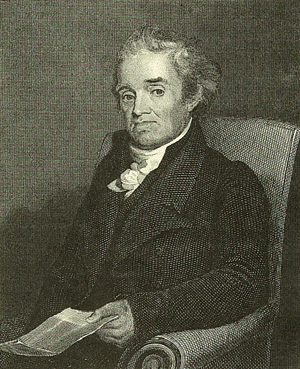
- Below you will find three sketches from a talented artist and friend depicting Noah Webster at work. Please tell us what you think.
Divine Study
 
Divine Study
|
Window of Reflection
 
Window of Reflection
|
Enlightening Grace
 
Enlightening Grace
|
164
|
953 |
126
|
1036 |
199
|
1076 |

Sake SAKE, noun [Heb. to press or oppress. The primary sense is to strain, urge, press or drive forward, and this is from the same root as seek, essay and Latin sequor, whence we have pursue and prosecute. We have analogous words in cause, thing, and the Latin res.] 1. Final cause; end; purpose; or rather the purpose of obtaining. I open a window for the sake of air, that is, to obtain it, for the purpose of obtaining air. I read for the sake of instruction, that is, to obtain it. sake then signifies primarily effort to obtain, and secondarily purpose of obtaining. The hero fights for the sake of glory; men labor for the sake of subsistence or wealth. 2. Account; regard to any person or thing. I will not again curse the ground any more for man's sake Genesis 8:21. Save me for thy mercies' sake Psalms 6:4. |

|
| Hard-cover Edition |
382 |
 |
564 |
|
| Compact Edition |
369 |
 |
257 |
|
| CD-ROM |
325 |
 |
202 |
|
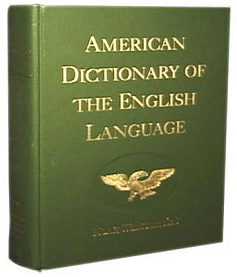
* As a note, I have purchased each of these products. In fact, as we have been developing the Project:: 1828 Reprint, I have purchased several of the bulky hard-cover dictionaries. My opinion is that the 2000-page hard-cover edition is the only good viable solution at this time. The compact edition was a bit disappointing and the CD-ROM as well. |
| [ + ] |
| Add Search To Your Site |
|
|
|