|
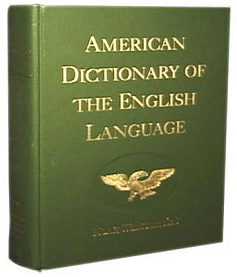
Search, browse, and study this dictionary to learn more about the early American, Christian language. 
1828.mshaffer.com › Word [reward]
REWARD', v.t. a as aw. [[L. re, denoting return.] To give in return, either good or evil.Thou hast rewarded me good, whereas I have rewarded thee evil. 1Sam. 24.Hence, when good is returned for good, reward signifies to repay, to recompense, to compensate. When evil or suffering is return for injury or wickedness, reward signifies to punish with just retribution, to take vengeance on, according to the nature of the case.I will render vengeance to my enemies; and will reward them that hate me. Deut. 32.The Son of man shall come in the glory of his Father, with his angels, and then he shall reward every man according to his works. Matt. 16.In the latter passage, reward signifies to render with good and evil.REWARD', n. 1. Recompense, or equivalent return for good done, for kindness, for services and the like. Rewards may consist of money, goods or any return of kindness or happiness.The laborer is worthy of his reward. 1Tim. 5.Great is your reward in heaven. Matt. 5.Rewards and punishments presuppose moral agency, and something voluntarily done, well or ill; without which respect, though we may receive good, it is only a benefit and not a reward.2. The fruit of men's labor or works.The dead know not any thing, neither have they any more a reward. Eccles. 9.3. A bribe; a gift to pervert justice. Deut. 27.4. A sum of money offered for taking or detecting a criminal, or for recovery of any thing lost.5. Punishment; a just return of evil or suffering for wickedness.Only with thine eyes shalt thou behold and see the reward of the wicked. Ps. 91.6. Return in human applause. Matt. 6.7. Return in joy and comfort. Ps. 19.
|
Evolution (or devolution) of this word [reward]
| 1828 Webster | 1844 Webster | 1913 Webster |
|---|
REWARD', v.t. a as aw. [[L. re, denoting return.] To give in return, either good or evil.Thou hast rewarded me good, whereas I have rewarded thee evil. 1Sam. 24.Hence, when good is returned for good, reward signifies to repay, to recompense, to compensate. When evil or suffering is return for injury or wickedness, reward signifies to punish with just retribution, to take vengeance on, according to the nature of the case.I will render vengeance to my enemies; and will reward them that hate me. Deut. 32.The Son of man shall come in the glory of his Father, with his angels, and then he shall reward every man according to his works. Matt. 16.In the latter passage, reward signifies to render with good and evil.REWARD', n. 1. Recompense, or equivalent return for good done, for kindness, for services and the like. Rewards may consist of money, goods or any return of kindness or happiness.The laborer is worthy of his reward. 1Tim. 5.Great is your reward in heaven. Matt. 5.Rewards and punishments presuppose moral agency, and something voluntarily done, well or ill; without which respect, though we may receive good, it is only a benefit and not a reward.2. The fruit of men's labor or works.The dead know not any thing, neither have they any more a reward. Eccles. 9.3. A bribe; a gift to pervert justice. Deut. 27.4. A sum of money offered for taking or detecting a criminal, or for recovery of any thing lost.5. Punishment; a just return of evil or suffering for wickedness.Only with thine eyes shalt thou behold and see the reward of the wicked. Ps. 91.6. Return in human applause. Matt. 6.7. Return in joy and comfort. Ps. 19. |
RE-WARD', n.- Recompense, or equivalent return for good done, for kindness, for services and the like. Rewards may consist of money, goods or any return of kindness or happiness.
The laborer is worthy of his reward. – 1 Tim. v.
Great is your reward in heaven. – Matth. v.
Rewards and punishments presuppose moral agency, and something voluntarily done, well or ill; without which respect, though we may receive good, it is only a benefit and not a reward.
- The fruit of men's labor or works.
The dead know not any thing, neither have they any more a reward. – Eccles. ix.
- A bribe; a gift to pervert justice. – Deut. xxvii.
- A sum of money offered for taking or detecting a criminal, or for recovery of any thing lost.
- Punishment; a just return of evil or suffering for wickedness.
Only with thine eyes shalt thou behold and see the reward of the wicked. – Ps. xci.
- Return in human applause. – Matth. vi.
- Return in joy and comfort. – Ps. xix.
RE-WARD', v.t. [Norm. regarder, to allow; regardes, fees, allowances, perquisites, rewards; regardez, awarded. In these words there appears to be an alliance with regard. But in the Fr. and Norm. guerdon, a reward, and guerdonner, to reward, this alliance does not appear. So the Italian guiderdonare, to reward, is evidently a compound of the L. dono with another word, and apparently with the Sax. wither, G. wider and wieder, D. weder, answering to L. re, denoting return. The Spanish and Portuguese have the Latin word with a different prefix; Sp. galardon, a reward; galardonar, to reward; Port. galardam, galadoar. The Armoric has garredon, garredoner. Reward appears to be from the Norman.]To give in return, either good or evil.
Thou hast rewarded me good, whereas I have rewarded thee evil. – 1 Sam. xxiv.
Hence, when good is returned for good, reward signifies to repay, to recompense, to compensate. When evil or suffering is returned for injury or wickedness, reward signifies to punish with just retribution, to take vengeance on; according to the nature of the case.
I will render vengeance to my enemies; and will reward them that hate me. – Deut. xxxii.
The Son of man will come in the glory of his Father, with his angels, and then he will reward every man according to his works. – Matth. xvi.
In the latter passage, reward signifies to render both good and evil. |
Re*ward"
- To give in return, whether good or evil] --
commonly in a good sense; to requite; to recompense; to repay; to
compensate.
- Regard; respect; consideration.
- That which is given in return for good or
evil done or received; esp., that which is offered or given in return
for some service or attainment, as for excellence in studies, for the
return of something lost, etc.; recompense; requital.
- Hence, the fruit of one's labor or
works.
- Compensation or remuneration
for services; a sum of money paid or taken for doing, or forbearing to
do, some act.
|
| 1828 Webster | 1844 Webster | 1913 Webster |
|---|
Thank you for visiting!
- Our goal is to try and improve the quality of the digital form of this dictionary being historically true and accurate to the first American dictionary. Read more ...
- Below you will find three sketches from a talented artist and friend depicting Noah Webster at work. Please tell us what you think.
Divine Study
 
Divine Study
|
Window of Reflection
 
Window of Reflection
|
Enlightening Grace
 
Enlightening Grace
|
164
|
953 |
126
|
1036 |
199
|
1076 |

Reward REWARD', verb transitive a as aw. [[Latin re, denoting return.] To give in return, either good or evil. Thou hast rewarded me good, whereas I have rewarded thee evil. 1 Samuel 24:19. Hence, when good is returned for good, reward signifies to repay, to recompense, to compensate. When evil or suffering is return for injury or wickedness, reward signifies to punish with just retribution, to take vengeance on, according to the nature of the case. I will render vengeance to my enemies; and will reward them that hate me. Deuteronomy 32:41. The Son of man shall come in the glory of his Father, with his angels, and then he shall reward every man according to his works. Matthew 16:27. In the latter passage, reward signifies to render with good and evil. REWARD', noun 1. Recompense, or equivalent return for good done, for kindness, for services and the like. Rewards may consist of money, goods or any return of kindness or happiness. The laborer is worthy of his reward 1 Timothy 5:18. Great is your reward in heaven. Matthew 5:12. REWARDs and punishments presuppose moral agency, and something voluntarily done, well or ill; without which respect, though we may receive good, it is only a benefit and not a reward 2. The fruit of men's labor or works. The dead know not any thing, neither have they any more a reward Ecclesiastes 9:5. 3. A bribe; a gift to pervert justice. Deuteronomy 27:25. 4. A sum of money offered for taking or detecting a criminal, or for recovery of any thing lost. 5. Punishment; a just return of evil or suffering for wickedness. Only with thine eyes shalt thou behold and see the reward of the wicked. Psalms 91:8. 6. Return in human applause. Mat 6. 7. Return in joy and comfort. Psalms 19:11. |

|
| Hard-cover Edition |
383 |
 |
564 |
|
| Compact Edition |
369 |
 |
257 |
|
| CD-ROM |
325 |
 |
202 |
|
* As a note, I have purchased each of these products. In fact, as we have been developing the Project:: 1828 Reprint, I have purchased several of the bulky hard-cover dictionaries. My opinion is that the 2000-page hard-cover edition is the only good viable solution at this time. The compact edition was a bit disappointing and the CD-ROM as well. |
| [ + ] |
| Add Search To Your Site |
|
|
|