|
Search, browse, and study this dictionary to learn more about the early American, Christian language. 
1828.mshaffer.com › Word [principal]
PRIN'CIPAL, a. [L. principalis, from princeps.] 1. Chief; highest in rank, character or respectability; as the principal officers of a government; the principal men of a city, town, or state. Acts 25. 1 Chron.24.2. Chief; most important or considerable; as the principal topics of debate; the principal arguments in a case; the principal points of law; the principal beams of a building; the principal productions of a country. Wisdom is the principal thing. Prov.4.3. In law, a principal challenge, is where the cause assigned carries with it prima facie evidence of partiality, favor or malice.4. In music, fundamental.PRIN'CIPAL, n. A chief or head; one who takes the lead; as the principal of a faction, an insurrection or mutiny. 1. The president, governor, or chief in authority. We apply the word to the chief instructor of an academy or seminary of learning.2. In law, the actor or absolute perpetrator of a crime, or an abettor. A principal in the first degree, is the absolute perpetrator of the crime; a principal in the second degree, is one who is present, aiding and abetting the fact to be done; distinguished from an accessory. In treason, all persons concerned are principals.3. In commerce, a capital sum lent on interest, due as a debt or used as a fund; so called in distinction from interest or profits. Taxes must be continued, because we have no other means for paying off the principal.4. One primarily engaged; a chief party; in distinction from an auxiliary. We were not principals, but auxiliaries in the war.
|
Evolution (or devolution) of this word [principal]
| 1828 Webster | 1844 Webster | 1913 Webster |
|---|
PRIN'CIPAL, a. [L. principalis, from princeps.] 1. Chief; highest in rank, character or respectability; as the principal officers of a government; the principal men of a city, town, or state. Acts 25. 1 Chron.24.2. Chief; most important or considerable; as the principal topics of debate; the principal arguments in a case; the principal points of law; the principal beams of a building; the principal productions of a country. Wisdom is the principal thing. Prov.4.3. In law, a principal challenge, is where the cause assigned carries with it prima facie evidence of partiality, favor or malice.4. In music, fundamental.PRIN'CIPAL, n. A chief or head; one who takes the lead; as the principal of a faction, an insurrection or mutiny. 1. The president, governor, or chief in authority. We apply the word to the chief instructor of an academy or seminary of learning.2. In law, the actor or absolute perpetrator of a crime, or an abettor. A principal in the first degree, is the absolute perpetrator of the crime; a principal in the second degree, is one who is present, aiding and abetting the fact to be done; distinguished from an accessory. In treason, all persons concerned are principals.3. In commerce, a capital sum lent on interest, due as a debt or used as a fund; so called in distinction from interest or profits. Taxes must be continued, because we have no other means for paying off the principal.4. One primarily engaged; a chief party; in distinction from an auxiliary. We were not principals, but auxiliaries in the war. |
PRIN'CI-PAL, a. [Fr. from L. principalis, from princeps.]- Chief; highest in rank, character or respectability; as, the principal officers of a government; the principal men of a city, town or state. – Acts xxv. 1 Chron. xxiv.
- Chief; most important or considerable; as, the principal topics of debate; the principal arguments in a case; the principal points of law; the principal beams of a building; the principal productions of a country.
Wisdom is the principal thing. – Prov. iv.
- In law, at principal challenge, is where the cause assigned carries with it prima facie evidence of partiality, favor or malice. – Blackstone.
- In music, fundamental.
PRIN'CI-PAL, n.- A chief or head; one who takes the lend; as, the principal of a faction, an insurrection or mutiny.
- The president, governor, or chief in authority. We apply the word to the chief instructor of an academy or seminary of learning.
- In law, the actor or absolute perpetrator of a crime, or an abettor. A principal in the first degree, is the absolute perpetrator of the crime; a principal in the second degree, is one who is present, aiding and abetting the fact to be done; distinguished from an accessory. In treason, all persons concerned are principals. – Blackstone.
- In commerce, a capital sum lent on interest, due as a debt or used as a fund; so called in distinction from interest or profits.
Taxes must be continued, because we have no other means for paying off principal. – Swift.
- One primarily engaged; a chief party; in distinction from an auxiliary.
We were not principals but auxiliaries in the war. – Swift.
- In music, an organ stop.
|
Prin"ci*pal
- Highest in rank, authority, character, importance, or degree]
most considerable or important; chief; main; as, the principal
officers of a Government; the principal men of a state; the
principal productions of a country; the principal
arguments in a case.
- A leader, chief, or head; one who takes the lead; one who acts
independently, or who has controlling authority or influence; as, the
principal of a faction, a school, a firm, etc.; --
distinguished from a subordinate, abettor,
auxiliary, or assistant.
- Of or pertaining to a prince;
princely.
- The
chief actor in a crime, or an abettor who is present at it, -- as
distinguished from an accessory.
|
| 1828 Webster | 1844 Webster | 1913 Webster |
|---|
Thank you for visiting!
- Our goal is to try and improve the quality of the digital form of this dictionary being historically true and accurate to the first American dictionary. Read more ...
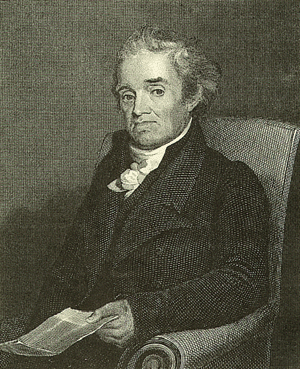
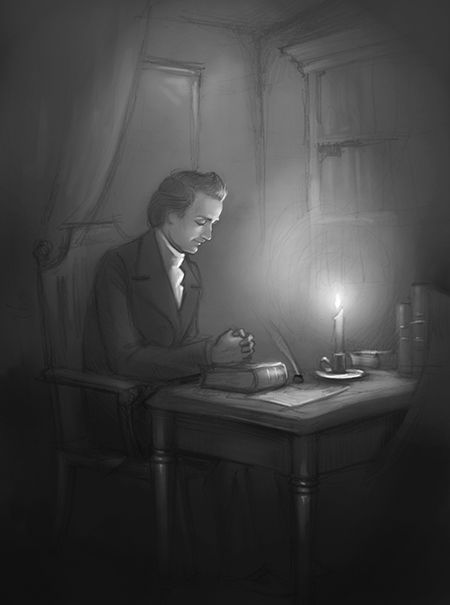
- Below you will find three sketches from a talented artist and friend depicting Noah Webster at work. Please tell us what you think.
Divine Study
 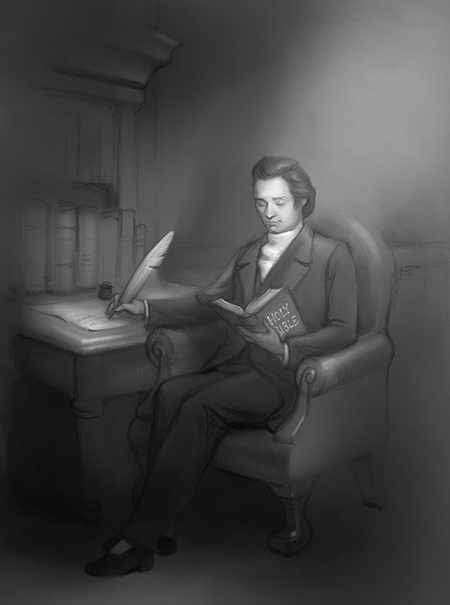
Divine Study
|
Window of Reflection
 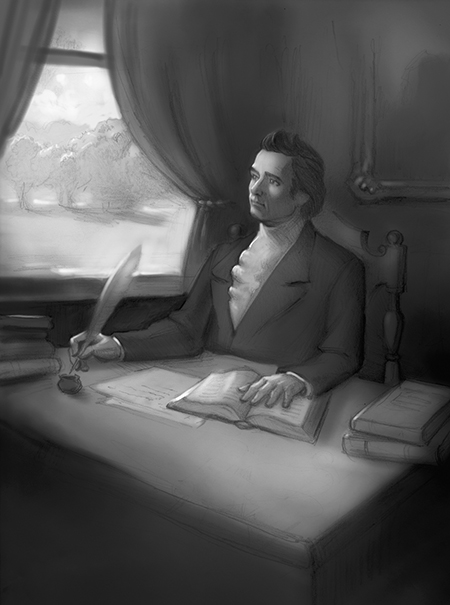
Window of Reflection
|
Enlightening Grace
Enlightening Grace
|
164
|
951 |
126
|
1034 |
199
|
1074 |

Principal PRIN'CIPAL, adjective [Latin principalis, from princeps.] 1. Chief; highest in rank, character or respectability; as the principal officers of a government; the principal men of a city, town, or state. Acts 25:23. 1 Chronicles 24:6. 2. Chief; most important or considerable; as the principal topics of debate; the principal arguments in a case; the principal points of law; the principal beams of a building; the principal productions of a country. Wisdom is the principal thing. Proverbs 4:7. 3. In law, a principal challenge, is where the cause assigned carries with it prima facie evidence of partiality, favor or malice. 4. In music, fundamental. PRIN'CIPAL, noun A chief or head; one who takes the lead; as the principal of a faction, an insurrection or mutiny. 1. The president, governor, or chief in authority. We apply the word to the chief instructor of an academy or seminary of learning. 2. In law, the actor or absolute perpetrator of a crime, or an abettor. A principal in the first degree, is the absolute perpetrator of the crime; a principal in the second degree, is one who is present, aiding and abetting the fact to be done; distinguished from an accessory. In treason, all persons concerned are principals. 3. In commerce, a capital sum lent on interest, due as a debt or used as a fund; so called in distinction from interest or profits. Taxes must be continued, because we have no other means for paying off the principal 4. One primarily engaged; a chief party; in distinction from an auxiliary. We were not principals, but auxiliaries in the war. |

|
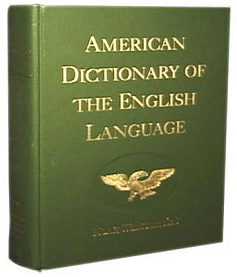
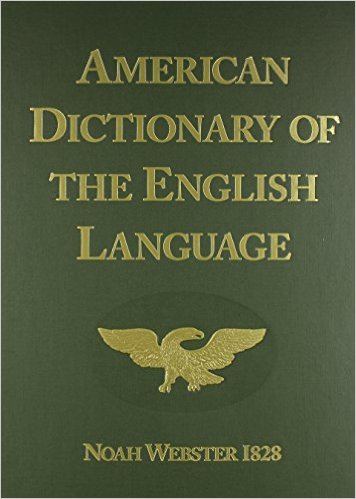
| Hard-cover Edition |
382 |
 |
562 |
|
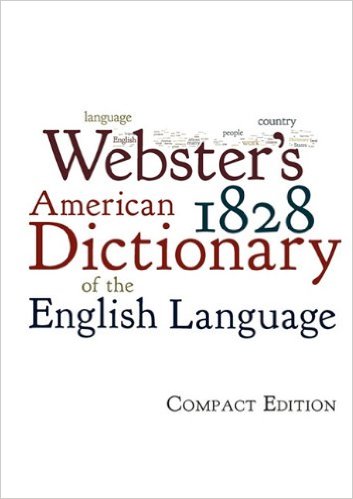
| Compact Edition |
368 |
 |
255 |
|
| CD-ROM |
324 |
 |
201 |
|
* As a note, I have purchased each of these products. In fact, as we have been developing the Project:: 1828 Reprint, I have purchased several of the bulky hard-cover dictionaries. My opinion is that the 2000-page hard-cover edition is the only good viable solution at this time. The compact edition was a bit disappointing and the CD-ROM as well. |
| [ + ] |
| Add Search To Your Site |
|
|
|