|
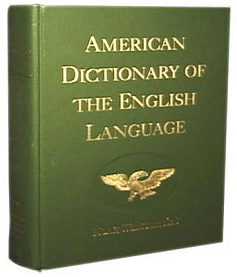
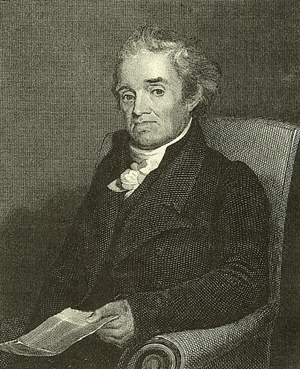
Search, browse, and study this dictionary to learn more about the early American, Christian language. 
1828.mshaffer.com › Word [policy]
POL'ICY, n. [L. politia; Gr. city.] 1. Policy, in its primary signification, is the same as polity, comprehending the fundamental constitution or frame of civil government in a state or kingdom. But by usage, policy is now more generally used to denote what is included under legislation and administration, and may be defined, the art or manner of governing a nation; or that system of measures which the sovereign of a country adopts and pursues, as best adapted to the interests of the nation. Thus we speak of domestic policy, or the system of internal regulations in a nation; foreign policy, or the measures which respect foreign nations; commercial policy, or the measures which respect commerce.2. Art, prudence, wisdom or dexterity in the management of public affairs; applied to persons governing. It has been the policy of France to preclude females from the throne. It has been the policy of Great Britain to encourage her navy, by keeping her carrying trade in her own hands. In this she manifests sound policy. Formerly, England permitted wool to be exported and manufactured in the Low Countries, which was very bad policy. The policy of all laws has made some forms necessary in the wording of last wills and testaments. All violent policy defeats itself.3. In common usage, the art, prudence or wisdom of individuals in the management of their private or social concerns.4. Stratagem; cunning; dexterity of management.5. A ticket or warrant for money in the public funds.6. Policy, in commerce, the writing or instrument by which a contract of indemnity is effected between the insurer and the insured; or the instrument containing the terms or conditions on which a person or company undertakes to indemnify another person or company against losses of property exposed to peculiar hazards, as houses or goods exposed to fire, or ships and goods exposed to destruction on the high seas. This writing is subscribed by the insurer, who is called the underwriter. The terms policy of insurance, or assurance, are also used for the contract between the insured and the underwriter.Policies are valued or open; valued, when the property or goods insured are valued at prime cost; open, when the goods are not valued, but if lost, their value must be proved.Wagering policies, which insure sums of money, interest or no interest, are illegal. All insurances, interest or no interest, or without further proof of interest than the policy itself, are null and void.The word policy is used also for the writing which insures against other events, as well as against loss of property.
|
Evolution (or devolution) of this word [policy]
| 1828 Webster | 1844 Webster | 1913 Webster |
|---|
POL'ICY, n. [L. politia; Gr. city.] 1. Policy, in its primary signification, is the same as polity, comprehending the fundamental constitution or frame of civil government in a state or kingdom. But by usage, policy is now more generally used to denote what is included under legislation and administration, and may be defined, the art or manner of governing a nation; or that system of measures which the sovereign of a country adopts and pursues, as best adapted to the interests of the nation. Thus we speak of domestic policy, or the system of internal regulations in a nation; foreign policy, or the measures which respect foreign nations; commercial policy, or the measures which respect commerce.2. Art, prudence, wisdom or dexterity in the management of public affairs; applied to persons governing. It has been the policy of France to preclude females from the throne. It has been the policy of Great Britain to encourage her navy, by keeping her carrying trade in her own hands. In this she manifests sound policy. Formerly, England permitted wool to be exported and manufactured in the Low Countries, which was very bad policy. The policy of all laws has made some forms necessary in the wording of last wills and testaments. All violent policy defeats itself.3. In common usage, the art, prudence or wisdom of individuals in the management of their private or social concerns.4. Stratagem; cunning; dexterity of management.5. A ticket or warrant for money in the public funds.6. Policy, in commerce, the writing or instrument by which a contract of indemnity is effected between the insurer and the insured; or the instrument containing the terms or conditions on which a person or company undertakes to indemnify another person or company against losses of property exposed to peculiar hazards, as houses or goods exposed to fire, or ships and goods exposed to destruction on the high seas. This writing is subscribed by the insurer, who is called the underwriter. The terms policy of insurance, or assurance, are also used for the contract between the insured and the underwriter.Policies are valued or open; valued, when the property or goods insured are valued at prime cost; open, when the goods are not valued, but if lost, their value must be proved.Wagering policies, which insure sums of money, interest or no interest, are illegal. All insurances, interest or no interest, or without further proof of interest than the policy itself, are null and void.The word policy is used also for the writing which insures against other events, as well as against loss of property. |
POL'I-CY, n. [Fr. police; L. politia; Gr. πολιτεια, from πολις, city, Sans. palya.]- Policy, in its primary signification, is the same as polity, comprehending the fundamental constitution or frame of civil government in a state or kingdom. But by usage, policy is now more generally used to denote what is included under legislation and administration, and may be defined, the art or manner of governing a nation; or that system of measures which the sovereign of a country adopts and pursues, as the best adapted to the interests of the nation. Thus we speak of domestic policy, or the system of internal regulations in a nation; foreign policy, or the measures which respect foreign nations; commercial policy, or the measures which respect commerce.
- Art, prudence, wisdom or dexterity in the management of public affairs; applied to persons governing. It has been the policy of France to preclude females from the throne. It has been the policy of Great Britain to encourage her navy, by keeping her carrying trade in her own hands. In this she manifests sound policy. Formerly, England permitted wool to be exported and manufactured in the Low Countries, which was very bad policy.
The policy of all laws has made some forms necessary in the wording of last wills and testaments. – Blackstone.
All violent policy defeats itself. – Hamilton.
- In common usage, the art, prudence or wisdom of individuals in the management of their private or social concerns.
- Stratagem; cunning; dexterity of management.
- A ticket or warrant for money in the public funds. [It. polizza.]
- [Sp. poliza.] Policy, in commerce, the writing or instruction by which a contract of indemnity is effected between the insurer and the insured; or the instrument containing the terms or conditions on which a person or company undertakes to indemnify another person or company against losses of property exposed to peculiar hazards, as houses or goods exposed to fire, or ships and goods exposed to destruction on the high seas. This writing is subscribed by the insurer, who is called the underwriter. The terms policy of insurance or assurance, are also used for the contract between the insured and the underwriter.
Policies are valued or open; valued, when the property or goods insured are valued at prime cost; open, when the goods are not valued, but if lost, their value must be proved. – Park. Blackstone.
Wagering policies, which insure sums of money, interest or no interest, are illegal.
All insurances, interest or no interest, or without further proof of interest than the policy itself, are null and void. – Blackstone.
The word policy is used also for the writing which insures against other events, as well as against loss of property.
|
Pol"i*cy
- Civil polity.
- To regulate by laws] to reduce to order.
- A ticket or warrant for money in the
public funds.
- The settled method by which the government
and affairs of a nation are, or may be, administered; a system of
public or official administration, as designed to promote the external
or internal prosperity of a state.
- The writing or instrument in which a
contract of insurance is embodied; an instrument in writing containing
the terms and conditions on which one party engages to indemnify
another against loss arising from certain hazards, perils, or risks to
which his person or property may be exposed. See
Insurance.
- The method by which any institution is
administered; system of management; course.
- A method of gambling by betting as to what
numbers will be drawn in a lottery; as, to play
policy.
- Management or administration based on
temporal or material interest, rather than on principles of equity or
honor; hence, worldly wisdom; dexterity of management; cunning;
stratagem.
- Prudence or wisdom in the management of
public and private affairs; wisdom; sagacity; wit.
- Motive; object; inducement.
|
| 1828 Webster | 1844 Webster | 1913 Webster |
|---|
Thank you for visiting!
- Our goal is to try and improve the quality of the digital form of this dictionary being historically true and accurate to the first American dictionary. Read more ...
- Below you will find three sketches from a talented artist and friend depicting Noah Webster at work. Please tell us what you think.
Divine Study
 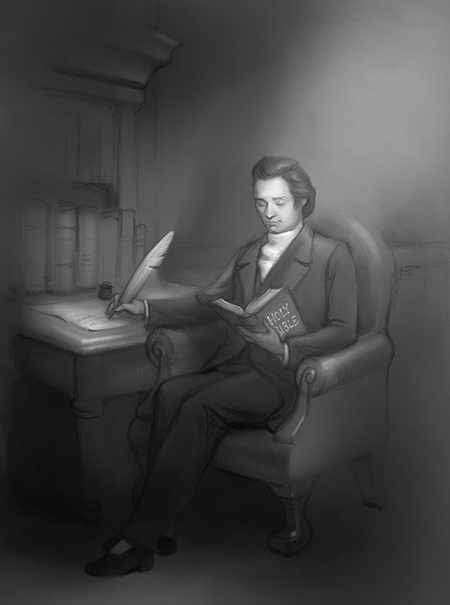
Divine Study
|
Window of Reflection
 
Window of Reflection
|
Enlightening Grace
 
Enlightening Grace
|
164
|
944 |
121
|
1027 |
195
|
1061 |

Policy POL'ICY, noun [Latin politia; Gr. city.] 1. policy in its primary signification, is the same as polity, comprehending the fundamental constitution or frame of civil government in a state or kingdom. But by usage, policy is now more generally used to denote what is included under legislation and administration, and may be defined, the art or manner of governing a nation; or that system of measures which the sovereign of a country adopts and pursues, as best adapted to the interests of the nation. Thus we speak of domestic policy or the system of internal regulations in a nation; foreign policy or the measures which respect foreign nations; commercial policy or the measures which respect commerce. 2. Art, prudence, wisdom or dexterity in the management of public affairs; applied to persons governing. It has been the policy of France to preclude females from the throne. It has been the policy of Great Britain to encourage her navy, by keeping her carrying trade in her own hands. In this she manifests sound policy Formerly, England permitted wool to be exported and manufactured in the Low Countries, which was very bad policy The policy of all laws has made some forms necessary in the wording of last wills and testaments. All violent policy defeats itself. 3. In common usage, the art, prudence or wisdom of individuals in the management of their private or social concerns. 4. Stratagem; cunning; dexterity of management. 5. A ticket or warrant for money in the public funds. 6. policy in commerce, the writing or instrument by which a contract of indemnity is effected between the insurer and the insured; or the instrument containing the terms or conditions on which a person or company undertakes to indemnify another person or company against losses of property exposed to peculiar hazards, as houses or goods exposed to fire, or ships and goods exposed to destruction on the high seas. This writing is subscribed by the insurer, who is called the underwriter. The terms policy of insurance, or assurance, are also used for the contract between the insured and the underwriter. Policies are valued or open; valued, when the property or goods insured are valued at prime cost; open, when the goods are not valued, but if lost, their value must be proved. Wagering policies, which insure sums of money, interest or no interest, are illegal. All insurances, interest or no interest, or without further proof of interest than the policy itself, are null and void. The word policy is used also for the writing which insures against other events, as well as against loss of property. |

|
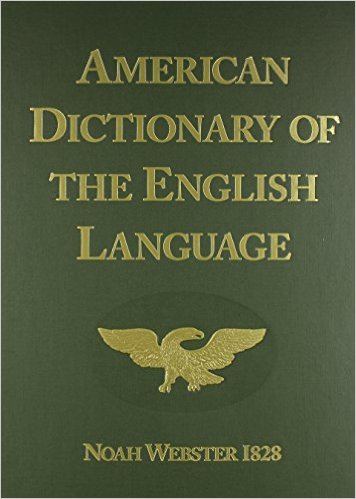
| Hard-cover Edition |
379 |
 |
556 |
|
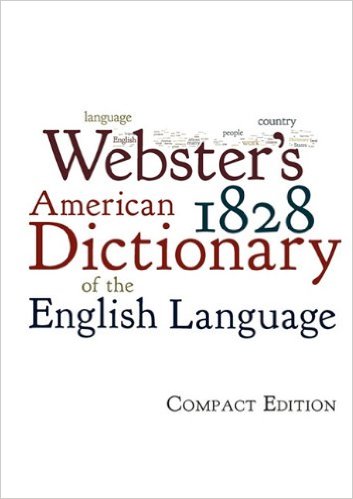
| Compact Edition |
364 |
 |
253 |
|
| CD-ROM |
316 |
 |
198 |
|
* As a note, I have purchased each of these products. In fact, as we have been developing the Project:: 1828 Reprint, I have purchased several of the bulky hard-cover dictionaries. My opinion is that the 2000-page hard-cover edition is the only good viable solution at this time. The compact edition was a bit disappointing and the CD-ROM as well. |
| [ + ] |
| Add Search To Your Site |
|
|
|