|
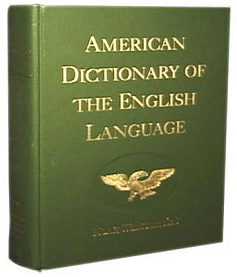
Search, browse, and study this dictionary to learn more about the early American, Christian language. 
1828.mshaffer.com › Word [pluck]
PLUCK, v.t. 1. To pull with sudden force or effort, or to pull off, out or from, with a twitch. Thus we say, to pluck feathers from a fowl; to pluck hair or wool from a skin; to pluck grapes or other fruit. They pluck the fatherless from the breast. Job.24.2. To strip by plucking; as, to pluck a fowl. They that pass by do pluck her. Ps.80.The sense of this verb is modified by particles.To pluck away, to pull away, or to separate by pulling; to tear away. He shall pluck away his crop with his feathers. Lev.1.To pluck down, to pull down; to demolish; or to reduce to a lower state. To pluck off, is to pull or tear off; as, to pluck off the skin. Mic.3. To pluck on, to pull or draw on. pluck up, to tear up by the roots or from the foundation; to eradicate; to exterminate; to destroy; as, to pluck up a plant; to pluck up a nation. Jer.12. To pluck out, to draw out suddenly or to tear out; as, to pluck out the eyes; to pluck out the hand from the bosom. Ps.74. To pluck up, to resume courage; properly, to pluck up the heart. [Not elegant.] PLUCK, n. The heart, liver and lights of an animal.
|
Evolution (or devolution) of this word [pluck]
| 1828 Webster | 1844 Webster | 1913 Webster |
|---|
PLUCK, v.t. 1. To pull with sudden force or effort, or to pull off, out or from, with a twitch. Thus we say, to pluck feathers from a fowl; to pluck hair or wool from a skin; to pluck grapes or other fruit. They pluck the fatherless from the breast. Job.24.2. To strip by plucking; as, to pluck a fowl. They that pass by do pluck her. Ps.80.The sense of this verb is modified by particles.To pluck away, to pull away, or to separate by pulling; to tear away. He shall pluck away his crop with his feathers. Lev.1.To pluck down, to pull down; to demolish; or to reduce to a lower state. To pluck off, is to pull or tear off; as, to pluck off the skin. Mic.3. To pluck on, to pull or draw on. pluck up, to tear up by the roots or from the foundation; to eradicate; to exterminate; to destroy; as, to pluck up a plant; to pluck up a nation. Jer.12. To pluck out, to draw out suddenly or to tear out; as, to pluck out the eyes; to pluck out the hand from the bosom. Ps.74. To pluck up, to resume courage; properly, to pluck up the heart. [Not elegant.] PLUCK, n. The heart, liver and lights of an animal. |
PLUCK, n.The heart, liver and lights of an animal.
PLUCK, v.t. [Sax. pluccian, which seems to be the same word, with a prefix, as lyccan or alucan, aluccan, to pull off or out; G. pflücken; D. plukken; Dan. plukker; Sw. plocka; Fr. eplucher; W. pliciaw, to pluck, to peel; plig, a peel.]- To pull with sudden force or effort, or to pull off, out or from, with a twitch. Thus we say, to pluck feathers from a fowl; to pluck hair or wool from a skin; to pluck grapes or other fruit.
They pluck the fatherless from the breast. – Job xxiv.
- To strip by plucking; as, to pluck a fowl.
They that pass by do pluck her. – Ps. lxxx.
The sense of this verb is modified by particles.
To pluck away, to pull away, or to separate by pulling; to tear away.
He shall pluck away his crop with his feathers. – Lev. i.
To pluck down, to pull down; to demolish; or to reduce to a lower state. – Shak.
To pluck off, is to pull or tear off; as, to pluck off the skin. – Mic. iii.
To pluck on, to pull or draw on. [Obs.] – Shak.
To pluck up, to tear up by the roots or from the foundation; to eradicate; to exterminate; to destroy; as, to pluck up a plant; to pluck up a nation. – Jer. xii.
To pluck out, to draw out suddenly, or to tear out; as, to pluck out the eyes; to pluck out the hand from the bosom. – Ps. lxxiv.
To pluck up, to resume courage; properly, to pluck up the heart. [Not elegant.]
|
Pluck
- To pull; to draw.
- To make a motion of
pulling or twitching; -- usually with at; as, to pluck
at one's gown.
- The
act of plucking; a pull; a twitch.
- Especially, to pull with sudden force or
effort, or to pull off or out from something, with a twitch; to
twitch; also, to gather, to pick; as, to pluck feathers from a
fowl; to pluck hair or wool from a skin; to pluck
grapes.
- The heart, liver, and lights of an
animal.
- To strip of, or as of, feathers; as, to
pluck a fowl.
- Spirit] courage; indomitable resolution;
fortitude.
- To reject at an
examination for degrees.
- The act of plucking, or the state of being
plucked, at college. See Pluck, v. t.,
4.
- The lyrie.
|
| 1828 Webster | 1844 Webster | 1913 Webster |
|---|
Thank you for visiting!
- Our goal is to try and improve the quality of the digital form of this dictionary being historically true and accurate to the first American dictionary. Read more ...
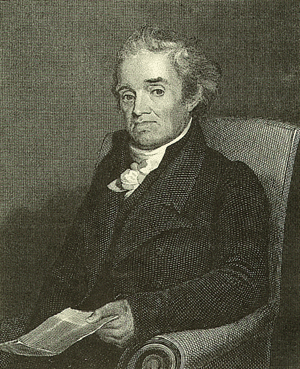
- Below you will find three sketches from a talented artist and friend depicting Noah Webster at work. Please tell us what you think.
Divine Study
 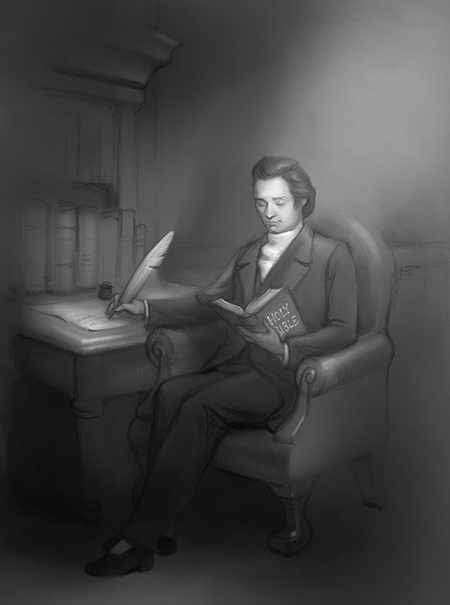
Divine Study
|
Window of Reflection
 
Window of Reflection
|
Enlightening Grace
 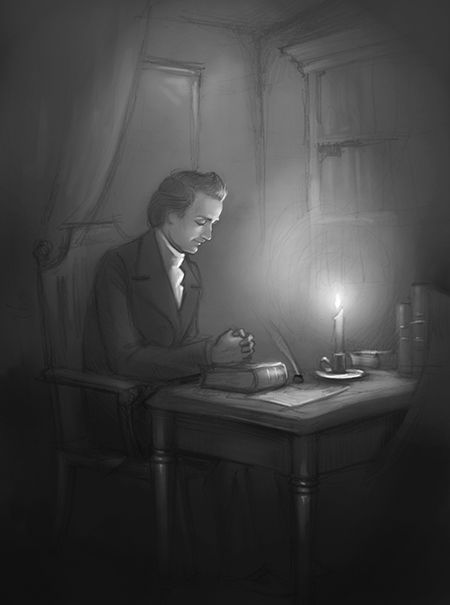
Enlightening Grace
|
164
|
955 |
126
|
1037 |
199
|
1078 |

Pluck PLUCK, verb transitive 1. To pull with sudden force or effort, or to pull off, out or from, with a twitch. Thus we say, to pluck feathers from a fowl; to pluck hair or wool from a skin; to pluck grapes or other fruit. They pluck the fatherless from the breast. Job 24:9. 2. To strip by plucking; as, to pluck a fowl. They that pass by do pluck her. Psalms 80:12. The sense of this verb is modified by particles. To pluck away, to pull away, or to separate by pulling; to tear away. He shall pluck away his crop with his feathers. Leviticus 1:16. To pluck down, to pull down; to demolish; or to reduce to a lower state. To pluck off, is to pull or tear off; as, to pluck off the skin. Micah 3:2. To pluck on, to pull or draw on. PLUCK up, to tear up by the roots or from the foundation; to eradicate; to exterminate; to destroy; as, to pluck up a plant; to pluck up a nation. Jeremiah 12:14. To pluck out, to draw out suddenly or to tear out; as, to pluck out the eyes; to pluck out the hand from the bosom. Psalms 74:11. To pluck up, to resume courage; properly, to pluck up the heart. [Not elegant.] PLUCK, noun The heart, liver and lights of an animal. |

|
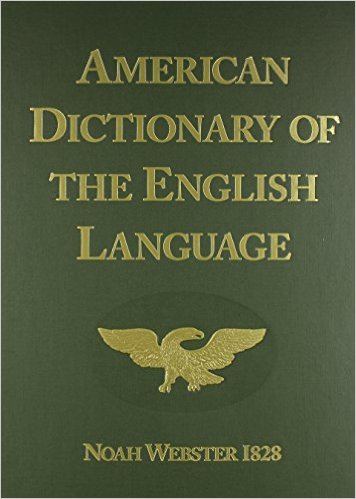
| Hard-cover Edition |
385 |
 |
566 |
|
| Compact Edition |
369 |
 |
259 |
|
| CD-ROM |
326 |
 |
202 |
|
* As a note, I have purchased each of these products. In fact, as we have been developing the Project:: 1828 Reprint, I have purchased several of the bulky hard-cover dictionaries. My opinion is that the 2000-page hard-cover edition is the only good viable solution at this time. The compact edition was a bit disappointing and the CD-ROM as well. |
| [ + ] |
| Add Search To Your Site |
|
|
|