|
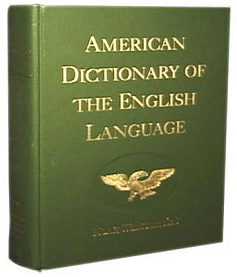
Search, browse, and study this dictionary to learn more about the early American, Christian language. 
1828.mshaffer.com › Word [person]
PERSON, n. per'sn. [L. persona; said to be compounded of per, through or by, and sonus, sound; a Latin word signifying primarily a mask used by actors on the state.] 1. An individual human being consisting of body and soul. We apply the word to living beings only, possessed of a rational nature; the body when dead is not called a person. It is applied alike to a man, woman or child. A person is a thinking intelligent being.2. A man, woman or child, considered as opposed to things, or distinct from them. A zeal for persons is far more easy to be perverted, than a zeal for things.3. A human being, considered with respect to the living body or corporeal existence only. The form of her person is elegant. You'll find her person difficult to gain. The rebels maintained the fight for a small time, and for their persons showed no want of courage.4. A human being, indefinitely; one; a man. Let a person's attainments be never so great, he should remember he is frail and imperfect.5. A human being represented in dialogue, fiction, or on the state; character. A player appears in the person of king Lear. These tables, Cicero pronounced under the person of Crassus, were of more use and authority than all the books of the philosophers.6. Character of office. How different is the same man from himself, as he sustains the person of a magistrate and that of a friend.7. In grammar, the nominative to a verb; the agent that performs or the patient that suffers any thing affirmed by a verb; as, I write; he is smitten; she is beloved; the rain descends in torrents. I, thou or you, he, she or it, are called the first, second and third persons. Hence we apply the word person to the termination or modified form of the verb used in connection with the persons; as the first or the third person of the verb; the verb is in the second person.8. In law, an artificial person, is a corporation or body politic.In person, by one's self; with bodily presence; not be representative. The king in person visits all around.
|
Evolution (or devolution) of this word [person]
| 1828 Webster | 1844 Webster | 1913 Webster |
|---|
PERSON, n. per'sn. [L. persona; said to be compounded of per, through or by, and sonus, sound; a Latin word signifying primarily a mask used by actors on the state.] 1. An individual human being consisting of body and soul. We apply the word to living beings only, possessed of a rational nature; the body when dead is not called a person. It is applied alike to a man, woman or child. A person is a thinking intelligent being.2. A man, woman or child, considered as opposed to things, or distinct from them. A zeal for persons is far more easy to be perverted, than a zeal for things.3. A human being, considered with respect to the living body or corporeal existence only. The form of her person is elegant. You'll find her person difficult to gain. The rebels maintained the fight for a small time, and for their persons showed no want of courage.4. A human being, indefinitely; one; a man. Let a person's attainments be never so great, he should remember he is frail and imperfect.5. A human being represented in dialogue, fiction, or on the state; character. A player appears in the person of king Lear. These tables, Cicero pronounced under the person of Crassus, were of more use and authority than all the books of the philosophers.6. Character of office. How different is the same man from himself, as he sustains the person of a magistrate and that of a friend.7. In grammar, the nominative to a verb; the agent that performs or the patient that suffers any thing affirmed by a verb; as, I write; he is smitten; she is beloved; the rain descends in torrents. I, thou or you, he, she or it, are called the first, second and third persons. Hence we apply the word person to the termination or modified form of the verb used in connection with the persons; as the first or the third person of the verb; the verb is in the second person.8. In law, an artificial person, is a corporation or body politic.In person, by one's self; with bodily presence; not be representative. The king in person visits all around. |
PER'SON, n. [per'sn; L. persona; said to be compounded of per, through or by, and sonus, sound; a Latin word signifying primarily a mask used by actors on the stage.]- An individual human being consisting of body and soul. We apply the word to living beings only, possessed of a rational nature; the body when dead is not called a person. It is applied alike to a man, woman or child.
A person is a thinking intelligent being. – Locke.
- A man, woman or child, considered as opposed to things, or distinct from them.
A zeal for persons is far more easy to be perverted, than a zeal for things. – Sprat.
- A human being, considered with respect to the living body or corporeal existence only. The form of her person is elegant.
You'll find her person difficult to gain. – Dryden.
The rebels maintained the fight for a small time, and for their persons showed no want of courage. – Bacon.
- A human being, indefinitely; one; a man. Let a person's attainments be never so great, he should remember he is frail and imperfect.
- A human being represented in dialogue, fiction, or on the stage; character. A player appears in the person of king Lear.
These tables, Cicero pronounced under the person of Crassus, were of more use and authority than all the books of the philosophers. – Baker.
- Character of office.
How different is the same man from himself, as he sustains the person of a magistrate and that of a friend. – South.
- In grammar, the nominative to a verb; the agent that performs or the patient that suffers any thing affirmed by a verb; as, I write; he is smitten; she is beloved; the rain descends in torrents. I, thou or you, he, she or it, are called the first, second and third persons. Hence we apply the word person to the termination or modified form of the verb used in connection with the persons; as, the first or third person of the verb; the verb is in the second person.
- In law, an artificial person, is a corporation or body politic. – Blackstone.
In person, by one's self; with bodily presence; not by representative.
The king in person visits all around. – Dryden.
PER'SON, v.t.To represent as a person; to make to resemble; to image. [Not in use.] – Milton. |
Per"son
- A character or part, as in a play; a specific
kind or manifestation of individual character, whether in real life,
or in literary or dramatic representation; an assumed character.
- To represent as
a person; to personify; to impersonate.
- The bodily form of a human being; body;
outward appearance; as, of comely person.
- A living, self-conscious being, as distinct
from an animal or a thing; a moral agent; a human being; a man, woman,
or child.
- A human being spoken of indefinitely; one;
a man; as, any person present.
- A parson; the parish priest.
- Among Trinitarians, one of
the three subdivisions of the Godhead (the Father, the Son, and the
Holy Ghost); an hypostasis.
- One of three relations or
conditions (that of speaking, that of being spoken to, and that of
being spoken of) pertaining to a noun or a pronoun, and thence also to
the verb of which it may be the subject.
- A shoot or bud of a plant; a
polyp or zooid of the compound Hydrozoa Anthozoa, etc.; also, an
individual, in the narrowest sense, among the higher animals.
|
| 1828 Webster | 1844 Webster | 1913 Webster |
|---|
Thank you for visiting!
- Our goal is to try and improve the quality of the digital form of this dictionary being historically true and accurate to the first American dictionary. Read more ...
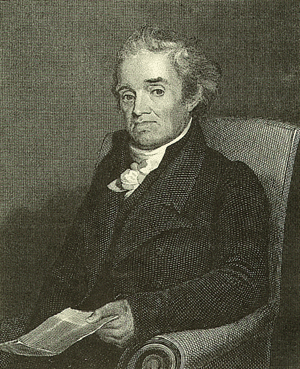
- Below you will find three sketches from a talented artist and friend depicting Noah Webster at work. Please tell us what you think.
Divine Study
 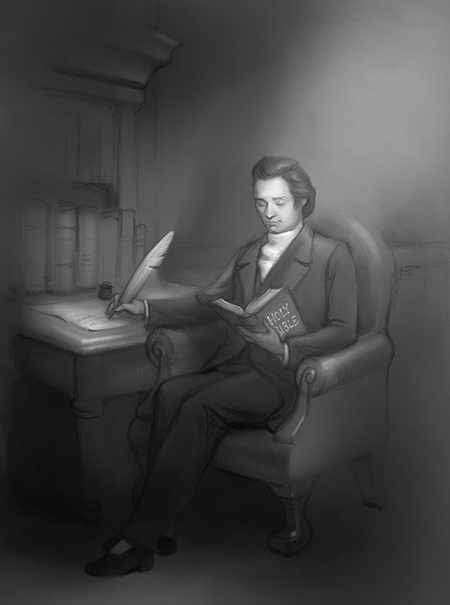
Divine Study
|
Window of Reflection
 
Window of Reflection
|
Enlightening Grace
 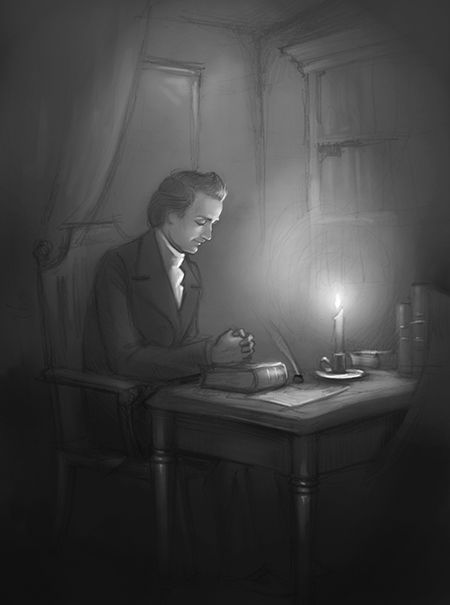
Enlightening Grace
|
164
|
955 |
126
|
1037 |
199
|
1078 |

Person PERSON, noun per'sn. [Latin persona; said to be compounded of per, through or by, and sonus, sound; a Latin word signifying primarily a mask used by actors on the state.] 1. An individual human being consisting of body and soul. We apply the word to living beings only, possessed of a rational nature; the body when dead is not called a person It is applied alike to a man, woman or child. A person is a thinking intelligent being. 2. A man, woman or child, considered as opposed to things, or distinct from them. A zeal for persons is far more easy to be perverted, than a zeal for things. 3. A human being, considered with respect to the living body or corporeal existence only. The form of her person is elegant. You'll find her person difficult to gain. The rebels maintained the fight for a small time, and for their persons showed no want of courage. 4. A human being, indefinitely; one; a man. Let a person's attainments be never so great, he should remember he is frail and imperfect. 5. A human being represented in dialogue, fiction, or on the state; character. A player appears in the person of king Lear. These tables, Cicero pronounced under the person of Crassus, were of more use and authority than all the books of the philosophers. 6. Character of office. How different is the same man from himself, as he sustains the person of a magistrate and that of a friend. 7. In grammar, the nominative to a verb; the agent that performs or the patient that suffers any thing affirmed by a verb; as, I write; he is smitten; she is beloved; the rain descends in torrents. I, thou or you, he, she or it, are called the first, second and third persons. Hence we apply the word person to the termination or modified form of the verb used in connection with the persons; as the first or the third person of the verb; the verb is in the second person 8. In law, an artificial person is a corporation or body politic. In person by one's self; with bodily presence; not be representative. The king in person visits all around. PER'SON, verb transitive To represent as a person; to make to resemble; to image. [Not in use.] |

|
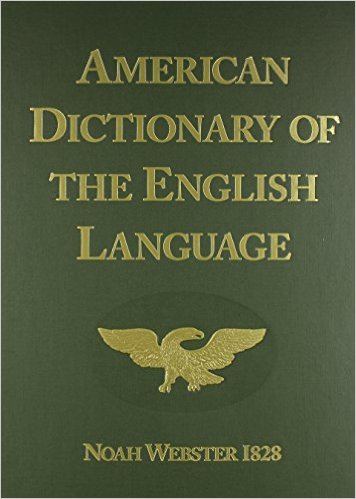
| Hard-cover Edition |
385 |
 |
566 |
|
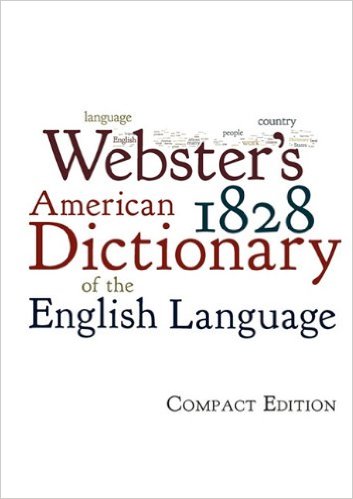
| Compact Edition |
369 |
 |
259 |
|
| CD-ROM |
326 |
 |
202 |
|
* As a note, I have purchased each of these products. In fact, as we have been developing the Project:: 1828 Reprint, I have purchased several of the bulky hard-cover dictionaries. My opinion is that the 2000-page hard-cover edition is the only good viable solution at this time. The compact edition was a bit disappointing and the CD-ROM as well. |
| [ + ] |
| Add Search To Your Site |
|
|
|