|
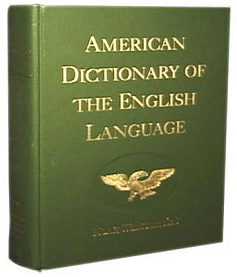
Search, browse, and study this dictionary to learn more about the early American, Christian language. 
1828.mshaffer.com › Word [pair]
PAIR, n. [L. par; Heb. to join, couple or associate.] 1. Two things of a kind, similar in form, applied to the same purpose,and suited to each other or used together; as a pair of gloves or stockings; a pair of shoes; a pair of oxen or horses.2. Two of a sort; a couple; a brace; as a pair of nerves; a pair of doves. Luke 2.PAIR, v.i. To be joined in pairs; to couple, as, birds pair in summer. 1. To suit; to fit; as a counterpart. Ethelinda, My heart was made to fit and pair with thine.PAIR, v.t. To unite in couples; as minds paired in heaven. 1. To unite as correspondent, or rather to contrast. Glossy jet is paired with shining white.PAIR, v.t. To impair. [See Impair.]
|
Evolution (or devolution) of this word [pair]
| 1828 Webster | 1844 Webster | 1913 Webster |
|---|
PAIR, n. [L. par; Heb. to join, couple or associate.] 1. Two things of a kind, similar in form, applied to the same purpose,and suited to each other or used together; as a pair of gloves or stockings; a pair of shoes; a pair of oxen or horses.2. Two of a sort; a couple; a brace; as a pair of nerves; a pair of doves. Luke 2.PAIR, v.i. To be joined in pairs; to couple, as, birds pair in summer. 1. To suit; to fit; as a counterpart. Ethelinda, My heart was made to fit and pair with thine.PAIR, v.t. To unite in couples; as minds paired in heaven. 1. To unite as correspondent, or rather to contrast. Glossy jet is paired with shining white.PAIR, v.t. To impair. [See Impair.] |
PAIR, n. [Fr. pair; L. Sp. and Port. par; It. pari; Arm. par; D. paar; G. par, paar; Sw. par; Norm. par or peir; Ir. peire; Sax. gefera, with a prefix. In W. par signifies what is contiguous or in continuity, a state of readiness or preparedness, a pair, fellow, match or couple, and para signifies to endure, to continue, to persevere; paru, to couple or join. In this language, as in Spanish, par, pair, is shown to be connected with the L. paro, to prepare. Now in Heb. Ch. Syr. and Eth. חבר signifies to join, couple, or associate, and the noun, an associate, evidently this very word, which goes far to prove that חבר is a derivative of the root ברא, from which the Latins probably have paro. See Class Br, No. 19. The primary sense of the root is to throw, strain and extend, and hence par, equal, is extended to, near, contiguous, or equally extended.]- Two things of a kind, similar in form, applied to the same purpose, and suited to each other or used together; as, a pair of gloves or stockings; a pair of shoes; a pair of oxen or horses.
- Two of a sort; a couple; a brace; as, a pair of nerves; a pair of doves. – Luke ii.
PAIR, v.i.- To be joined in pairs; to couple; as, birds pair in summer.
- To suit; to fit; as a counterpart.
Ethelinda, / My heart was made to fit and pair with thine. – Rowe.
PAIR, v.t.1- To unite in couples; as, minds paired in heaven. – Dryden.
- To unite as correspondent, or rather to contrast.
Glossy jet is paired with shining white. – Pope.
PAIR, v.t.2To impair. [See Impair.] |
Pair
- A number of things resembling one another,
or belonging together; a set; as, a pair or flight of stairs.
"A pair of beads." Chaucer. Beau. *** Fl. "Four
pair of stairs." Macaulay. [Now mostly or quite disused,
except as to stairs.]
- To be joined in paris] to
couple; to mate, as for breeding.
- To
unite in couples; to form a pair of; to bring together, as things
which belong together, or which complement, or are adapted to one
another.
- To
impair.
- Two things of a kind, similar in form,
suited to each other, and intended to be used together] as, a
pair of gloves or stockings; a pair of shoes.
- To suit; to fit, as a
counterpart.
- To engage (one's self) with another of
opposite opinions not to vote on a particular question or class of
questions.
- Two of a sort; a span; a yoke; a couple; a
brace; as, a pair of horses; a pair of oxen.
- Same as To pair off. See phrase
below.
- A married couple; a man and wife.
- A single thing, composed of two pieces
fitted to each other and used together; as, a pair of scissors;
a pair of tongs; a pair of bellows.
- Two members of opposite parties or opinion,
as in a parliamentary body, who mutually agree not to vote on a given
question, or on issues of a party nature during a specified time; as,
there were two pairs on the final vote.
- In a mechanism, two
elements, or bodies, which are so applied to each other as to mutually
constrain relative motion.
|
| 1828 Webster | 1844 Webster | 1913 Webster |
|---|
Thank you for visiting!
- Our goal is to try and improve the quality of the digital form of this dictionary being historically true and accurate to the first American dictionary. Read more ...
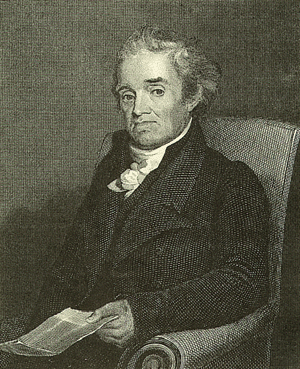
- Below you will find three sketches from a talented artist and friend depicting Noah Webster at work. Please tell us what you think.
Divine Study
 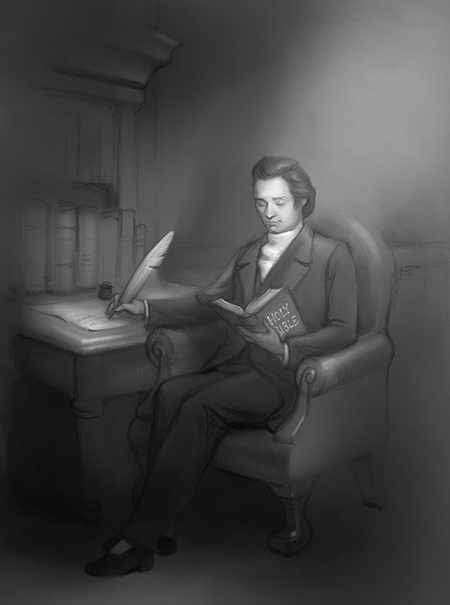
Divine Study
|
Window of Reflection
 
Window of Reflection
|
Enlightening Grace
 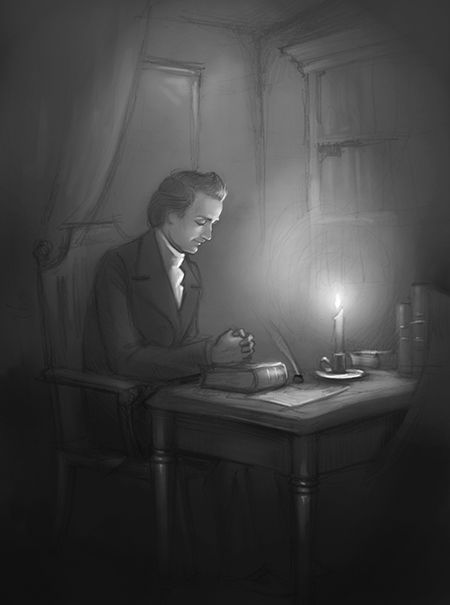
Enlightening Grace
|
164
|
949 |
125
|
1031 |
198
|
1068 |

Pair PAIR, noun [Latin par; Heb. to join, couple or associate.] 1. Two things of a kind, similar in form, applied to the same purpose, and suited to each other or used together; as a pair of gloves or stockings; a pair of shoes; a pair of oxen or horses. 2. Two of a sort; a couple; a brace; as a pair of nerves; a pair of doves. Luke 2:24. PAIR, verb intransitive To be joined in pairs; to couple, as, birds pair in summer. 1. To suit; to fit; as a counterpart. Ethelinda, My heart was made to fit and pair with thine. PAIR, verb transitive To unite in couples; as minds paired in heaven. 1. To unite as correspondent, or rather to contrast. Glossy jet is paired with shining white. PAIR, verb transitive To impair. [See Impair.] |

|
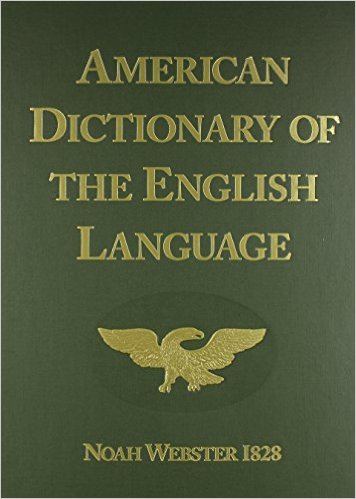
| Hard-cover Edition |
380 |
 |
561 |
|
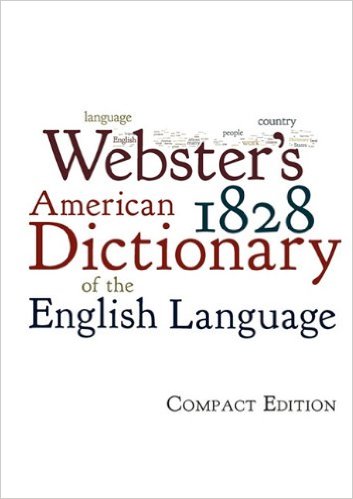
| Compact Edition |
365 |
 |
255 |
|
| CD-ROM |
321 |
 |
200 |
|
* As a note, I have purchased each of these products. In fact, as we have been developing the Project:: 1828 Reprint, I have purchased several of the bulky hard-cover dictionaries. My opinion is that the 2000-page hard-cover edition is the only good viable solution at this time. The compact edition was a bit disappointing and the CD-ROM as well. |
| [ + ] |
| Add Search To Your Site |
|
|
|