|
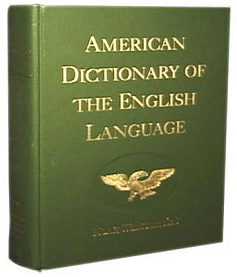
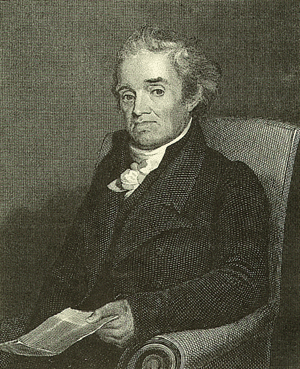
Search, browse, and study this dictionary to learn more about the early American, Christian language. 
1828.mshaffer.com › Word [of]
OF, prep. ov. [Gr.] 1. From or out of; proceeding from, as the cause, source, means, author or agent bestowing.I have received of the Lord that which also I delivered to you. 1Cor. 11.For it was of the Lord to harden their hearts. Josh. 11.It is of the Lord's mercies that we are not consumed. Lam. 3. The whole disposing thereof is of the Lord. Prov. 16.Go, inquire of the Lord for me. 2Chron. 34.That holy thing that shall be born of thee. Luke 1.Hence of is the sign of the genitive case, the case that denotes production; as the son of man, the son proceeding from man, produced from man. This is the primary sense, although we now say, produced by man. "Part of these were slain;" that is, a number separate, for part denotes a division; the sense then is, a number from or out of the whole were slain. So also, "some of these were slain;" that is, some from or out of others. "I have known him of old, or of a child;" that is, from old times, from a child. "He is of the race of kings;" that is, descended from kings. "He is of noble blood or birth, or of ignoble origin." "No particle of matter, or no body can move of itself;" that is, by force or strength proceeding from itself, derived from itself."The quarrel is not now of fame and tribute, or of wrongs done;" that is, from fame or wrongs, as the cause, and we may render it concerning, about, relating to."Of this little he had some to spare;" that is, some from the whole. It may be rendered out of."Of all our heroes thou canst boast alone;" that is, thou alone from the number of heroes. This may be rendered among."The best of men, the most renowned of all;" that is, the best from the number of men, the most renowned from the whole; denoting primarily separation, like part."I was well entertained of the English Consul;" that is, entertained from the Consul; my entertainment was from the Consul. This use is obsolete, and we use by in lieu of it."This does of right belong to us;" that is, from right, de jure; our title proceeds from right."The chariot was all of cedar;" that is, made from cedar. So we say, made of gold, made of clay; an application corresponding with our modern use of from; manufactured from wool, or from raw materials. Hence we say, cloth consisting of wool. "This is a scheme of his own devising;" that is, from his own devising or device. "If any man minister, let him do it as of the ability which God giveth;" that is, as from the ability, as the source of action."Of happy, he is become miserable;" that is, from happy; from being happy, he has passed to being miserable. "Of necessity this must prove ruinous;" that is, from necessity, as the cause or source. "Of a hundred take fifty;" that is, from a hundred, or out of a hundred, from among a hundred.Of sometimes implies a part or share.It is a duty to communicate of those blessings we have received.From is then the primary sense of this preposition; a sense retained in off, the same word differently written for distinction. But this sense is appropriately lost in many of its applications; as a man of genius, a man of courage, a man of rare endowments, a fossil of a red color, or of a hexagonal figure. he lost all hope of relief. This is an affair of the cabinet. He is a man of decayed fortune. What is the price of corn? We say that of, in these and similar phrases, denotes property or possession, making of the sign of the genitive or possessive case. These applications, however, all proceeded from the same primary sense. That which proceeds from or is produced by a person, is naturally the property or possession of that person, as the son of John; and this idea of property in the course of time would pass to things not thus produced, but still bearing a relation to another thing. Thus we say, the father of a son, as well as the son of a father. In both senses, other languages also use the same word, as in the French de, de la, and Italian di, dell. Of then has one primary sense, from, departing, issuing, proceeding from or out of, and a derivative sense denoting possession or property.
|
Evolution (or devolution) of this word [of]
| 1828 Webster | 1844 Webster | 1913 Webster |
|---|
OF, prep. ov. [Gr.] 1. From or out of; proceeding from, as the cause, source, means, author or agent bestowing.I have received of the Lord that which also I delivered to you. 1Cor. 11.For it was of the Lord to harden their hearts. Josh. 11.It is of the Lord's mercies that we are not consumed. Lam. 3. The whole disposing thereof is of the Lord. Prov. 16.Go, inquire of the Lord for me. 2Chron. 34.That holy thing that shall be born of thee. Luke 1.Hence of is the sign of the genitive case, the case that denotes production; as the son of man, the son proceeding from man, produced from man. This is the primary sense, although we now say, produced by man. "Part of these were slain;" that is, a number separate, for part denotes a division; the sense then is, a number from or out of the whole were slain. So also, "some of these were slain;" that is, some from or out of others. "I have known him of old, or of a child;" that is, from old times, from a child. "He is of the race of kings;" that is, descended from kings. "He is of noble blood or birth, or of ignoble origin." "No particle of matter, or no body can move of itself;" that is, by force or strength proceeding from itself, derived from itself."The quarrel is not now of fame and tribute, or of wrongs done;" that is, from fame or wrongs, as the cause, and we may render it concerning, about, relating to."Of this little he had some to spare;" that is, some from the whole. It may be rendered out of."Of all our heroes thou canst boast alone;" that is, thou alone from the number of heroes. This may be rendered among."The best of men, the most renowned of all;" that is, the best from the number of men, the most renowned from the whole; denoting primarily separation, like part."I was well entertained of the English Consul;" that is, entertained from the Consul; my entertainment was from the Consul. This use is obsolete, and we use by in lieu of it."This does of right belong to us;" that is, from right, de jure; our title proceeds from right."The chariot was all of cedar;" that is, made from cedar. So we say, made of gold, made of clay; an application corresponding with our modern use of from; manufactured from wool, or from raw materials. Hence we say, cloth consisting of wool. "This is a scheme of his own devising;" that is, from his own devising or device. "If any man minister, let him do it as of the ability which God giveth;" that is, as from the ability, as the source of action."Of happy, he is become miserable;" that is, from happy; from being happy, he has passed to being miserable. "Of necessity this must prove ruinous;" that is, from necessity, as the cause or source. "Of a hundred take fifty;" that is, from a hundred, or out of a hundred, from among a hundred.Of sometimes implies a part or share.It is a duty to communicate of those blessings we have received.From is then the primary sense of this preposition; a sense retained in off, the same word differently written for distinction. But this sense is appropriately lost in many of its applications; as a man of genius, a man of courage, a man of rare endowments, a fossil of a red color, or of a hexagonal figure. he lost all hope of relief. This is an affair of the cabinet. He is a man of decayed fortune. What is the price of corn? We say that of, in these and similar phrases, denotes property or possession, making of the sign of the genitive or possessive case. These applications, however, all proceeded from the same primary sense. That which proceeds from or is produced by a person, is naturally the property or possession of that person, as the son of John; and this idea of property in the course of time would pass to things not thus produced, but still bearing a relation to another thing. Thus we say, the father of a son, as well as the son of a father. In both senses, other languages also use the same word, as in the French de, de la, and Italian di, dell. Of then has one primary sense, from, departing, issuing, proceeding from or out of, and a derivative sense denoting possession or property. |
OF, prep. [ov; Sax. of; G. ab; Sw. Ice. Dan. and D. af; L. ab, but originally af; Gr. απο. The primary sense is departing, issuing or proceeding from; but this sense has been modified by usage.]From or out of; proceeding from, as the cause, source, means, author or agent bestowing.
I have received of the Lord that which also I delivered to you. 1 Cor. xi.
For it was of the Lord to harden their hearts. Josh. xi.
It is of the Lord's mercies that we are not consumed. Lam. iii.
The whole disposing thereof is of the Lord. Prov. xvi.
Go, inquire of the Lord for me. 2 Chron. xxxiv.
That holy thing that shall be born of thee. Luke i.
Hence of is the sign of the genitive case, the case that denotes production; as, the son of man, the son proceeding from man, produced from man. This is the primary sense, although we now say, produced by man. “Part of these were slain;” that is, a number separate, for part denotes a division; the sense then is, a number from or out of the whole were slain. So also, “some of these were slain;” that is, some from or out of the others. “I have known him of old, or of a child;” that is, from old times, from a child. “He is of the race of kings;” that is, descended from kings. “He is of noble blood or birth, or of ignoble origin.” “No particle of matter, or no body can move of itself;” that is, by force or strength proceeding from itself, derived from itself.
“The quarrel is not now of fame and tribute, or of wrongs done;” that is, from fame or wrongs, as the cause, and we may render it, concerning, about, relating to.
“Of this little he had some to spare;” that is, some from the whole.” It may be rendered out of.
“Of all our heroes thou canst boast alone;” that is, thou alone from the number of heroes. This may be rendered among.
“The best of men, the most renowned of all;” that is, the best from the number of men, the most renowned from the whole; denoting primarily separation, like part.
“I was well entertained of the English Consul;” that is, entertained from the Consul; my entertainment was from the Consul. This use is obsolete, and we use by in lieu of it.
“This does of right belong to us;” that is, from right, de injure; our title proceeds from right.
“The chariot was all of cedar;” that is, made from cedar. So we say, made of gold, made of clay; an application corresponding with our modern use of from; manufactured from wool, or from raw materials. Hence we say, cloth consisting of wool. “This is a scheme of his own devising;” that is, from his own devising or device. “If any man minister, let him do it as of the ability which God giveth;” that is, as from the ability, as the source of action.
“Of happy, he is become miserable;” that is, from happy; from being happy, he has passed to being miserable. “Of necessity this must prove ruinous;” that is, from necessity, as the cause or source. “Of a hundred take fifty;” that is, from a hundred, or out of a hundred, from among a hundred.
Of sometimes implies a part or share.
It is a duty to communicate of those blessings we have received. Franklin.
From is then the primary sense of this preposition; a sense retained in off, the same word differently written for distinction. But this sense is appropriately lost in many of its applications; as, a man of genius, a man of courage, a man of rare endowments, a fossil of a red color, or of a hexagonal figure. He lost all hope of relief. This is an affair of the cabinet. He is a man of decayed fortune. What is the price of corn? We say that of, in these and similar phrases, denotes property or possession, making of the sign of the genitive or possessive case. These applications, however, all proceeded from the same primary sense. That which proceeds from or is produced by a person, is naturally the property or possession of that person, as the son of John; and this idea of property in the course of time would pass to things not thus produced, but still bearing a relation to another thing. Thus we say, the father of a son, as well as the son of a father. In both senses, other languages also use the same word, as in the French de, de la, and Italian, di, dell. Of then, has one primary sense, from, departing, issuing, proceeding from or out of, and a derivative sense denoting possession or property. |
Of
- Denoting that from which anything
proceeds; indicating origin, source, descent, and the like; as, he is
of a race of kings; he is of noble blood.
- Denoting possession or ownership, or the
relation of subject to attribute; as, the apartment of the
consul: the power of the king; a man of courage; the
gate of heaven.
- Denoting the material of which anything is
composed, or that which it contains; as, a throne of gold; a
sword of steel; a wreath of mist; a cup of
water.
- Denoting part of an aggregate or whole;
belonging to a number or quantity mentioned; out of; from amongst;
as, of this little he had some to spare; some of the
mines were unproductive; most of the company.
- Denoting that by which a person or thing
is actuated or impelled; also, the source of a purpose or action; as,
they went of their own will; no body can move of
itself; he did it of necessity.
- Denoting reference to a thing; about;
concerning; relating to; as, to boast of one's
achievements.
- Denoting nearness or distance, either in
space or time; from; as, within a league of the town; within
an hour of the appointed time.
- Denoting identity or equivalence; -- used
with a name or appellation, and equivalent to the relation of
apposition; as, the continent of America; the city of
Rome; the Island of Cuba.
- Denoting the agent, or person by whom, or
thing by which, anything is, or is done; by.
- Denoting relation to place or time;
belonging to, or connected with; as, men of Athens; the people
of the Middle Ages; in the days of Herod.
- Denoting passage from one state to
another; from.
- During; in the course of.
|
| 1828 Webster | 1844 Webster | 1913 Webster |
|---|
Thank you for visiting!
- Our goal is to try and improve the quality of the digital form of this dictionary being historically true and accurate to the first American dictionary. Read more ...
- Below you will find three sketches from a talented artist and friend depicting Noah Webster at work. Please tell us what you think.
Divine Study
 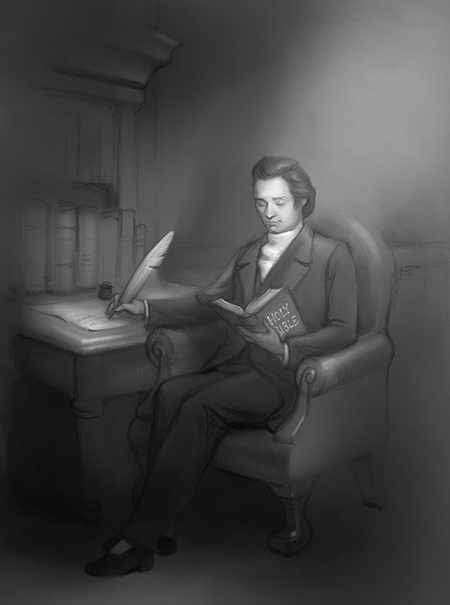
Divine Study
|
Window of Reflection
 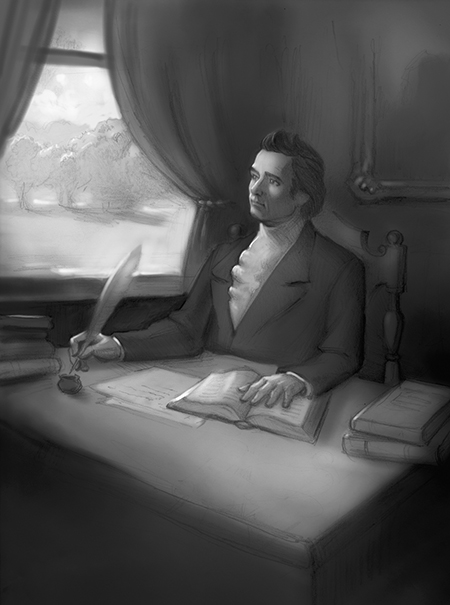
Window of Reflection
|
Enlightening Grace
 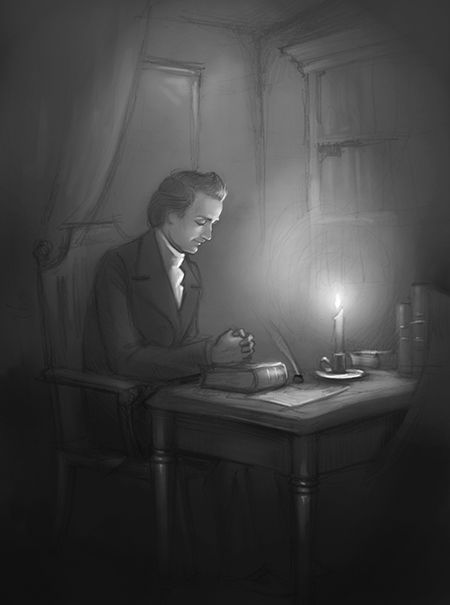
Enlightening Grace
|
164
|
953 |
126
|
1036 |
199
|
1076 |

Of OF, preposition ov. [Gr.] 1. From or out of; proceeding from, as the cause, source, means, author or agent bestowing. I have received of the Lord that which also I delivered to you. 1 Corinthians 11:1. For it was of the Lord to harden their hearts. Joshua 11:1. It is of the Lord's mercies that we are not consumed. Lamentations 3:1. The whole disposing thereof is of the Lord. Proverbs 16:1. Go, inquire of the Lord for me. 2 Chronicles 34:2. That holy thing that shall be born of thee. Luke 1:1. Hence of is the sign of the genitive case, the case that denotes production; as the son of man, the son proceeding from man, produced from man. This is the primary sense, although we now say, produced by man. 'Part of these were slain; ' that is, a number separate, for part denotes a division; the sense then is, a number from or out of the whole were slain. So also, 'some of these were slain; ' that is, some from or out of others. 'I have known him of old, or of a child; ' that is, from old times, from a child. 'He is of the race of kings; ' that is, descended from kings. 'He is of noble blood or birth, or of ignoble origin.' 'No particle of matter, or no body can move of itself; ' that is, by force or strength proceeding from itself, derived from itself. 'The quarrel is not now of fame and tribute, or of wrongs done; ' that is, from fame or wrongs, as the cause, and we may render it concerning, about, relating to. 'Of this little he had some to spare; ' that is, some from the whole. It may be rendered out of 'Of all our heroes thou canst boast alone; ' that is, thou alone from the number of heroes. This may be rendered among. 'The best of men, the most renowned of all; ' that is, the best from the number of men, the most renowned from the whole; denoting primarily separation, like part. 'I was well entertained of the English Consul; ' that is, entertained from the Consul; my entertainment was from the Consul. This use is obsolete, and we use by in lieu of it. 'This does of right belong to us; ' that is, from right, de jure; our title proceeds from right. 'The chariot was all of cedar; ' that is, made from cedar. So we say, made of gold, made of clay; an application corresponding with our modern use of from; manufactured from wool, or from raw materials. Hence we say, cloth consisting of wool. 'This is a scheme of his own devising; ' that is, from his own devising or device. 'If any man minister, let him do it as of the ability which God giveth; ' that is, as from the ability, as the source of action. 'Of happy, he is become miserable; ' that is, from happy; from being happy, he has passed to being miserable. 'Of necessity this must prove ruinous; ' that is, from necessity, as the cause or source. 'Of a hundred take fifty; ' that is, from a hundred, or out of a hundred, from among a hundred. OF sometimes implies a part or share. It is a duty to communicate of those blessings we have received. From is then the primary sense of this preposition; a sense retained in off, the same word differently written for distinction. But this sense is appropriately lost in many of its applications; as a man of genius, a man of courage, a man of rare endowments, a fossil of a red color, or of a hexagonal figure. he lost all hope of relief. This is an affair of the cabinet. He is a man of decayed fortune. What is the price of corn? We say that of in these and similar phrases, denotes property or possession, making of the sign of the genitive or possessive case. These applications, however, all proceeded from the same primary sense. That which proceeds from or is produced by a person, is naturally the property or possession of that person, as the son of John; and this idea of property in the course of time would pass to things not thus produced, but still bearing a relation to another thing. Thus we say, the father of a son, as well as the son of a father. In both senses, other languages also use the same word, as in the French de, de la, and Italian di, dell. of then has one primary sense, from, departing, issuing, proceeding from or out of and a derivative sense denoting possession or property. |

|
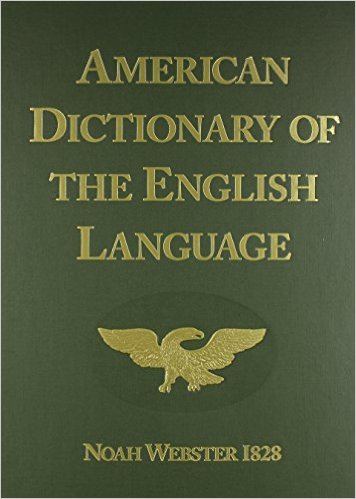
| Hard-cover Edition |
382 |
 |
564 |
|
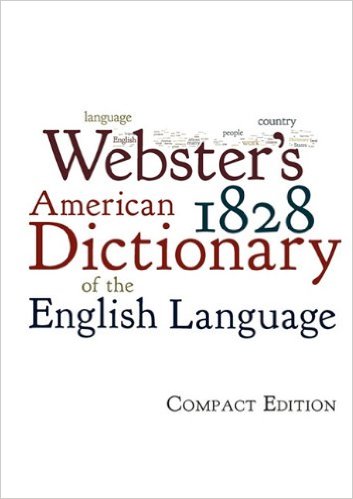
| Compact Edition |
369 |
 |
257 |
|
| CD-ROM |
325 |
 |
202 |
|
* As a note, I have purchased each of these products. In fact, as we have been developing the Project:: 1828 Reprint, I have purchased several of the bulky hard-cover dictionaries. My opinion is that the 2000-page hard-cover edition is the only good viable solution at this time. The compact edition was a bit disappointing and the CD-ROM as well. |
| [ + ] |
| Add Search To Your Site |
|
|
|