|
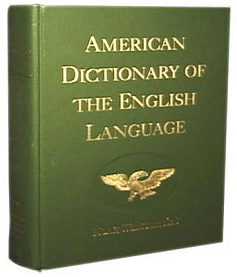
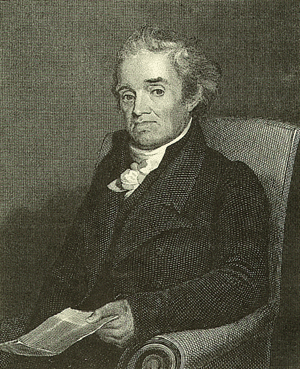
Search, browse, and study this dictionary to learn more about the early American, Christian language. 
1828.mshaffer.com › Word [miss]
MISS, n. 1. The title of a young woman or girl; as little masters and misses.2. A kept mistress; a prostitute retained; a concubine.MISS, v.t. [L. mitto, misi; omitto, omisi.] 1. To fail in aim; to fail of reaching the object; not to hit; as, to miss the mark; to miss the object intended.2. To fail of finding the right way; to err in attempting to find; as, to miss the way or the road.3. To fail of obtaining. Orgalus feared nothing but to miss Parthenia.4. To learn or discover that something is wanting, or not where it was supposed to be; as, to miss one's snuff-box; I missed the first volume of Livy. Neither missed we any thing--. Nothing was missed of all that pertained to him. 1 Sam.25.5. To be without; as, we cannot miss him.6. To omit; to pass by; to go without; to fail to have; as, to miss a meal of victuals. She would never miss one day A walk so fine, a sight so gay.7. To perceive the want of. What by me thou hast lost, thou least shalt miss, He who has a firm sincere friend, may want all the rest without missing them.8. To fail of seeing or finding.MISS, v.i. To fail to hit; to fly wide; to deviate from the true direction. Flying bullets now, To execute his rage, appear too slow; They miss, or sweep but common souls away.1. Not to succeed; to fail. Men observe when things hit, and not when they miss--2. To fail; to miscarry, as by accident. The invention all admired, and each, how he To be the inventor missed.3. To fail to obtain, learn or find; with of. On the least reflection, we can miss of them.4. To fail; to mistake.MISS, n. Loss; want. There will be no great miss of those which are lost.1. Mistake; error. He did without any great miss in the hardest points of grammar. [Little used.]2. Harm from mistake.
|
Evolution (or devolution) of this word [miss]
| 1828 Webster | 1844 Webster | 1913 Webster |
|---|
MISS, n. 1. The title of a young woman or girl; as little masters and misses.2. A kept mistress; a prostitute retained; a concubine.MISS, v.t. [L. mitto, misi; omitto, omisi.] 1. To fail in aim; to fail of reaching the object; not to hit; as, to miss the mark; to miss the object intended.2. To fail of finding the right way; to err in attempting to find; as, to miss the way or the road.3. To fail of obtaining. Orgalus feared nothing but to miss Parthenia.4. To learn or discover that something is wanting, or not where it was supposed to be; as, to miss one's snuff-box; I missed the first volume of Livy. Neither missed we any thing--. Nothing was missed of all that pertained to him. 1 Sam.25.5. To be without; as, we cannot miss him.6. To omit; to pass by; to go without; to fail to have; as, to miss a meal of victuals. She would never miss one day A walk so fine, a sight so gay.7. To perceive the want of. What by me thou hast lost, thou least shalt miss, He who has a firm sincere friend, may want all the rest without missing them.8. To fail of seeing or finding.MISS, v.i. To fail to hit; to fly wide; to deviate from the true direction. Flying bullets now, To execute his rage, appear too slow; They miss, or sweep but common souls away.1. Not to succeed; to fail. Men observe when things hit, and not when they miss--2. To fail; to miscarry, as by accident. The invention all admired, and each, how he To be the inventor missed.3. To fail to obtain, learn or find; with of. On the least reflection, we can miss of them.4. To fail; to mistake.MISS, n. Loss; want. There will be no great miss of those which are lost.1. Mistake; error. He did without any great miss in the hardest points of grammar. [Little used.]2. Harm from mistake. |
MISS, n. [supposed by Bailey to be contracted from mistress. But probably it is from the Armoric mesell, a young lady, or contracted from Fr. demoiselle, Sp. damisola. See Damsel.]- The title of a young woman or girl; as, little masters and misses. Swift.
- A kept mistress; a prostitute retained; a concubine. Dryden.
MISS, n.- Loss; want.
There will be no great miss of these which are lost. Locke.
- Mistake; error.
He did without any great miss in the hardest points of grammar. [Little used.] Ascham.
- Harm from mistake. [Obs.] Spenser.
MISS, v.i.- To fail to hit; to fly wide; to deviate from the true direction.
Flying bullets now, / To execute his rage, appear too slow; / They miss, or sweep but common souls away. Waller.
- Not to succeed; to fail.
Men observe when things hit, and not when they miss. Bacon.
- To fail; to miscarry, as by accident.
The invention all admired, and each, how he / To be the inventor missed. Milton.
- To fail to obtain, learn or find; with of.
On the least reflection, we can not miss of them. Atterbury.
- To fail; to mistake. Spenser.
MISS, v.t. [Sax. missian; D. and G. missen; Sw. mista; Dan. mister; allied perhaps to L. mitto, misi; omitto, omisi. But this is not certain. The Welsh has the word in methu, to fail, to miss, to become abortive, to miscarry, to decay. See Class Md, No. 8, 12, 13, 14, 16. Hence the prefix mis.]- To fail in aim; to fail of reaching the object; not to hit; as, to miss the mark; to miss the object intended.
- To fail of finding the right way; to err in attempting to find; as, to miss the way or the road.
- To fail of obtaining.
Orgalus feared nothing but to miss Parthenia. Sidney.
- To learn or discover that something is wanting, or not where it was supposed to be; as, to miss one's snuff-box; I missed the first volume of Livy.
Neither missed we any thing. Nothing was missed of all that pertained to him. 1 Sam. xxv.
- To be without; as, we can not miss him. [Obs.] Shak.
- To omit; to pass by; to go without; to fail to have; as, to miss a meat of victuals.
She would never miss one day / A walk so line, a sight so gay. Prior.
- To perceive the want of.
What by me thou hast lost, thou least shalt miss. Milton.
He who has a firm sincere friend, may want all the rest,
without missing them. South.
- To fail of seeing or finding.
|
Miss
- A title of courtesy prefixed to the name of a
girl or a woman who has not been married. See Mistress,
5.
- To fail of hitting, reaching, getting,
finding, seeing, hearing, etc.; as, to miss the mark one
shoots at; to miss the train by being late; to miss
opportunites of getting knowledge; to miss the point or
meaning of something said.
- To fail to hit; to fly wide; to deviate from the true
direction.
- The
act of missing; failure to hit, reach, find, obtain, etc.
- A young unmarried woman or a girl; as, she
is a miss of sixteen.
- To omit; to fail to have or to do; to get
without; to dispense with; -- now seldom applied to
persons.
- To fail to obtain, learn, or find; -- with
of.
- Loss; want; felt absence.
- A kept mistress. See Mistress,
4.
- To discover the absence or omission of; to
feel the want of; to mourn the loss of; to want.
- To go wrong; to err.
- Mistake; error; fault.
- In the game of
three-card loo, an extra hand, dealt on the table, which may be
substituted for the hand dealt to a player.
- To be absent, deficient, or wanting.
- Harm from mistake.
|
| 1828 Webster | 1844 Webster | 1913 Webster |
|---|
Thank you for visiting!
- Our goal is to try and improve the quality of the digital form of this dictionary being historically true and accurate to the first American dictionary. Read more ...
- Below you will find three sketches from a talented artist and friend depicting Noah Webster at work. Please tell us what you think.
Divine Study
 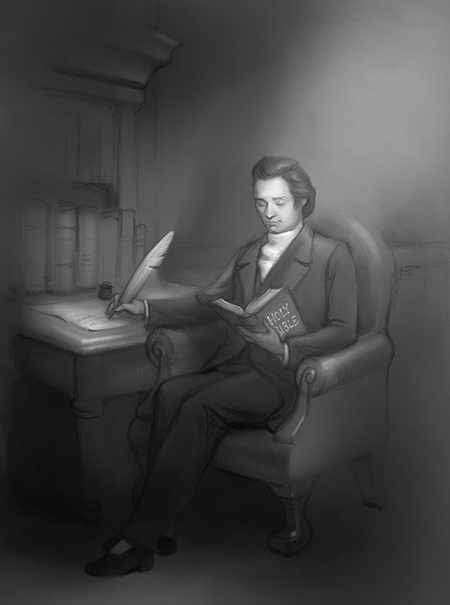
Divine Study
|
Window of Reflection
 
Window of Reflection
|
Enlightening Grace
 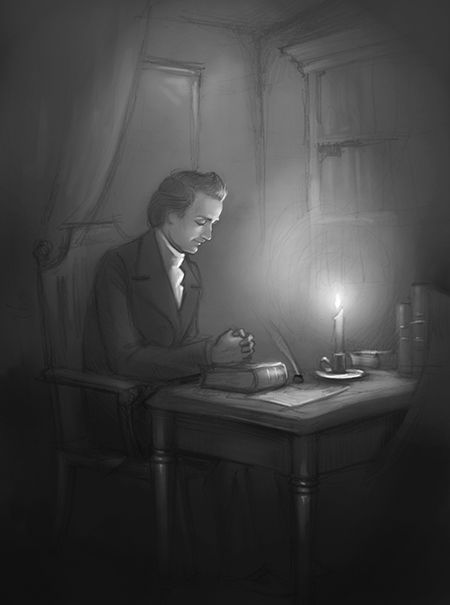
Enlightening Grace
|
164
|
955 |
126
|
1037 |
199
|
1078 |

Miss MISS, noun 1. The title of a young woman or girl; as little masters and misses. 2. A kept mistress; a prostitute retained; a concubine. MISS, verb transitive [Latin mitto, misi; omitto, omisi.] 1. To fail in aim; to fail of reaching the object; not to hit; as, to miss the mark; to miss the object intended. 2. To fail of finding the right way; to err in attempting to find; as, to miss the way or the road. 3. To fail of obtaining. Orgalus feared nothing but to miss Parthenia. 4. To learn or discover that something is wanting, or not where it was supposed to be; as, to miss one's snuff-box; I missed the first volume of Livy. Neither missed we any thing--. Nothing was missed of all that pertained to him. 1 Samuel 25:15. 5. To be without; as, we cannot miss him. 6. To omit; to pass by; to go without; to fail to have; as, to miss a meal of victuals. She would never miss one day A walk so fine, a sight so gay. 7. To perceive the want of. What by me thou hast lost, thou least shalt miss He who has a firm sincere friend, may want all the rest without missing them. 8. To fail of seeing or finding. MISS, verb intransitive To fail to hit; to fly wide; to deviate from the true direction. Flying bullets now, To execute his rage, appear too slow; They miss or sweep but common souls away. 1. Not to succeed; to fail. Men observe when things hit, and not when they miss-- 2. To fail; to miscarry, as by accident. The invention all admired, and each, how he To be the inventor missed. 3. To fail to obtain, learn or find; with of. On the least reflection, we can miss of them. 4. To fail; to mistake. MISS, noun Loss; want. There will be no great miss of those which are lost. 1. Mistake; error. He did without any great miss in the hardest points of grammar. [Little used.] 2. Harm from mistake. |

|
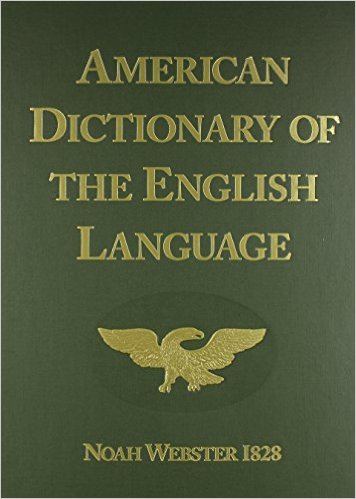
| Hard-cover Edition |
385 |
 |
566 |
|
| Compact Edition |
369 |
 |
259 |
|
| CD-ROM |
326 |
 |
202 |
|
* As a note, I have purchased each of these products. In fact, as we have been developing the Project:: 1828 Reprint, I have purchased several of the bulky hard-cover dictionaries. My opinion is that the 2000-page hard-cover edition is the only good viable solution at this time. The compact edition was a bit disappointing and the CD-ROM as well. |
| [ + ] |
| Add Search To Your Site |
|
|
|