|
Search, browse, and study this dictionary to learn more about the early American, Christian language. 
1828.mshaffer.com › Word [law]
LAW, n. [L. lex; from the root of lay. See lay. A law is that which is laid, set or fixed, like statute, constitution, from L. statuo.] 1. A rule, particularly an established or permanent rule, prescribed by the supreme power of a state to its subjects, for regulating their actions, particularly their social actions. Laws are imperative or mandatory, commanding what shall be done; prohibitory, restraining from what is to be forborn; or permissive, declaring what may be done without incurring a penalty. The laws which enjoin the duties of piety and morality, are prescribed by God and found in the Scriptures.Law is beneficence acting by rule.2. Municipal law, is a rule of civil conduct prescribed by the supreme power of a state, commanding what its subjects are to do, and prohibiting what they are to forbear; a statute.Municipal or civil laws are established by the decrees, edicts or ordinances of absolute princes, as emperors and kings, or by the formal acts of the legislatures of free states. Law therefore is sometimes equivalent to decree, edict, or ordinance.3. Law of nature, is a rule of conduct arising out of the natural relations of human beings established by the Creator, and existing prior to any positive precept. Thus it is a law of nature, that one man should not injure another, and murder and fraud would be crimes, independent of any prohibition from a supreme power.4. Laws of animal nature, the inherent principles by which the economy and functions of animal bodies are performed, such as respiration, the circulation of the blood, digestion, nutrition, various secretions, &c.5. Laws of vegetation, the principles by which plats are produced, and their growth carried on till they arrive to perfection.6. Physical laws, or laws of nature. The invariable tendency or determination of any species of matter to a particular form with definite properties, and the determination of a body to certain motions, changes, and relations, which uniformly take place in the same circumstances, is called a physical law. These tendencies or determinations, whether called laws or affections of matter, have been established by the Creator, and are, with a peculiar felicity of expression, denominated in Scripture, ordinances of heaven.7. Laws of nations, the rules that regulate the mutual intercourse of nations or states. These rules depend on natural law, or the principles of justice which spring from the social state; or they are founded on customs, compacts, treaties, leagues and agreements between independent communities.By the law of nations, we are to understand that code of public instruction, which defines the rights and prescribes the duties of nations, in their intercourse with each other.8. Moral law, a law which prescribes to men their religious and social duties, in other words, their duties to God and to each other. The moral law is summarily contained in the decalogue or ten commandments, written by the finger of God on two tables of stone, and delivered to Moses on mount Sinai. Ex. 20. 9. Ecclesiastical law, a rule of action prescribed for the government of a church; otherwise called canon law.10. Written law, a law or rule of action prescribed or enacted by a sovereign, and promulgated and recorded in writing; a written statute, ordinance, edict or decree.11. Unwritten or common law, a rule of action which derives its authority from long usage, or established custom, which has been immemorially received and recognized by judicial tribunals. As this law can be traced to no positive statutes, its rules or principles are to be found only in the records of courts, and in the reports of judicial decisions.12. By-law, a law of a city, town or private corporation. [See By.]13. Mosaic law, the institutions of Moses, or the code of laws prescribed to the Jews, as distinguished from the gospel.14. Ceremonial law, the Mosaic institutions which prescribe the external rites and ceremonies to be observed by the Jews, as distinct from the moral precepts, which are of perpetual obligation.15. A rule of direction; a directory; as reason and natural conscience.These, having not the law, as a law to themselves. Rom. 2.16. That which governs or has a tendency to rule; that which has the power of controlling.But I see another law in my members warring against the law of my mind, and bringing me into captivity to the law of sin which is in my members. Romans 7.17. The word of God; the doctrines and precepts of God, or his revealed will.But his delight is in the law of the Lord, and in his law doth he meditate day and night. Ps. 1.18. The Old Testament.Is it not written in your law, I said, ye are gods? John 10.19. The institutions of Moses, as distinct from the other parts of the Old Testament; as the law and the prophets.20. A rule or axiom of science or art; settled principle; as the laws of versification or poetry.21. Law martial, or martial law, the rules ordained for the government of an army or military force.22. Marine laws, rules for the regulation of navigation, and the commercial intercourse of nations.23. Commercial law, law-merchant, the system of rules by which trade and commercial intercourse are regulated between merchants.24. Judicial process; prosecution of right in courts of law.Tom Touchy is a fellow famous for taking the law of every body.Hence the phrase, to go to law, to prosecute; to seek redress in a legal tribunal.25. Jurisprudence; as in the title, Doctor of Laws.26. In general, law is a rule of action prescribed for the government of rational beings or moral agents, to which rule they are bound to yield obedience, in default of which they are exposed to punishment; or law is a settled mode or course of action or operation in irrational beings and in inanimate bodies.Civil law, criminal law. [See Civil and Criminal.]Laws of honor. [See Honor.]Law language, the language used in legal writings and forms, particularly the Norman dialect or Old French, which was used in judicial proceedings from the days of William the conqueror to the 36th year of Edward III.Wager of law, a species of trial formerly used in England, in which the defendant gave security that he would, on a certain day, make his law, that is, he would make oath that he owed nothing to the plaintiff, and would produce eleven of his neighbors as compurgators, who should swear that they believed in their consciences that he had sworn the truth.
|
Evolution (or devolution) of this word [law]
| 1828 Webster | 1844 Webster | 1913 Webster |
|---|
LAW, n. [L. lex; from the root of lay. See lay. A law is that which is laid, set or fixed, like statute, constitution, from L. statuo.] 1. A rule, particularly an established or permanent rule, prescribed by the supreme power of a state to its subjects, for regulating their actions, particularly their social actions. Laws are imperative or mandatory, commanding what shall be done; prohibitory, restraining from what is to be forborn; or permissive, declaring what may be done without incurring a penalty. The laws which enjoin the duties of piety and morality, are prescribed by God and found in the Scriptures.Law is beneficence acting by rule.2. Municipal law, is a rule of civil conduct prescribed by the supreme power of a state, commanding what its subjects are to do, and prohibiting what they are to forbear; a statute.Municipal or civil laws are established by the decrees, edicts or ordinances of absolute princes, as emperors and kings, or by the formal acts of the legislatures of free states. Law therefore is sometimes equivalent to decree, edict, or ordinance.3. Law of nature, is a rule of conduct arising out of the natural relations of human beings established by the Creator, and existing prior to any positive precept. Thus it is a law of nature, that one man should not injure another, and murder and fraud would be crimes, independent of any prohibition from a supreme power.4. Laws of animal nature, the inherent principles by which the economy and functions of animal bodies are performed, such as respiration, the circulation of the blood, digestion, nutrition, various secretions, &c.5. Laws of vegetation, the principles by which plats are produced, and their growth carried on till they arrive to perfection.6. Physical laws, or laws of nature. The invariable tendency or determination of any species of matter to a particular form with definite properties, and the determination of a body to certain motions, changes, and relations, which uniformly take place in the same circumstances, is called a physical law. These tendencies or determinations, whether called laws or affections of matter, have been established by the Creator, and are, with a peculiar felicity of expression, denominated in Scripture, ordinances of heaven.7. Laws of nations, the rules that regulate the mutual intercourse of nations or states. These rules depend on natural law, or the principles of justice which spring from the social state; or they are founded on customs, compacts, treaties, leagues and agreements between independent communities.By the law of nations, we are to understand that code of public instruction, which defines the rights and prescribes the duties of nations, in their intercourse with each other.8. Moral law, a law which prescribes to men their religious and social duties, in other words, their duties to God and to each other. The moral law is summarily contained in the decalogue or ten commandments, written by the finger of God on two tables of stone, and delivered to Moses on mount Sinai. Ex. 20. 9. Ecclesiastical law, a rule of action prescribed for the government of a church; otherwise called canon law.10. Written law, a law or rule of action prescribed or enacted by a sovereign, and promulgated and recorded in writing; a written statute, ordinance, edict or decree.11. Unwritten or common law, a rule of action which derives its authority from long usage, or established custom, which has been immemorially received and recognized by judicial tribunals. As this law can be traced to no positive statutes, its rules or principles are to be found only in the records of courts, and in the reports of judicial decisions.12. By-law, a law of a city, town or private corporation. [See By.]13. Mosaic law, the institutions of Moses, or the code of laws prescribed to the Jews, as distinguished from the gospel.14. Ceremonial law, the Mosaic institutions which prescribe the external rites and ceremonies to be observed by the Jews, as distinct from the moral precepts, which are of perpetual obligation.15. A rule of direction; a directory; as reason and natural conscience.These, having not the law, as a law to themselves. Rom. 2.16. That which governs or has a tendency to rule; that which has the power of controlling.But I see another law in my members warring against the law of my mind, and bringing me into captivity to the law of sin which is in my members. Romans 7.17. The word of God; the doctrines and precepts of God, or his revealed will.But his delight is in the law of the Lord, and in his law doth he meditate day and night. Ps. 1.18. The Old Testament.Is it not written in your law, I said, ye are gods? John 10.19. The institutions of Moses, as distinct from the other parts of the Old Testament; as the law and the prophets.20. A rule or axiom of science or art; settled principle; as the laws of versification or poetry.21. Law martial, or martial law, the rules ordained for the government of an army or military force.22. Marine laws, rules for the regulation of navigation, and the commercial intercourse of nations.23. Commercial law, law-merchant, the system of rules by which trade and commercial intercourse are regulated between merchants.24. Judicial process; prosecution of right in courts of law.Tom Touchy is a fellow famous for taking the law of every body.Hence the phrase, to go to law, to prosecute; to seek redress in a legal tribunal.25. Jurisprudence; as in the title, Doctor of Laws.26. In general, law is a rule of action prescribed for the government of rational beings or moral agents, to which rule they are bound to yield obedience, in default of which they are exposed to punishment; or law is a settled mode or course of action or operation in irrational beings and in inanimate bodies.Civil law, criminal law. [See Civil and Criminal.]Laws of honor. [See Honor.]Law language, the language used in legal writings and forms, particularly the Norman dialect or Old French, which was used in judicial proceedings from the days of William the conqueror to the 36th year of Edward III.Wager of law, a species of trial formerly used in England, in which the defendant gave security that he would, on a certain day, make his law, that is, he would make oath that he owed nothing to the plaintiff, and would produce eleven of his neighbors as compurgators, who should swear that they believed in their consciences that he had sworn the truth. |
LAW, n. [Sax. laga, lage, lag, or lah; Sw. lag; Dan. lov; It. legge; Sp. ley; Fr. loi; L. lex; from the root of lay, Sax. lecgan, Goth. lagyan. See Lay. A law is that which is laid, set or fixed, like statute, constitution, from L. statuo.]- A rule, particularly an established or permanent rule, prescribed by the supreme power of a state to its subjects, for regulating their actions, particularly their social actions. Laws are imperative or mandatory, commanding what shall be done; prohibitory, restraining from what is to be forborne or permissive, declaring what may be done without incurring a penalty. The laws which enjoin the duties of piety and morality, are prescribed by God and found in the Scriptures.
Law is beneficence acting by rule. – Burke.
- Municipal law, is a rule of civil conduct prescribed by the supreme power of a state, commanding what its subjects are to do, and prohibiting what they are to forbear; a statute.
Municipal or civil laws are established by the decrees, edicts or ordinances of absolute princes, as emperors and kings, or by the formal acts of the legislatures of free states. Law therefore is sometimes equivalent to decree, edict, or ordinance.
- Law of nature, is a rule of conduct arising out of the natural relations of human beings established by the Creator, and existing prior to any positive precept. Thus it is a law of nature, that one man should not injure another, and murder and fraud would be crimes, independent of why prohibition from a supreme power.
- Laws of animal nature, the inherent principles by which the economy and functions of animal bodies are performed such as respiration, the circulation of the blood, digestion, nutrition, various secretions, &c.
- Laws of vegetation, the principles by which plants are produced, and their growth carried on till they arrive to perfection.
- Physical laws, or laws of nature. The invariable tendency or determination of any species of matter to a particular form with definite properties, and the determination of a body to certain motions, changes, and relations, which uniformly take place in the same circumstances, is called a physical law. These tendencies or determinations, whether called laws or affections of matter, have been established by the Creator, and are, with a peculiar felicity of expression, denominated in Scripture, ordinances of heaven.
- Laws of nations, the rules that regulate the mutual intercourse of nations or states. These rules depend on natural law, or the principles of justice which spring from the social state; or they are founded on customs, compacts, treaties, leagues and agreements between independent communities.
By the law of nations, we are to understand that code of public instruction, which defines the rights and prescribes the duties of nations, in their intercourse with each other. Kent.
- Moral law, a law which prescribes to men their religious and social duties, in other words, their duties to God and to each other. The moral law is summarily contained in the decalogue or ten commandments, written by the finger of God on two tables of stone, and delivered to Moses on mount Sinai. Ex. xx.
- Ecclesiastical law, a rule of action prescribed for the government of a church; otherwise called canon law.
- Written law, a law or rule of action prescribed or enacted by a sovereign, and promulgated and recorded in writing; a written statute, ordinance, edict or decree.
- Unwritten or common law, a rule of action which derives its authority from long usage, or established custom, which has been immemorially received and recognized by judicial tribunals. As this law can be traced to no positive statutes, its rules or principles are to be found only in the records of courts, and in the reports of judicial decisions.
- By-law, a law of a city, town or private corporation. [See By.]
- Mosaic law, the institutions of Moses, or the code of laws prescribed to the Jews, as distinguished from the Gospel.
- Ceremonial law, the Mosaic institutions which prescribe the external rites and ceremonies to be observed by the Jews, as distinct from the moral precepts, which are of perpetual obligation.
- A rule of direction; a directory; as reason and natural conscience.
These, having not the law, are a law to themselves. – Rom. ii.
- That which governs or has a tendency to rule; that which has the power of controlling.
But I see another law in my members warring against the law of my mind, and bringing me into captivity to the law of sin which is in my members. – Rom. vii.
- The word of God; the doctrines and precepts of God, or, his revealed will.
But his delight is in the law of the Lord, and in his law doth he meditate day and night. – Ps. i.
- The Old Testament.
Is it not written in your law, I said, ye are gods? – John x.
- The institutions of Moses, as distinct from the other parts of the Old Testament; as, the law and the prophets.
- A rule or axiom of science or art; settled principle; as, the laws of versification or poetry.
- Law martial, or martial law, the rules ordained for the government of an army or military force.
- Marine laws, rules for the regulation of navigation, and the commercial intercourse of nations.
- Commercial law, law-merchant, the system of rules by which trade and commercial intercourse are regulated between merchants.
- Judicial process; prosecution of right in courts of law.
Tom Touchy is a fellow famous for taking the law of every body. – Spectator.
hence the phrase, to go to law, to prosecute; to seek redress in a legal tribunal.
- Jurisprudence; as in the title, Doctor of Laws.
- In general, law is a rule of action prescribed for the government of rational beings or moral agents, to which rule they are bound to yield obedience, in default of which they are exposed to punishment; or law is a certain inherent instinctive propension of irrational animals to particular actions; or an invariable determination or tendency of inanimate bodies to certain motions, combinations and forms.
Law is not a series of actions, but the cause or principle from which they proceed, and of which they are evidence.
Civil law, Criminal law. [See Civil and Criminal.]
Laws of honor. [See Honor.]
Law language, the language used in legal writings and forms, particularly the Norman dialect or Old French, which was used in judicial proceedings from the days of William the Conqueror to the 36th year of Edward III.
Wager of law, a species of trial formerly used in England, in which the defendant gave security that he would, on certain day, make his law, that is, he would make oath that he owed nothing to the plaintif, and would produce eleven of his neighbors as compurgators, who should swear that they believed in their consciences that he had sworn the truth. – Blackstone.
|
Law
- In general, a rule of being or of conduct,
established by an authority able to enforce its will; a controlling
regulation; the mode or order according to which an agent or a power
acts.
- Same as
Lawe, v. t.
- An
exclamation of mild surprise.
- In morals: The will of God as the rule for
the disposition and conduct of all responsible beings toward him and
toward each other; a rule of living, conformable to righteousness;
the rule of action as obligatory on the conscience or moral
nature.
- The Jewish or Mosaic code, and that part
of Scripture where it is written, in distinction from the
gospel; hence, also, the Old Testament.
- An organic rule, as a constitution or charter, establishing and
defining the conditions of the existence of a state or other
organized community.
|
| 1828 Webster | 1844 Webster | 1913 Webster |
|---|
Thank you for visiting!
- Our goal is to try and improve the quality of the digital form of this dictionary being historically true and accurate to the first American dictionary. Read more ...
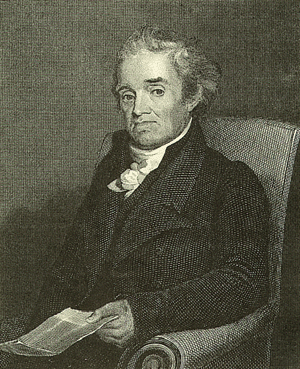
- Below you will find three sketches from a talented artist and friend depicting Noah Webster at work. Please tell us what you think.
Divine Study
 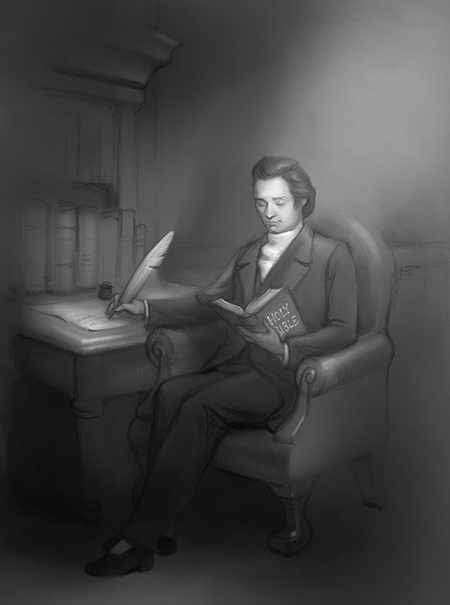
Divine Study
|
Window of Reflection
 
Window of Reflection
|
Enlightening Grace
 
Enlightening Grace
|
164
|
952 |
126
|
1036 |
199
|
1075 |

Law LAW, noun [Latin lex; from the root of lay. See lay. A law is that which is laid, set or fixed, like statute, constitution, from Latin statuo.] 1. A rule, particularly an established or permanent rule, prescribed by the supreme power of a state to its subjects, for regulating their actions, particularly their social actions. Laws are imperative or mandatory, commanding what shall be done; prohibitory, restraining from what is to be forborn; or permissive, declaring what may be done without incurring a penalty. The laws which enjoin the duties of piety and morality, are prescribed by God and found in the Scriptures. LAW is beneficence acting by rule. 2. Municipal law is a rule of civil conduct prescribed by the supreme power of a state, commanding what its subjects are to do, and prohibiting what they are to forbear; a statute. Municipal or civil laws are established by the decrees, edicts or ordinances of absolute princes, as emperors and kings, or by the formal acts of the legislatures of free states. law therefore is sometimes equivalent to decree, edict, or ordinance. 3. law of nature, is a rule of conduct arising out of the natural relations of human beings established by the Creator, and existing prior to any positive precept. Thus it is a law of nature, that one man should not injure another, and murder and fraud would be crimes, independent of any prohibition from a supreme power. 4. Laws of animal nature, the inherent principles by which the economy and functions of animal bodies are performed, such as respiration, the circulation of the blood, digestion, nutrition, various secretions, etc. 5. Laws of vegetation, the principles by which plats are produced, and their growth carried on till they arrive to perfection. 6. Physical laws, or laws of nature. The invariable tendency or determination of any species of matter to a particular form with definite properties, and the determination of a body to certain motions, changes, and relations, which uniformly take place in the same circumstances, is called a physical law These tendencies or determinations, whether called laws or affections of matter, have been established by the Creator, and are, with a peculiar felicity of expression, denominated in Scripture, ordinances of heaven. 7. Laws of nations, the rules that regulate the mutual intercourse of nations or states. These rules depend on natural law or the principles of justice which spring from the social state; or they are founded on customs, compacts, treaties, leagues and agreements between independent communities. By the law of nations, we are to understand that code of public instruction, which defines the rights and prescribes the duties of nations, in their intercourse with each other. 8. Moral law a law which prescribes to men their religious and social duties, in other words, their duties to God and to each other. The moral law is summarily contained in the decalogue or ten commandments, written by the finger of God on two tables of stone, and delivered to Moses on mount Sinai. Exodus 20:1. 9. Ecclesiastical law a rule of action prescribed for the government of a church; otherwise called canon law 10. Written law a law or rule of action prescribed or enacted by a sovereign, and promulgated and recorded in writing; a written statute, ordinance, edict or decree. 11. Unwritten or common law a rule of action which derives its authority from long usage, or established custom, which has been immemorially received and recognized by judicial tribunals. As this law can be traced to no positive statutes, its rules or principles are to be found only in the records of courts, and in the reports of judicial decisions. 12. By-law, a law of a city, town or private corporation. [See By.] 13. Mosaic law the institutions of Moses, or the code of laws prescribed to the Jews, as distinguished from the gospel. 14. Ceremonial law the Mosaic institutions which prescribe the external rites and ceremonies to be observed by the Jews, as distinct from the moral precepts, which are of perpetual obligation. 15. A rule of direction; a directory; as reason and natural conscience. These, having not the law as a law to themselves. Romans 2:12. 16. That which governs or has a tendency to rule; that which has the power of controlling. But I see another law in my members warring against the law of my mind, and bringing me into captivity to the law of sin which is in my members. Romans 7:1. 17. The word of God; the doctrines and precepts of God, or his revealed will. But his delight is in the law of the Lord, and in his law doth he meditate day and night. Psalms 1:2. 18. The Old Testament. Is it not written in your law I said, ye are gods? John 10:34. 19. The institutions of Moses, as distinct from the other parts of the Old Testament; as the law and the prophets. 20. A rule or axiom of science or art; settled principle; as the laws of versification or poetry. 21. law martial, or martial law the rules ordained for the government of an army or military force. 22. Marine laws, rules for the regulation of navigation, and the commercial intercourse of nations. 23. Commercial law law-merchant, the system of rules by which trade and commercial intercourse are regulated between merchants. 24. Judicial process; prosecution of right in courts of law Tom Touchy is a fellow famous for taking the law of every body. Hence the phrase, to go to law to prosecute; to seek redress in a legal tribunal. 25. Jurisprudence; as in the title, Doctor of Laws. 26. In general, law is a rule of action prescribed for the government of rational beings or moral agents, to which rule they are bound to yield obedience, in default of which they are exposed to punishment; or law is a settled mode or course of action or operation in irrational beings and in inanimate bodies. Civil law criminal law [See Civil and Criminal.] LAWs of honor. [See Honor.] LAW language, the language used in legal writings and forms, particularly the Norman dialect or Old French, which was used in judicial proceedings from the days of William the conqueror to the 36th year of Edward III. Wager of law a species of trial formerly used in England, in which the defendant gave security that he would, on a certain day, make his law that is, he would make oath that he owed nothing to the plaintiff, and would produce eleven of his neighbors as compurgators, who should swear that they believed in their consciences that he had sworn the truth. LAW'-BREAKER, noun One who violates the law |

|
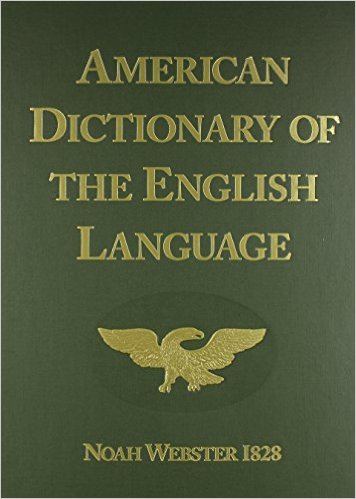
| Hard-cover Edition |
382 |
 |
564 |
|
| Compact Edition |
369 |
 |
257 |
|
| CD-ROM |
325 |
 |
202 |
|
* As a note, I have purchased each of these products. In fact, as we have been developing the Project:: 1828 Reprint, I have purchased several of the bulky hard-cover dictionaries. My opinion is that the 2000-page hard-cover edition is the only good viable solution at this time. The compact edition was a bit disappointing and the CD-ROM as well. |
| [ + ] |
| Add Search To Your Site |
|
|
|



 tr, L. frater, E. brother, G.
bruder; L. tres, E. three, G. drei, Skr.
go, E. cow, G. kuh; Skr. dh
tr, L. frater, E. brother, G.
bruder; L. tres, E. three, G. drei, Skr.
go, E. cow, G. kuh; Skr. dh