|
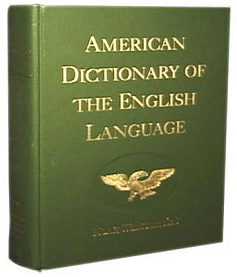
Search, browse, and study this dictionary to learn more about the early American, Christian language. 
1828.mshaffer.com › Word [influence]
IN'FLUENCE, n. [L. influens, influo, to flow in; in and fluo, to flow.] Literally, a flowing in, into or on, and referring to substances spiritual or too subtil to be visible, like inspiration. Hence the word was formerly followed by into. God hath his influence into the very essence of all things.It is not followed by on or with. 1. In a general sense, influence denotes power whose operation is invisible and known only by its effects, or a power whose cause and operation are unseen.2. The power which celestial bodies are supposed to exert on terrestrial; as the influence of the planets on the birth and fortunes of men; an exploded doctrine of astrology.3. Moral power; power of truth operating on the mind, rational faculties or will, in persuading or dissuading, as the influence of motives, of arguments,or of prayer. We say, arguments had no influence on the jury. The magistrate is not popular; he has no influence with the people; or he has great influence with the prince.4. Physical power; power that affects natural bodies by unseen operation; as, the rays of the sun have an influence in whitening cloth, and in giving a green color to vegetables.5. Power acting on sensibility; as the influence of love or pity in sympathy.6. Spiritual power, or the immediate power of God on the mind; as divine influence; the influences of the Holy Spirit.IN'FLUENCE, v.t. To move by physical power operating by unseen laws or force; to affect. These experiments succeed after the same manner in vacuo, as in the open air, and therefore are not influenced by the weight or pressure of the atmosphere.1. To move by moral power; to act on and affect, as the mind or will, in persuading or dissuading; to induce. Men are influenced by motives of interest or pleasure. An orator may influence the people to take arms, or to abandon an enterprise.2. To move, as the passions, as, to influence one by pity.3. To lead or direct. This revelation is sufficient to influence our faith and practice.
|
Evolution (or devolution) of this word [influence]
| 1828 Webster | 1844 Webster | 1913 Webster |
|---|
IN'FLUENCE, n. [L. influens, influo, to flow in; in and fluo, to flow.] Literally, a flowing in, into or on, and referring to substances spiritual or too subtil to be visible, like inspiration. Hence the word was formerly followed by into. God hath his influence into the very essence of all things.It is not followed by on or with. 1. In a general sense, influence denotes power whose operation is invisible and known only by its effects, or a power whose cause and operation are unseen.2. The power which celestial bodies are supposed to exert on terrestrial; as the influence of the planets on the birth and fortunes of men; an exploded doctrine of astrology.3. Moral power; power of truth operating on the mind, rational faculties or will, in persuading or dissuading, as the influence of motives, of arguments,or of prayer. We say, arguments had no influence on the jury. The magistrate is not popular; he has no influence with the people; or he has great influence with the prince.4. Physical power; power that affects natural bodies by unseen operation; as, the rays of the sun have an influence in whitening cloth, and in giving a green color to vegetables.5. Power acting on sensibility; as the influence of love or pity in sympathy.6. Spiritual power, or the immediate power of God on the mind; as divine influence; the influences of the Holy Spirit.IN'FLUENCE, v.t. To move by physical power operating by unseen laws or force; to affect. These experiments succeed after the same manner in vacuo, as in the open air, and therefore are not influenced by the weight or pressure of the atmosphere.1. To move by moral power; to act on and affect, as the mind or will, in persuading or dissuading; to induce. Men are influenced by motives of interest or pleasure. An orator may influence the people to take arms, or to abandon an enterprise.2. To move, as the passions, as, to influence one by pity.3. To lead or direct. This revelation is sufficient to influence our faith and practice. |
IN'FLU-ENCE, n. [Fr. from L. influens, influo, to flow in; in and fluo, to flow; Sp. influencia; It. influenza.]- Literally, a flowing in, into or on, and referring to substances spiritual or too subtil to be visible, like inspiration. Hence the word was formerly followed by into.
God hath his influence into the very essence of all things. – Hooker. It is now followed by on or with.
- In a general sense, influence denotes power whose operation is invisible and known only by its effects, or a power whose cause and operation are unseen.
- The power which celestial bodies are supposed to exert on terrestrial; as, the influence of the planets on the birth and fortunes of men; an exploded doctrine of astrology.
- Moral power; power of truth operating on the mind, rational faculties or will, in persuading or dissuading; as, the influence of motives, of arguments, or of prayer. We say, arguments had no influence on the jury. The magistrate is not popular; he has no influence with the people; or he has great influence with the prince.
- Physical power; power that affects natural bodies by unseen operation; as, the rays of the sun have an influence in whitening cloth, and in giving a green color to vegetables.
- Power acting on sensibility; as, the influence of love or pity in sympathy.
- Spiritual power, or the immediate power of God on the mind; as, divine influence; the influences of the Holy Spirit.
IN'FLU-ENCE, v.t.- To move by physical power operating by unseen laws or force; to affect.
These experiments succeed after the same manner in vacuo, as in the open air, and therefore are not influenced by the weight or pressure of the atmosphere. Newton.
- To move by moral power; to act on and affect, as the mind or will, in persuading or dissuading; to induce. Men are influenced by motives of interest or pleasure. An orator may influence the people to take arms, or to abandon an enterprise.
- To move, as the passions; as, to influence one by pity.
- To lead or direct. This revelation is sufficient to influence our faith and practice.
|
In"flu*ence
- A flowing in or upon; influx.
- To control or move by power, physical
or moral] to affect by gentle action; to exert an influence upon; to
modify, bias, or sway; to move; to persuade; to induce.
- Hence, in general, the bringing about of
an effect, physical or moral, by a gradual process; controlling power
quietly exerted; agency, force, or tendency of any kind which
affects, modifies, or sways; as, the influence which the sun
exerts on animal and vegetable life; the influence of
education on the mind; the influence, according to
astrologers, of the stars over affairs.
- Power or authority arising from elevated
station, excelence of character or intellect, wealth, etc.;
reputation; acknowledged ascendency; as, he is a man of
influence in the community.
- Induction.
|
| 1828 Webster | 1844 Webster | 1913 Webster |
|---|
Thank you for visiting!
- Our goal is to try and improve the quality of the digital form of this dictionary being historically true and accurate to the first American dictionary. Read more ...
- Below you will find three sketches from a talented artist and friend depicting Noah Webster at work. Please tell us what you think.
Divine Study
 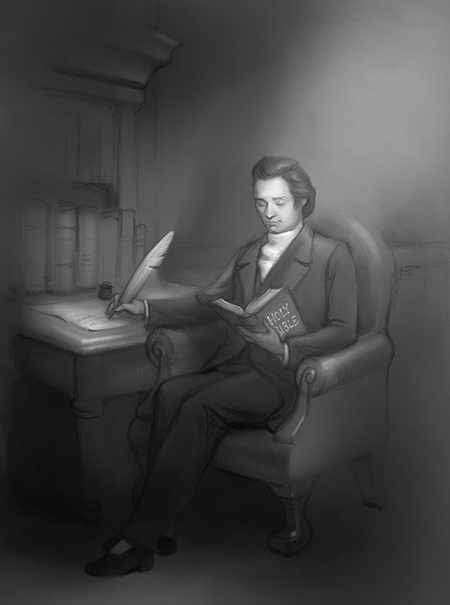
Divine Study
|
Window of Reflection
 
Window of Reflection
|
Enlightening Grace
 
Enlightening Grace
|
164
|
953 |
126
|
1036 |
199
|
1076 |

Influence IN'FLUENCE, noun [Latin influens, influo, to flow in; in and fluo, to flow.] Literally, a flowing in, into or on, and referring to substances spiritual or too subtil to be visible, like inspiration. Hence the word was formerly followed by into. God hath his influence into the very essence of all things. It is not followed by on or with. 1. In a general sense, influence denotes power whose operation is invisible and known only by its effects, or a power whose cause and operation are unseen. 2. The power which celestial bodies are supposed to exert on terrestrial; as the influence of the planets on the birth and fortunes of men; an exploded doctrine of astrology. 3. Moral power; power of truth operating on the mind, rational faculties or will, in persuading or dissuading, as the influence of motives, of arguments, or of prayer. We say, arguments had no influence on the jury. The magistrate is not popular; he has no influence with the people; or he has great influence with the prince. 4. Physical power; power that affects natural bodies by unseen operation; as, the rays of the sun have an influence in whitening cloth, and in giving a green color to vegetables. 5. Power acting on sensibility; as the influence of love or pity in sympathy. 6. Spiritual power, or the immediate power of God on the mind; as divine influence; the influences of the Holy Spirit. IN'FLUENCE, verb transitive To move by physical power operating by unseen laws or force; to affect. These experiments succeed after the same manner in vacuo, as in the open air, and therefore are not influenced by the weight or pressure of the atmosphere. 1. To move by moral power; to act on and affect, as the mind or will, in persuading or dissuading; to induce. Men are influenced by motives of interest or pleasure. An orator may influence the people to take arms, or to abandon an enterprise. 2. To move, as the passions, as, to influence one by pity. 3. To lead or direct. This revelation is sufficient to influence our faith and practice. |

|
| Hard-cover Edition |
384 |
 |
565 |
|
| Compact Edition |
369 |
 |
259 |
|
| CD-ROM |
326 |
 |
202 |
|
* As a note, I have purchased each of these products. In fact, as we have been developing the Project:: 1828 Reprint, I have purchased several of the bulky hard-cover dictionaries. My opinion is that the 2000-page hard-cover edition is the only good viable solution at this time. The compact edition was a bit disappointing and the CD-ROM as well. |
| [ + ] |
| Add Search To Your Site |
|
|
|