|
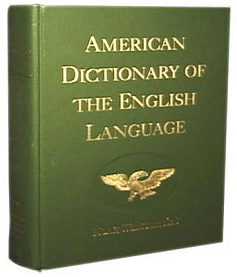
Search, browse, and study this dictionary to learn more about the early American, Christian language. 
1828.mshaffer.com › Word [fee]
FEE, n. [L. pecu, pecus. From the use of cattle in transferring property, or from barter and payments in cattle, the word came to signify money; it signified also goods, substance in general. The word belongs to Class Bg, but the primary sense is not obvious.] A reward or compensation for services; recompense, either gratuitous, or established by law and claimed of right. It is applied particularly to the reward of professional services; as the fees of lawyers and physicians; the fees of office; clerk's fees; sheriff's fees; marriage fees, &c. Many of these are fixed by law; but gratuities to professional men are also called fees.FEE, n. [In English, is loan. This word, fee, inland, or an estate in trust, originated among the descendants of the northern conquerors of Italy, but it originated in the south of Europe. See Feud.] Primarily, a loan of land, an estate in trust, granted by a prince or lord, to be held by the grantee on condition of personal service, or other condition; and if the grantee or tenant failed to perform the conditions, the land reverted to the lord or donor, called the landlord, or lend-lord, the lord of the loan. A fee then is any land or tenement held of a superior on certain conditions. It is synonymous with fief and feud. All the land in England, except the crown land, is of this kind. Fees are absolute or limited. An absolute fee or fee-simple is land which a man holds to himself and his heirs forever, who are called tenants in fee simple. Hence in modern times, the term fee or fee simple denotes an estate of inheritance; and in America, where lands are not generally held of a superior, a fee or fee simple is an estate in which the owner has the whole property without any condition annexed to the tenure. A limited fee is an estate limited or clogged with certain conditions; as a qualified or base fee, which ceases with the existence of certain conditions; and a conditional fee, which is limited to particular heirs.In the United States, an estate in fee or fee simple is what is called in English law an allodial estate, an estate held by a person in his own right, and descendible to the heirs in general.
|
Evolution (or devolution) of this word [fee]
| 1828 Webster | 1844 Webster | 1913 Webster |
|---|
FEE, n. [L. pecu, pecus. From the use of cattle in transferring property, or from barter and payments in cattle, the word came to signify money; it signified also goods, substance in general. The word belongs to Class Bg, but the primary sense is not obvious.] A reward or compensation for services; recompense, either gratuitous, or established by law and claimed of right. It is applied particularly to the reward of professional services; as the fees of lawyers and physicians; the fees of office; clerk's fees; sheriff's fees; marriage fees, &c. Many of these are fixed by law; but gratuities to professional men are also called fees.FEE, n. [In English, is loan. This word, fee, inland, or an estate in trust, originated among the descendants of the northern conquerors of Italy, but it originated in the south of Europe. See Feud.] Primarily, a loan of land, an estate in trust, granted by a prince or lord, to be held by the grantee on condition of personal service, or other condition; and if the grantee or tenant failed to perform the conditions, the land reverted to the lord or donor, called the landlord, or lend-lord, the lord of the loan. A fee then is any land or tenement held of a superior on certain conditions. It is synonymous with fief and feud. All the land in England, except the crown land, is of this kind. Fees are absolute or limited. An absolute fee or fee-simple is land which a man holds to himself and his heirs forever, who are called tenants in fee simple. Hence in modern times, the term fee or fee simple denotes an estate of inheritance; and in America, where lands are not generally held of a superior, a fee or fee simple is an estate in which the owner has the whole property without any condition annexed to the tenure. A limited fee is an estate limited or clogged with certain conditions; as a qualified or base fee, which ceases with the existence of certain conditions; and a conditional fee, which is limited to particular heirs.In the United States, an estate in fee or fee simple is what is called in English law an allodial estate, an estate held by a person in his own right, and descendible to the heirs in general. |
FEE, n.1 [Sax. feo, feoh; D. vee; G. vieh; Sw. fä; Dan. fæe; Scot. fee, fey, or fie, cattle; L. pecu, pecus. From the use of cattle in transferring property, or from barter and payments in cattle, the word came to signify money; it signified also goods, substance in general. The word belongs to Class Bg, but the primary sense is not obvious.]A reward or compensation for services; recompense, either gratuitous, or established by law and claimed of right. It is applied particularly to the reward of professional services; as, the fees of lawyers and physicians; the fees of office; clerk's fees; sheriff's fees; marriage fees, &c. Many of these are fixed by law; but gratuities to professional men are also called fees.
FEE, n.2 [This word is usually deduced from Sax. feoh, cattle, property, and fee, a reward. This is a mistake. Fee, in land, is a contraction of feud or fief, or from the same source; It. fede, Sp. fe, faith, trust. Fee, a reward, from feoh, is a Teutonic word; but fee, feud, fief, are words wholly unknown to the Teutonic nations, who use, as synonymous with them, the word, which, in English, is loan. This word, fee, in land or an estate in trust, originated among the descendents of the northern conquerors of Italy, but it originated in the south of Europe. See Feud.]Primarily, a loan of land, an estate in trust, granted by a prince or lord, to be held by the grantee on condition of personal service, or other condition; and if the grantee or tenant failed to perform the conditions, the land reverted to the lord or donor, called the landlord, or lend-lord, the lord of the loan. A fee then is any land or tenement held of a superior on certain conditions. It is synonymous with fief and feud. All the land in England, except the Crown land, is of this kind. Fees are absolute or limited. An absolute fee or fee-simple is land which a man holds to himself and his heirs forever, who are called tenants in fee-simple. Hence in modern times, the term fee or fee-simple denotes an estate of inheritance; and in America, where lands are not generally held of a superior, a fee or fee-simple is an estate in which the owner has the whole property without any condition annexed to the tenure. A limited fee is an estate limited or clogged with certain conditions; as, a qualified or base fee, which ceases with the existence of certain conditions; and a conditional fee, which is limited to particular heirs. Blackstone. Encyc.
In the United States, an estate in fee or fee-simple is what is called in English law an allodial estate, an estate held by a person in his own right, and descendible to the heirs in general.
FEE, v.t.- To pay a fee to; to reward. Hence,
- To engage in one's service by advancing a fee or sum of money to; as, to fee a lawyer.
- To hire; to bribe. Shak.
- To keep in hire. Shak.
|
Fee
- property;
possession; tenure.
- To reward for services performed,
or to be performed] to recompense; to hire or keep in hire; hence, to
bribe.
- Reward or compensation for services
rendered or to be rendered; especially, payment for professional
services, of optional amount, or fixed by custom or laws; charge;
pay; perquisite; as, the fees of lawyers and physicians; the
fees of office; clerk's fees; sheriff's fees;
marriage fees, etc.
- A right to the use of a
superior's land, as a stipend for services to be performed; also, the
land so held; a fief.
- An estate of inheritance
supposed to be held either mediately or immediately from the
sovereign, and absolutely vested in the owner.
- An estate of
inheritance belonging to the owner, and transmissible to his heirs,
absolutely and simply, without condition attached to the
tenure.
|
| 1828 Webster | 1844 Webster | 1913 Webster |
|---|
Thank you for visiting!
- Our goal is to try and improve the quality of the digital form of this dictionary being historically true and accurate to the first American dictionary. Read more ...
- Below you will find three sketches from a talented artist and friend depicting Noah Webster at work. Please tell us what you think.
Divine Study
 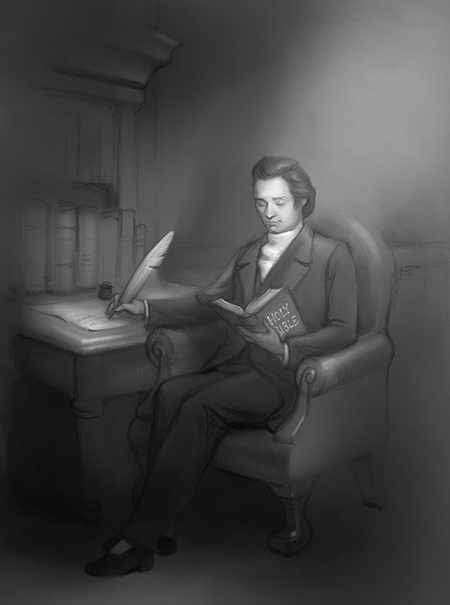
Divine Study
|
Window of Reflection
 
Window of Reflection
|
Enlightening Grace
 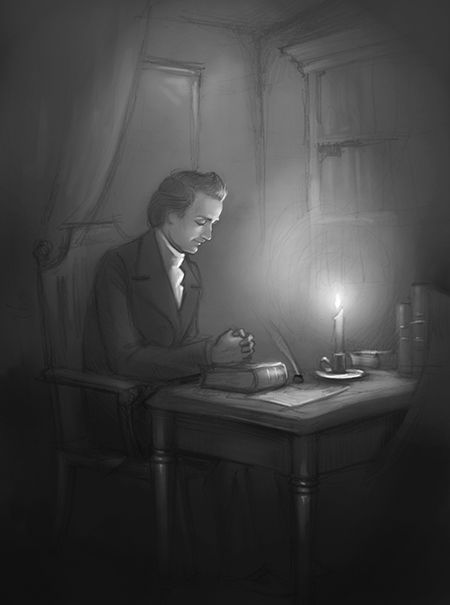
Enlightening Grace
|
164
|
947 |
124
|
1030 |
197
|
1064 |

Fee FEE, noun [Latin pecu, pecus. From the use of cattle in transferring property, or from barter and payments in cattle, the word came to signify money; it signified also goods, substance in general. The word belongs to Class Bg, but the primary sense is not obvious.] A reward or compensation for services; recompense, either gratuitous, or established by law and claimed of right. It is applied particularly to the reward of professional services; as the fees of lawyers and physicians; the fees of office; clerk's fees; sheriff's fees; marriage fees, etc. Many of these are fixed by law; but gratuities to professional men are also called fees. FEE, noun [In English, is loan. This word, fee inland, or an estate in trust, originated among the descendants of the northern conquerors of Italy, but it originated in the south of Europe. See Feud.] Primarily, a loan of land, an estate in trust, granted by a prince or lord, to be held by the grantee on condition of personal service, or other condition; and if the grantee or tenant failed to perform the conditions, the land reverted to the lord or donor, called the landlord, or lend-lord, the lord of the loan. A fee then is any land or tenement held of a superior on certain conditions. It is synonymous with fief and feud. All the land in England, except the crown land, is of this kind. Fees are absolute or limited. An absolute fee or fee-simple is land which a man holds to himself and his heirs forever, who are called tenants in fee simple. Hence in modern times, the term fee or fee simple denotes an estate of inheritance; and in America, where lands are not generally held of a superior, a fee or fee simple is an estate in which the owner has the whole property without any condition annexed to the tenure. A limited fee is an estate limited or clogged with certain conditions; as a qualified or base fee which ceases with the existence of certain conditions; and a conditional fee which is limited to particular heirs. In the United States, an estate in fee or fee simple is what is called in English law an allodial estate, an estate held by a person in his own right, and descendible to the heirs in general. FEE'-FARM, noun [fee and farm.] A kind of tenure of estates without homage, fealty or other service, except that mentioned in the feoffment, which is usually the full rent. The nature of this tenure is, that if the rent is in arrear or unpaid for two years, the feoffer and his heirs may have an action for the recovery of the lands. |

|
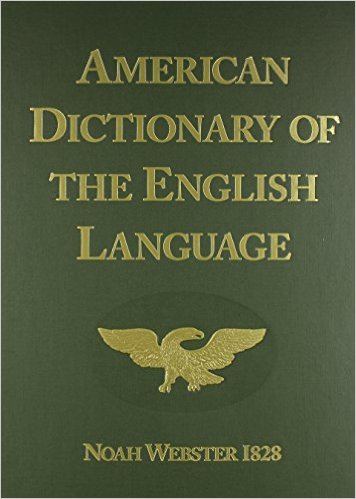
| Hard-cover Edition |
379 |
 |
559 |
|
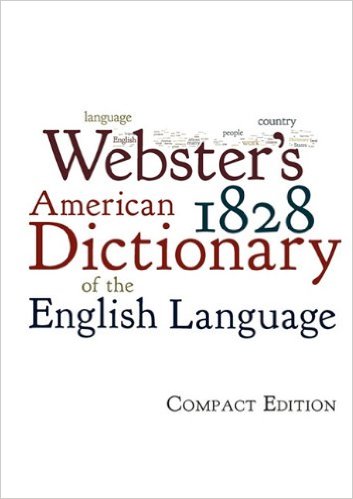
| Compact Edition |
365 |
 |
254 |
|
| CD-ROM |
319 |
 |
200 |
|
* As a note, I have purchased each of these products. In fact, as we have been developing the Project:: 1828 Reprint, I have purchased several of the bulky hard-cover dictionaries. My opinion is that the 2000-page hard-cover edition is the only good viable solution at this time. The compact edition was a bit disappointing and the CD-ROM as well. |
| [ + ] |
| Add Search To Your Site |
|
|
|