|
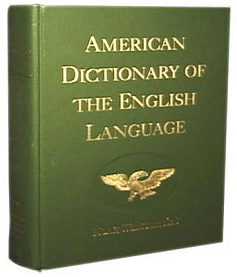
Search, browse, and study this dictionary to learn more about the early American, Christian language. 
1828.mshaffer.com › Word [covenant]
COVENANT, n. [L, to come; a coming together; a meeting or agreement of minds.] 1. A mutual consent or agreement of two or more persons, to do or to forbear some act or thing; a contract; stipulation. A covenant is created by deed in writing, sealed and executed; or it may be implied in the contract.2. A writing containing the terms of agreement or contract between parties; or the clause of agreement in a deed containing the covenant.3. In theology, the covenant of works, is that implied in the commands, prohibitions, and promises of God; the promise of God to man, that mans perfect obedience should entitle him to happiness. This do, and live; that do, and die.The covenant of redemption, is the mutual agreement between the Father and Son, respecting the redemption of sinners by Christ.The covenant of grace, is that by which God engages to bestow salvation on man, upon the condition that man shall believe in Christ and yield obedience to the terms of the gospel.4. In church affairs, a solemn agreement between the members of a church, that they will walk together according to the precepts of the gospel, in brotherly affection.COVENANT, v.i. To enter into a formal agreement; to stipulate; to bind ones self by contract. A covenants with B to convey to him a certain estate. When the terms are expressed ti has for before the thing or price. They covenanted with him for thirty pieces of silver. Matthew 26.COVENANT, v.t. To grant or promise by covenant.
|
Evolution (or devolution) of this word [covenant]
| 1828 Webster | 1844 Webster | 1913 Webster |
|---|
COVENANT, n. [L, to come; a coming together; a meeting or agreement of minds.] 1. A mutual consent or agreement of two or more persons, to do or to forbear some act or thing; a contract; stipulation. A covenant is created by deed in writing, sealed and executed; or it may be implied in the contract.2. A writing containing the terms of agreement or contract between parties; or the clause of agreement in a deed containing the covenant.3. In theology, the covenant of works, is that implied in the commands, prohibitions, and promises of God; the promise of God to man, that mans perfect obedience should entitle him to happiness. This do, and live; that do, and die.The covenant of redemption, is the mutual agreement between the Father and Son, respecting the redemption of sinners by Christ.The covenant of grace, is that by which God engages to bestow salvation on man, upon the condition that man shall believe in Christ and yield obedience to the terms of the gospel.4. In church affairs, a solemn agreement between the members of a church, that they will walk together according to the precepts of the gospel, in brotherly affection.COVENANT, v.i. To enter into a formal agreement; to stipulate; to bind ones self by contract. A covenants with B to convey to him a certain estate. When the terms are expressed ti has for before the thing or price. They covenanted with him for thirty pieces of silver. Matthew 26.COVENANT, v.t. To grant or promise by covenant. |
COV'E-NANT, n. [Fr. convenant, the participle of convenir, to agree; L. convenio, con and venio, to come; Norm. conevence, a covenant; It. convenzione, from L. conventio. Literally, a coming together; a meeting or agreement of minds.]- A mutual consent or agreement of two or more persons, to do or to forbear some act or thing; a contract; stipulation. A covenant is created by deed in writing, sealed and executed; or it may be implied in the contract. – Encyc. Blackstone.
- A writing containing the terms of agreement or contract between parties; or the clause of agreement in a deed containing the covenant.
- In theology, the covenant of works, is that implied in the commands, prohibitions, and promises of God; the promise of God to man, that man's perfect obedience should entitle him to happiness. This do, and live; that do, and die.
The covenant of redemption, is the mutual agreement between the Father and Son, respecting the redemption of sinners by Christ.
The covenant of grace, is that by which God engages to bestow salvation on man, upon the condition that man shall believe in Christ and yield obedience to the terms of the gospel. – Cruden. Encyc.
- In church affairs, a solemn agreement between the members of a church, that they will walk together according to the precepts of the gospel, in brotherly affection.
COV'E-NANT, v.i.To enter into a formal agreement; to stipulate; to bind one's self by contract. A. covenants with B. to convey to him a certain estate. When the terms are expressed, it has for before the thing or price.
They covenanted with him for thirty pieces of silver. – Matth. xxvi.
COV'E-NANT, v.t.To grant or promise by covenant. |
Cov"e*nant
- A mutual agreement of two or more
persons or parties, or one of the stipulations in such an
agreement.
- To agree (with)] to
enter into a formal agreement; to bind one's self by contract; to
make a stipulation.
- To grant or
promise by covenant.
- An agreement made
by the Scottish Parliament in 1638, and by the English Parliament
in 1643, to preserve the reformed religion in Scotland, and to
extirpate popery and prelacy] -- usually called the "Solemn
League and Covenant."
- The promises of God as
revealed in the Scriptures, conditioned on certain terms on the
part of man, as obedience, repentance, faith, etc.
- A solemn compact between members of a
church to maintain its faith, discipline, etc.
- An
undertaking, on sufficient consideration, in writing and under
seal, to do or to refrain from some act or thing; a contract; a
stipulation; also, the document or writing containing the terms
of agreement.
|
| 1828 Webster | 1844 Webster | 1913 Webster |
|---|
Thank you for visiting!
- Our goal is to try and improve the quality of the digital form of this dictionary being historically true and accurate to the first American dictionary. Read more ...
- Below you will find three sketches from a talented artist and friend depicting Noah Webster at work. Please tell us what you think.
Divine Study
 
Divine Study
|
Window of Reflection
 
Window of Reflection
|
Enlightening Grace
 
Enlightening Grace
|
164
|
951 |
126
|
1035 |
199
|
1074 |

Covenant COVENANT, noun [L, to come; a coming together; a meeting or agreement of minds.] 1. A mutual consent or agreement of two or more persons, to do or to forbear some act or thing; a contract; stipulation. A covenant is created by deed in writing, sealed and executed; or it may be implied in the contract. 2. A writing containing the terms of agreement or contract between parties; or the clause of agreement in a deed containing the covenant 3. In theology, the covenant of works, is that implied in the commands, prohibitions, and promises of God; the promise of God to man, that mans perfect obedience should entitle him to happiness. This do, and live; that do, and die. The covenant of redemption, is the mutual agreement between the Father and Son, respecting the redemption of sinners by Christ. The covenant of grace, is that by which God engages to bestow salvation on man, upon the condition that man shall believe in Christ and yield obedience to the terms of the gospel. 4. In church affairs, a solemn agreement between the members of a church, that they will walk together according to the precepts of the gospel, in brotherly affection. COVENANT, verb intransitive To enter into a formal agreement; to stipulate; to bind ones self by contract. A covenants with B to convey to him a certain estate. When the terms are expressed ti has for before the thing or price. They covenanted with him for thirty pieces of silver. Matthew 26:15. COVENANT, verb transitive To grant or promise by covenant |

|
| Hard-cover Edition |
382 |
 |
564 |
|
| Compact Edition |
369 |
 |
257 |
|
| CD-ROM |
325 |
 |
201 |
|
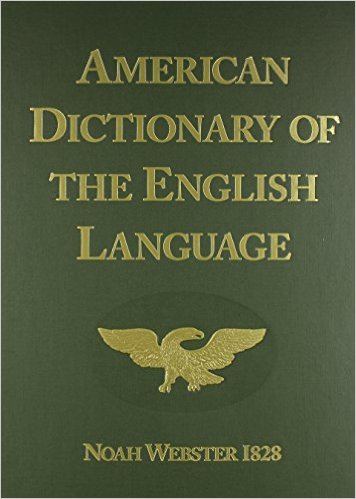
* As a note, I have purchased each of these products. In fact, as we have been developing the Project:: 1828 Reprint, I have purchased several of the bulky hard-cover dictionaries. My opinion is that the 2000-page hard-cover edition is the only good viable solution at this time. The compact edition was a bit disappointing and the CD-ROM as well. |
| [ + ] |
| Add Search To Your Site |
|
|
|