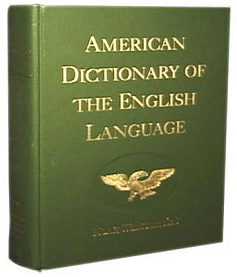
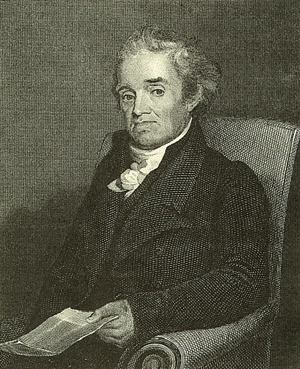
|
Search, browse, and study this dictionary to learn more about the early American, Christian language. 
1828.mshaffer.com › Word [coin]
COIN, n. 1. A corner; a jutting point, as of a wall.Rustic coins, stones jutting from a wall for new buildings to be joined to.2. A wedge for raising or lowering a piece of ordnance.3. A wedge or piece of wood to lay between casks on shipboard.COIN, n. Primarily, the die employed for stamping money. Hence, 1. Money stamped; a piece of metal, as gold, silver, copper, or other metal, converted into money, by impressing on it marks, figures or characters. To make good money, these impressions must be made under the authority of government. That which is stamped without authority is called false or counterfeit coin. Formerly, all coin was made by hammering; but it is now impressed by a machine or mill.Current coin is coin legally stamped and circulating in trade.Ancient coins are chiefly those of the Jews, Greeks and Romans, which are kept in cabinets as curiosities.2. In architecture, a kind of die cut diagonally, after the manner of a flight of a stair case, serving at bottom to support columns in a level, and at top to correct the inclination of an entablature supporting a vault.3. That which serves for payment.The loss of present advantage to flesh and blood is repaid in a nobler coin.COIN, v.t. 1. To stamp a metal, and convert it into money; to mint.2. To make; as, to coin words.3. To make; to forge; to fabricate; in an ill sense; as, to coin a lie; to coin a fable.
|
Evolution (or devolution) of this word [coin]
| 1828 Webster | 1844 Webster | 1913 Webster |
|---|
COIN, n. 1. A corner; a jutting point, as of a wall.Rustic coins, stones jutting from a wall for new buildings to be joined to.2. A wedge for raising or lowering a piece of ordnance.3. A wedge or piece of wood to lay between casks on shipboard.COIN, n. Primarily, the die employed for stamping money. Hence, 1. Money stamped; a piece of metal, as gold, silver, copper, or other metal, converted into money, by impressing on it marks, figures or characters. To make good money, these impressions must be made under the authority of government. That which is stamped without authority is called false or counterfeit coin. Formerly, all coin was made by hammering; but it is now impressed by a machine or mill.Current coin is coin legally stamped and circulating in trade.Ancient coins are chiefly those of the Jews, Greeks and Romans, which are kept in cabinets as curiosities.2. In architecture, a kind of die cut diagonally, after the manner of a flight of a stair case, serving at bottom to support columns in a level, and at top to correct the inclination of an entablature supporting a vault.3. That which serves for payment.The loss of present advantage to flesh and blood is repaid in a nobler coin.COIN, v.t. 1. To stamp a metal, and convert it into money; to mint.2. To make; as, to coin words.3. To make; to forge; to fabricate; in an ill sense; as, to coin a lie; to coin a fable. |
COIN, n.1 [Fr. coin, a corner, a wedge; Arm. coign; Sp. esquina, a corner, and cuña, a wedge; Port. quina; L. cuneus; Gr. γωνια; Ir. cuinne; W. gaing,or cyn, a wedge. The pronunciation of this word, by our common people, is quine, or quoin, when applied to a wedging stone, in masonry. See the next word.]- A corner; a jutting point, as of a wall. – Shak.
Rustic coins, stones jutting from a wall for new buildings to be joined to. – Bailey.
- A wedge for raising or lowering a piece of ordnance. – Bailey.
- A wedge or piece of wood to lay between casks on shipboard. – Bailey.
COIN, n.2 [Sp. cuña; Port. cunho, a die to stamp money; Sp. acuñar, to coin or impress money, to wedge; Port. cunhar; It. conio, a die; coniare, to coin; Fr. coin; Ar. قَانَ kauna, to hammer, forge or stamp. The sense is, to strike, beat, or drive, coinciding with the French coigner, or cogner. Hence we see that coin, whether it signifies a corner, a wedge or a die, is from the same root, from thrusting, driving. Primarily, the die employed for stamping money. Hence,]- Money stamped; a piece of metal, as gold, silver, copper, or other metal, converted into money, by impressing on it marks, figures or characters. To make good money, these impressions must be made under the authority of government. That which is stamped without authority is called false or counterfeit coin. Formerly, all coin was made by hammering; but it is now impressed by a machine or mill.
Current coin is coin legally stamped and circulating in trade.
Ancient coins are chiefly those of the Jews, Greeks, and Romans, which are kept in cabinets as curiosities.
- In Architecture, a kind of die cut diagonally, after the manner of a flight of a staircase, serving at bottom to support columns in a level, and at top to correct the inclination of an entablature supporting a vault. – Encyc.
- That which serves for payment.
The loss of present advantage to flesh and blood is repaid in a nobler coin. – Hammond.
COIN, v.t.- To stamp a metal, and convert it into money; to mint.
- To make; as, to coin words. – Shak.
- To make; to forge; to fabricate; in an ill sense; as, to coin a lie; to coin a fable. – Hudibras. Dryden.
|
Coin
- A quoin;
a corner or external angle; a wedge. See Coigne, and
Quoin.
- To make of
a definite fineness, and convert into coins, as a mass of metal]
to mint; to manufacture; as, to coin silver dollars; to
coin a medal.
- To manufacture
counterfeit money.
- A piece of metal on which certain
characters are stamped by government authority, making it legally
current as money; -- much used in a collective sense.
- To make or fabricate; to invent; to
originate; as, to coin a word.
- That which serves for payment or
recompense.
- To acquire rapidly, as money; to
make.
|
| 1828 Webster | 1844 Webster | 1913 Webster |
|---|
Thank you for visiting!
- Our goal is to try and improve the quality of the digital form of this dictionary being historically true and accurate to the first American dictionary. Read more ...
- Below you will find three sketches from a talented artist and friend depicting Noah Webster at work. Please tell us what you think.
Divine Study
 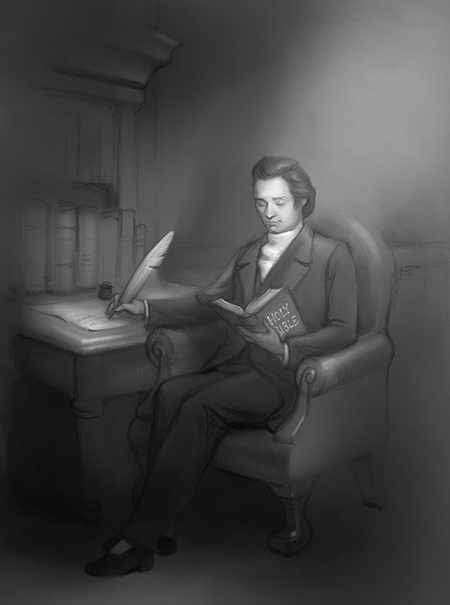
Divine Study
|
Window of Reflection
 
Window of Reflection
|
Enlightening Grace
 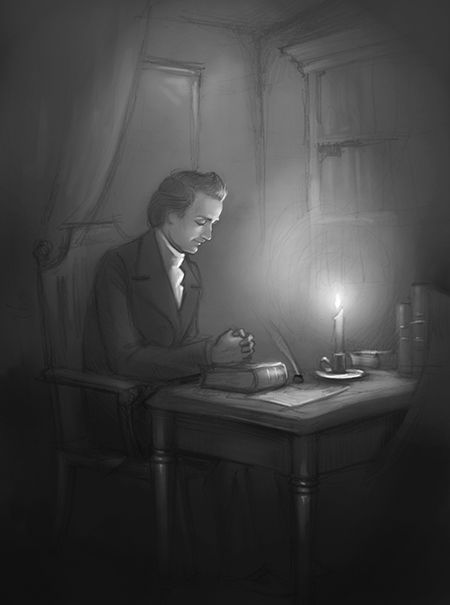
Enlightening Grace
|
164
|
955 |
126
|
1037 |
199
|
1078 |

Coin COIN, noun 1. A corner; a jutting point, as of a wall. Rustic coins, stones jutting from a wall for new buildings to be joined to. 2. A wedge for raising or lowering a piece of ordnance. 3. A wedge or piece of wood to lay between casks on shipboard. COIN, noun Primarily, the die employed for stamping money. Hence, 1. Money stamped; a piece of metal, as gold, silver, copper, or other metal, converted into money, by impressing on it marks, figures or characters. To make good money, these impressions must be made under the authority of government. That which is stamped without authority is called false or counterfeit coin Formerly, all coin was made by hammering; but it is now impressed by a machine or mill. Current coin is coin legally stamped and circulating in trade. Ancient coins are chiefly those of the Jews, Greeks and Romans, which are kept in cabinets as curiosities. 2. In architecture, a kind of die cut diagonally, after the manner of a flight of a stair case, serving at bottom to support columns in a level, and at top to correct the inclination of an entablature supporting a vault. 3. That which serves for payment. The loss of present advantage to flesh and blood is repaid in a nobler coin COIN, verb transitive 1. To stamp a metal, and convert it into money; to mint. 2. To make; as, to coin words. 3. To make; to forge; to fabricate; in an ill sense; as, to coin a lie; to coin a fable. |

|
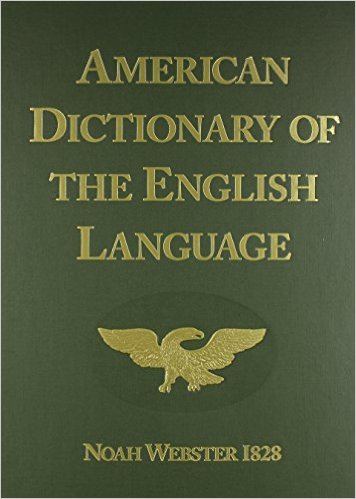
| Hard-cover Edition |
385 |
 |
566 |
|
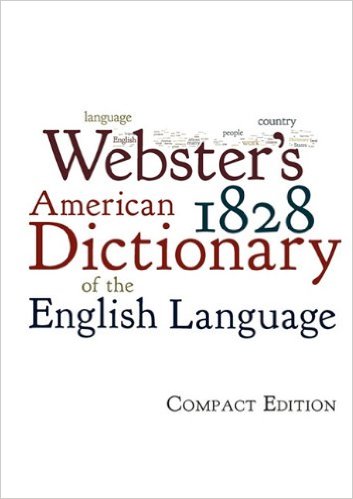
| Compact Edition |
369 |
 |
259 |
|
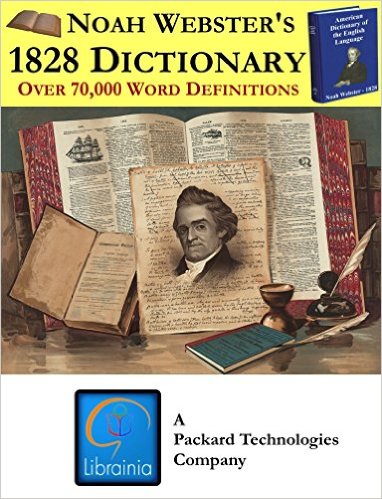
| CD-ROM |
326 |
 |
202 |
|
* As a note, I have purchased each of these products. In fact, as we have been developing the Project:: 1828 Reprint, I have purchased several of the bulky hard-cover dictionaries. My opinion is that the 2000-page hard-cover edition is the only good viable solution at this time. The compact edition was a bit disappointing and the CD-ROM as well. |
| [ + ] |
| Add Search To Your Site |
|
|
|