Free Online Color Picker Harmony Tool! http://1828.mshaffer.com
Friday - February 10, 2012

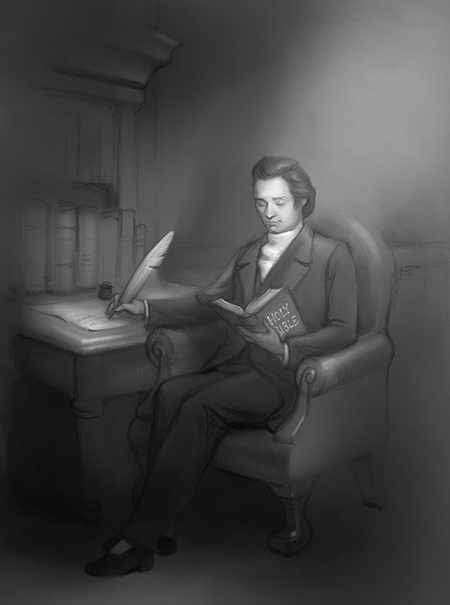
In my view, the Christian religion is the most important and one of the first things in which all children, under a free government ought to be instructed.. .No truth is more evident to my mind than that the Christian religion must be the basis of any government intended to secure the rights and privileges of a free people.
- Preface

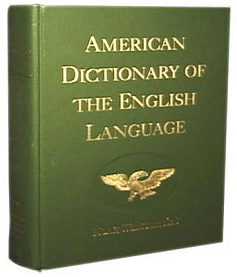
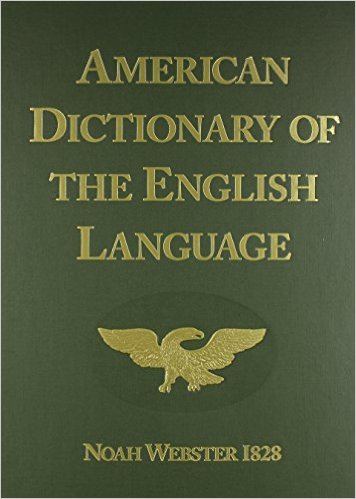
1828 Noah Webster Dictionary
ABCDEFGHIJKLMNOPQRSTUVWXYZ
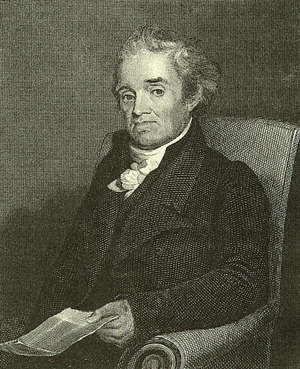
In celebration of Noah Webster's Birthday (October 16, 2009), we have prepared an updated website.
Please update your bookmarks: http://www.1828-dictionary.com/d/word/coalescence

coalescence

COALESCENCE, n. The act of growing together; the act of uniting by natural affinity or attraction; the state of being united; union; concretion.


1828 Noah Webster Dictionary

Google
 
Web 1828.mshaffer.com

Why Donate?

Here are a number of reasons:

  • To indicate your approval.
  • To express your appreciation.
  • To help pay for website expenses and keep this website online.

Donate Using PayPal

If you have a major credit card (Visa, MasterCard, American Express) or a PayPal account, donating is easy. Just click the dollar amount below to donate:

Make payments with PayPal - it's fast, free and secure!
$ 5 $ 10 $ 20 $ 50 $ 100 $ Other $
 

Donations from Outside of the United States

We welcome donations from anywhere in the world and in any currency. PayPal accepts a number of international currencies.

Donations by Other Methods

If you wish to donate via direct bank deposit or mail a cheque or money order, please email me .


Please support this FREE service, by making a donation today!

Firefox Plugin
I | S 1828 Webster's 1828 Webster's


Add Search
To Your Site
[ + ]

News: protection

February 10, 2012
[12:26:40 AM] (PDT)


Although most inventions will be concerned with the rights a patent grants during its monopoly or in-force period (from the date the patent issues until it expires (20 years after the filing date)), the law actually recognizes five "rights" periods in the life of an invention. (1) Invention conceived but not yet documented: When an inventor conceives of an invention, but hasn't yet made any written, signed, dated, and witness record of it, the inventor has no legal rights whatsoever, only the potential for acquiring rights. (2) Invention documented but patent application not yet filed: After making a proper, signed, dated and witnessed documentation of an invention, the inventor has valuable rights against any inventor who later conceives of the same invention and applies for a patent. An inventor who documents the building and testing of the invention has substantially greater rights than one who merely documents conception. During this period the invention may also be treated as a "trade secret" this is, kept confidential. This gives the inventor the legal right to sue and recover damages against anyone who immorally learns of the invention, for instance, through industrial spying. (3) Patent Pending - Patent application filed but not yet issued: During the patent pending period, including the one year period after a provisional patent application is filed, the inventor's rights are the same as they are in period 2 above for the most part. Otherwise, the inventor has no rights whatsoever against infringers, only the hope of a future monopoly, which doesn't commence until a patent issues. Most companies that manufacture a product this is the subject of a pending patent application will mark the product "patent pending" in order to warn potential copiers that it they copy the product, they may have to stop later if and when the patent issues. The PTO by law must keep all patent applications preserved in secrecy until the application is published or the patent issues. The patent pending period usually lasts from one to three years. (4) In-force patent - patent issued but hasn't yet expired: After the patent issues, the patent owner can bring and maintain a lawsuit for a patent infringement against anyone who makes, uses or sells the invention without permission. The patents in force period last from the date it issues until 20 years from its filing date, provided maintenance fees are paid. Nearly every patent is guaranteed an in-force period of at least 17 years. In order to assure this 17-year term, the patent will be extended, if necessary, to compensate for delays resulting from failures by the PRO in processing the patent application. Also, once the patent issues, it becomes a public record or publication that can block others who file later from getting patents on the same or similar inventions, that is, it becomes "prior art" to anyone who files after its filing date. (5) Patent expired: After the patent expires (20 years after the filing date, or sooner if a maintenance fee isn't paid), the patent owner has no further rights, although infringement suits can be brought for any infringement that occurred during the patent's in-force period. An expired patent remains a valid "prior art reference" (as of its filing date) forever. IPStreet.com's patent search tools and resources will help you better understand if your idea is patentable, the duration of a patent and complex patent analytics.
Here are five common factors that often determine the worth of an invention. (1) Importance of a Patent: For breakthrough patents, a.k.a. foundational patents, the patents are so innovative that they give the owner a complete monopoly over an entire industry and are extremely valuable, often worth billions of dollars. Although most patents never reach these heady heights they are nevertheless valuable in that they can force a competitor to start innovating to keep pace with new and improved technologies and products in the market. Incremental patents, which make only small advances over existing products, are usually the least valuable though this may not be always so. A question that is often asked in relation to endeavoring to put a price on a patent is 'How much would my competitors pay to use my protected product or process?' (2) The Market: Market size, the number of products that are likely to be made and the cost of each product also have a significant bearing on the value of a patent. What sort of sales can the patent be expected to support, and for how long? A good example of an article which has significant market presence is the ubiquitous Intel chip that is reported to have a value estimated in the billions of dollars. (3) The Patent Term: Patents have a maximum life of 20 years and, therefore, a 20-year potential monopoly. Patents that are just beginning their life and which have longer to run on the their potential monopoly position understandably will have more value. It is rare that a patent nearing the end of its term will cause a great threat to its competitors. It is almost certain that they will have devised technologies or products of their own by then that will not interfere with the patent owners monopoly position. In addition, one has to take into consideration the potential business life of a patent, i.e., the duration, which a patent is likely to be economically useful, if other subsequent patents are providing better alternatives to it. (4) Amount of Prior Art: The number of cited documents or patented products populating an area of innovation also has an effect on the value of a patent. Generally, if the particular product is one of many products of a similar type then the consumers' options de-value the patent of interest, yielding a relatively smaller premium than, for example, a stand alone patent with a captured customer base and no adjacent competition. (5) Patent Significance: Every patent has its own significance in a particular area and will usually form part of an overall IP strategy either to maximize its earning potential or to allow other patents to maximize theirs. Examples of such patents are those that are used to block other key players from gaining a foothold in a market. Yet other examples are those patents that are additional to an original patent and rely on the protected matter in the original patent to successfully operate. It is not uncommon for drug companies or telecom companies to take out further patents protecting a strong first generation of patents, thus securing a big chunk of a market and the ability to negotiate licenses and royalties from the protected, but much desired technology.
In Nortel's recent bankrupcy, the liquidation of the IP assets led to a bidding war. Google offered $900M for the patents; Apple and Microsoft created an alliance (with RIM, Sony, EMC, Ericsson) to offer $4.5B for the same patents^. Certainly there was a great disparity in these bid prices. How can you objectively determine the value of a portfolio and patent duration. Let the tools at IPstreet.com help you.
0.017716884613037|February 10, 2012 => 3:06 am