|
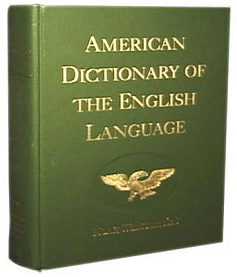
Search, browse, and study this dictionary to learn more about the early American, Christian language. 
1828.mshaffer.com › Word [cause]
CAUSE, n. s as z. 1. A suit or action in court; any legal process which a party institutes to obtain his demand, or by which he seeks his right or his supposed right. This is a legal, scriptural and popular use of the word, coinciding nearly with case from cado, and action from ago, to urge or drive.The cause of both parties shall come before the judges. Ex. 22.2. That which produces an effect; that which impels into existence, or by its agency or operation produces what did not before exist; that by virtue of which any thing is done; that from which any thing proceeds, and without which it would not exist.Cause is a substance exerting its power into act, to make a thing begin to be.3. The reason or motive that urges, moves, or impels the mind to act or decide.For this cause have I raised up Pharaoh. Ex. 9.And David said, is there not a cause? 1 Sam. 17.4. Sake; account.I did it not for his cause that had done the wrong. 2 Cor. 6. [See Sake.]5. That which a party or nation pursues; or rather pursuit, prosecution of an object. We say, Bible Societies are engaged in a noble cause. [See the first definition.] Hence the word cause is used to denote that which a person or thing favors; that to which the efforts of an intelligent being are directed; as, to promote religion is to advance the cause of God. So we say, the cause of truth or of justice. In all its applications, cause retains something of its original meaning, struggle, impelling force, contest, effort to obtain or to effect something.6. Without cause, without good reason; without a reason or motive to justify the act.They hate me without cause. Ps. 35. 69.CAUSE, v.t. 1. To produce; to bring into existence.They caused great joy to all the brethren. Acts 15.2. To effect by agency, power or influence.I will cause it to rain on the earth forty days. Gen. 7.I will cause him to fall by the sword. 2 Kings 19.CAUSE, v.i. To assign insufficient cause.
|
Evolution (or devolution) of this word [cause]
| 1828 Webster | 1844 Webster | 1913 Webster |
|---|
CAUSE, n. s as z. 1. A suit or action in court; any legal process which a party institutes to obtain his demand, or by which he seeks his right or his supposed right. This is a legal, scriptural and popular use of the word, coinciding nearly with case from cado, and action from ago, to urge or drive.The cause of both parties shall come before the judges. Ex. 22.2. That which produces an effect; that which impels into existence, or by its agency or operation produces what did not before exist; that by virtue of which any thing is done; that from which any thing proceeds, and without which it would not exist.Cause is a substance exerting its power into act, to make a thing begin to be.3. The reason or motive that urges, moves, or impels the mind to act or decide.For this cause have I raised up Pharaoh. Ex. 9.And David said, is there not a cause? 1 Sam. 17.4. Sake; account.I did it not for his cause that had done the wrong. 2 Cor. 6. [See Sake.]5. That which a party or nation pursues; or rather pursuit, prosecution of an object. We say, Bible Societies are engaged in a noble cause. [See the first definition.] Hence the word cause is used to denote that which a person or thing favors; that to which the efforts of an intelligent being are directed; as, to promote religion is to advance the cause of God. So we say, the cause of truth or of justice. In all its applications, cause retains something of its original meaning, struggle, impelling force, contest, effort to obtain or to effect something.6. Without cause, without good reason; without a reason or motive to justify the act.They hate me without cause. Ps. 35. 69.CAUSE, v.t. 1. To produce; to bring into existence.They caused great joy to all the brethren. Acts 15.2. To effect by agency, power or influence.I will cause it to rain on the earth forty days. Gen. 7.I will cause him to fall by the sword. 2 Kings 19.CAUSE, v.i. To assign insufficient cause. |
CAUSE, n. [s. as z. Fr. cause; Sp. Port. and It. causa; L. causa, from the Celtic; Welch acaws, effecting power, allied to cais, effort, ceisiaw, to seek or go after, to attempt; Arm. caus or cos. The primary sense is to urge, press, impel, like sequor, whence suit; hence, to accuse, to attack or follow with a charge. The root of this word coincides with that of castle, cast, &c., which express a driving. A cause is that which moves, excites or impels to action or effect; in law, a pressing for a claim. See Question. Cause, sake and thing have the like radical sense.]- A suit or action in court; any legal process which a party institutes to obtain his demand, or by which he seeks his right or his supposed right. This is a legal, scriptural and popular use of the word, coinciding nearly with case from cado, and action from ago, to urge or drive.
The cause of both parties shall come before the judges. – Ex. xxii.
- That which produces an effect; that which impels into existence, or by its agency or operation produces what did not before exist; that by virtue of which any thing is done; that from which any thing proceeds, and without which it would not exist.
Cause is a substance exerting its power into act, to make a thing begin to be. – Locke.
- The reason or motive that urges, moves, or impels the mind to act or decide.
For this cause have I raised up Pharaoh. – Ex. ix.
And David said, is there not a cause? – 1 Sam. xvii.
- Sake; account.
I did it not for his cause that had done the wrong. – 2 Cor. vii. [See Sake.]
- That which a party or nation pursues; or rather pursuit, prosecution of an object. We say, Bible Societies are engaged in a noble cause. [See the first definition.] Hence the word cause is used to denote that which a person or thing favors; that to which the efforts of an intelligent being are directed; as, to promote religion is to advance the cause of God. So we say, the cause of truth or of justice. In all its applications, cause retains something of its original meaning, struggle, impelling force, contest, effort to obtain or to effect something.
- Without cause, without good reason; without a reason or motive to justify the act.
They hate me without cause. – Ps. xxxv. lxix.
CAUSE, v.i.To assign insufficient cause. [Obs.] Spenser.
CAUSE, v.t.- To produce; to bring into existence.
They caused great joy to all the brethren. – Acts xv.
- To effect by agency, power or influence.
I will cause it to rain on the earth forty days. – Gen. vii.
I will cause him to fall by the sword. – 2 Kings xix.
|
Cause
- That which produces or effects a result; that from which
anything proceeds, and without which it would not
exist.
- To effect as an agent] to produce; to be the
occasion of; to bring about; to bring into existence; to make; --
usually followed by an infinitive, sometimes by that with
a finite verb.
- To assign or show
cause; to give a reason; to make excuse.
- Abbreviation of
Because.
- That which is the occasion of an
action or state; ground; reason; motive; as, cause for
rejoicing.
- Sake; interest; advantage.
- A suit or action in
court; any legal process by which a party endeavors to obtain his
claim, or what he regards as his right; case; ground of
action.
- Any subject of discussion or debate;
matter; question; affair in general.
- The side of a question, which is
espoused, advocated, and upheld by a person or party; a principle
which is advocated; that which a person or party seeks to
attain.
|
| 1828 Webster | 1844 Webster | 1913 Webster |
|---|
Thank you for visiting!
- Our goal is to try and improve the quality of the digital form of this dictionary being historically true and accurate to the first American dictionary. Read more ...
- Below you will find three sketches from a talented artist and friend depicting Noah Webster at work. Please tell us what you think.
Divine Study
 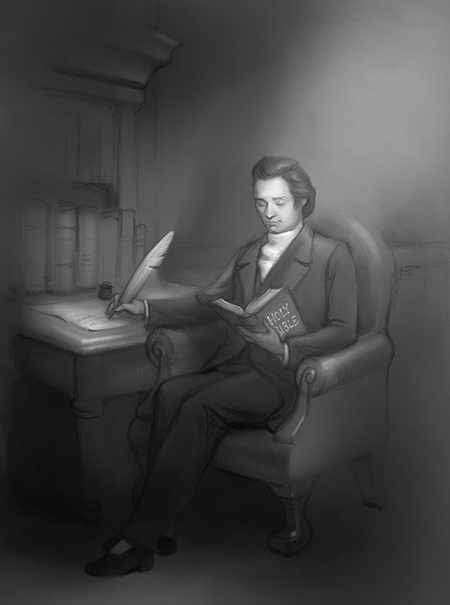
Divine Study
|
Window of Reflection
 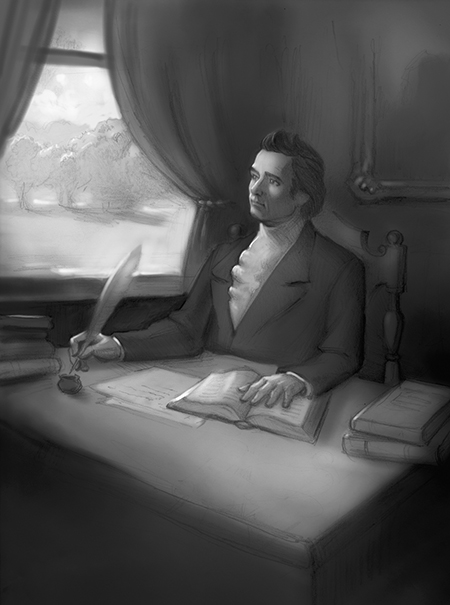
Window of Reflection
|
Enlightening Grace
 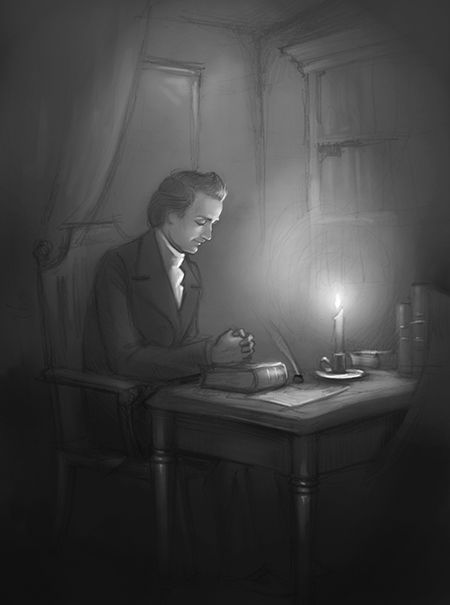
Enlightening Grace
|
164
|
949 |
125
|
1032 |
199
|
1069 |

Cause CAUSE, noun s as z. 1. A suit or action in court; any legal process which a party institutes to obtain his demand, or by which he seeks his right or his supposed right. This is a legal, scriptural and popular use of the word, coinciding nearly with case from cado, and action from ago, to urge or drive. The cause of both parties shall come before the judges. Exodus 22:5. 2. That which produces an effect; that which impels into existence, or by its agency or operation produces what did not before exist; that by virtue of which any thing is done; that from which any thing proceeds, and without which it would not exist. CAUSE is a substance exerting its power into act, to make a thing begin to be. 3. The reason or motive that urges, moves, or impels the mind to act or decide. For this cause have I raised up Pharaoh. Exodus 9:16. And David said, is there not a cause? 1 Samuel 17:29. 4. Sake; account. I did it not for his cause that had done the wrong. 2 Corinthians 6:1. [See Sake.] 5. That which a party or nation pursues; or rather pursuit, prosecution of an object. We say, Bible Societies are engaged in a noble cause [See the first definition.] Hence the word cause is used to denote that which a person or thing favors; that to which the efforts of an intelligent being are directed; as, to promote religion is to advance the cause of God. So we say, the cause of truth or of justice. In all its applications, cause retains something of its original meaning, struggle, impelling force, contest, effort to obtain or to effect something. 6. Without cause without good reason; without a reason or motive to justify the act. They hate me without cause Psalms 35:19. Psalms 69:4. CAUSE, verb transitive 1. To produce; to bring into existence. They caused great joy to all the brethren. Acts 15:3. 2. To effect by agency, power or influence. I will cause it to rain on the earth forty days. Genesis 7:4. I will cause him to fall by the sword. 2 Kings 19:7. CAUSE, verb intransitive To assign insufficient cause |

|
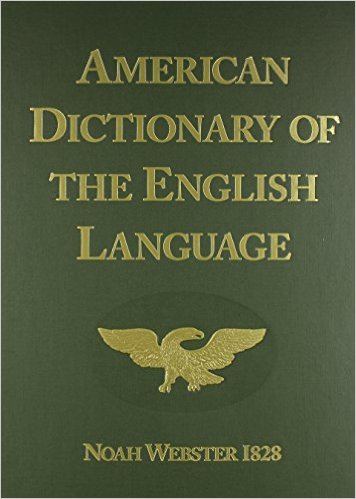
| Hard-cover Edition |
382 |
 |
561 |
|
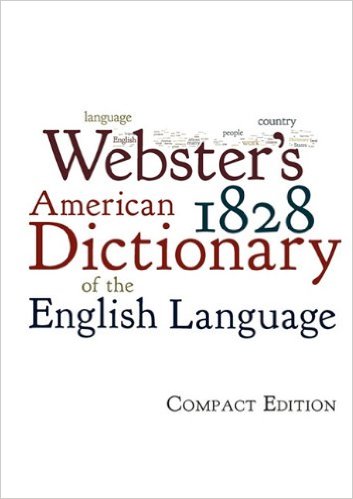
| Compact Edition |
366 |
 |
255 |
|
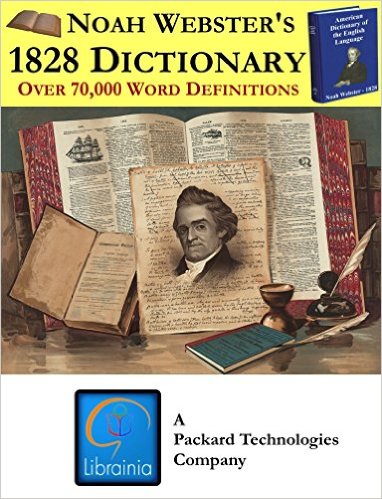
| CD-ROM |
322 |
 |
200 |
|
* As a note, I have purchased each of these products. In fact, as we have been developing the Project:: 1828 Reprint, I have purchased several of the bulky hard-cover dictionaries. My opinion is that the 2000-page hard-cover edition is the only good viable solution at this time. The compact edition was a bit disappointing and the CD-ROM as well. |
| [ + ] |
| Add Search To Your Site |
|
|
|