|
Search, browse, and study this dictionary to learn more about the early American, Christian language. 
1828.mshaffer.com › Word [catch]
CATCH, v.t. 1. To seize or lay hold on with the hand; carrying the sense of pursuit, thrusting forward the hand, or rushing on.And they came upon him and caught him. Acts 6.2. To seize, in a general sense; as, to catch a ball; to catch hold of a bough.3. To seize, as in a snare or trap; to ensnare; to entangle.They sent certain of the Pharisees and of the Herodians, to catch him in his words. Mark 12.4. To seize in pursuit; hence simply to overtake; a popular use of the word.He ran, but could not catch him companion.5. To take hold; to communicate to.The fire caught the adjoining building.6. To seize the affections; to engage and attach to; as, to catch the fair.7. To take or receive by contagion or infection; as, to catch the measles or small pox.8. To snatch; to take suddenly; as, to catch a book out of the hand.9. To receive something passing.The swelling sails no more catch the soft airs and wanton in the sky. Trumbull.To catch at, to endeavor to seize suddenly.To catch at all opportunities of subverting the state.To catch up, to snatch; to take up suddenly.CATCH, v.i. 1. To communicate; to spread by infecting; as, a disease will catch from man to man.2. Any thing that seizes or takes hold, as a hook.3. The posture of seizing; a state of preparation to catch, or of watching an opportunity to seize; as, to lie upon the catch.4. A sudden advantage taken.5. The thing caught, considered as an object of desire; profit; advantage. Hector shall have a great catch. Shak.6. A snatch; a short interval of action.It has been writ by catches.7. A little portion.We retain a catch of a pretty story.8. In music, a fugue in the unison, wherein to humor some conceit in the words, the melody is broken, and the sense is interrupted in one part, and caught and supported by another, or a different sense is given to the words; or a piece for three or more voices, one of which leads and the others follow in the same notes.
|
Evolution (or devolution) of this word [catch]
| 1828 Webster | 1844 Webster | 1913 Webster |
|---|
CATCH, v.t. 1. To seize or lay hold on with the hand; carrying the sense of pursuit, thrusting forward the hand, or rushing on.And they came upon him and caught him. Acts 6.2. To seize, in a general sense; as, to catch a ball; to catch hold of a bough.3. To seize, as in a snare or trap; to ensnare; to entangle.They sent certain of the Pharisees and of the Herodians, to catch him in his words. Mark 12.4. To seize in pursuit; hence simply to overtake; a popular use of the word.He ran, but could not catch him companion.5. To take hold; to communicate to.The fire caught the adjoining building.6. To seize the affections; to engage and attach to; as, to catch the fair.7. To take or receive by contagion or infection; as, to catch the measles or small pox.8. To snatch; to take suddenly; as, to catch a book out of the hand.9. To receive something passing.The swelling sails no more catch the soft airs and wanton in the sky. Trumbull.To catch at, to endeavor to seize suddenly.To catch at all opportunities of subverting the state.To catch up, to snatch; to take up suddenly.CATCH, v.i. 1. To communicate; to spread by infecting; as, a disease will catch from man to man.2. Any thing that seizes or takes hold, as a hook.3. The posture of seizing; a state of preparation to catch, or of watching an opportunity to seize; as, to lie upon the catch.4. A sudden advantage taken.5. The thing caught, considered as an object of desire; profit; advantage. Hector shall have a great catch. Shak.6. A snatch; a short interval of action.It has been writ by catches.7. A little portion.We retain a catch of a pretty story.8. In music, a fugue in the unison, wherein to humor some conceit in the words, the melody is broken, and the sense is interrupted in one part, and caught and supported by another, or a different sense is given to the words; or a piece for three or more voices, one of which leads and the others follow in the same notes. |
CATCH, n.- Seizure; the act of seizing.
- Any thing that seizes or takes hold, as a hook.
- The posture of seizing; a state of preparation to catch, or of watching an opportunity to seize; as, to lie upon the catch. – Addison.
- A sudden advantage taken. – Dryden.
- The thing caught, considered as an object of desire; profit; advantage.
Hector shall have a great catch. – Shak.
- A snatch; a short interval of action.
It has been writ by catches. – Locke.
- A little portion.
We retain a catch of a pretty story. – Glanville.
- In music, a fugue in the unison, wherein to humor some conceit in the words, the melody is broken, and the sense is interrupted in one part, and caught and supported by another, or a different sense is given to the words; or a piece for three or more voices, one of which leads and the others follow in the same notes. – Encyc. Busby.
CATCH, v.i.- To communicate; to spread by infecting; as, a disease will catch from man to man.
- To seize and hold; as, a hook catches.
CATCH, v.t. [pret. and pp. catched or caught. Sp. coger, to catch, coinciding in elements with Gr. κιχεω. The orthography of caught determines the radical letters to be Cg. The popular or common pronunciation is ketch.]- To seize or lay hold on with the hand; carrying the sense of pursuit, thrusting forward the hand, or rushing on.
And they came upon him and caught him. – Acts vi.
- To seize, in a general sense; as, to catch a ball; to catch hold of a bough.
- To seize, as in a snare or trap; to insnare; to entangle.
They sent certain of the Pharisees and of the Herodians, to catch him in his words. – Mark xii.
- To seize in pursuit; hence simply to overtake; a popular use of the word.
He ran, but could not catch his companion.
- To take hold; to communicate to.
The fire caught the adjoining building.
- To seize the affections; to engage and attach to; as, to catch the fair. – Dryden.
- To take or receive by contagion or infection; as, to catch the measles or small-pox.
- To snatch; to take suddenly; as, to catch a book out of the hand.
- To receive something passing.
The swelling sails no more
Catch the soft airs and wanton in the sky. – Trumbull.
To catch at, to endeavor to seize suddenly.
To catch at all opportunities of subverting the state. – Addison.
To catch up, to snatch; to take up suddenly.
|
Catch
- To lay hold on] to seize, especially
with the hand; to grasp (anything) in motion, with the effect of
holding; as, to catch a ball.
- To attain possession.
- Act of seizing; a grasp.
- To seize after pursuing; to arrest;
as, to catch a thief.
- To be held or impeded by entanglement
or a light obstruction; as, a kite catches in a tree; a
door catches so as not to open.
- That by which anything is caught or
temporarily fastened; as, the catch of a gate.
- To take captive, as in a snare or net,
or on a hook; as, to catch a bird or fish.
- To take hold; as, the bolt does not
catch.
- The posture of seizing; a state of
preparation to lay hold of, or of watching he opportunity to
seize; as, to lie on the catch.
- Hence: To insnare; to entangle.
- To spread by, or as by, infecting; to
communicate.
- That which is caught or taken; profit;
gain; especially, the whole quantity caught or taken at one time;
as, a good catch of fish.
- To seize with the senses or the mind;
to apprehend; as, to catch a melody.
- Something desirable to be caught, esp.
a husband or wife in matrimony.
- To communicate to; to fasten upon; as,
the fire caught the adjoining building.
- Passing opportunities
seized; snatches.
- To engage and attach; to please; to
charm.
- A slight remembrance; a
trace.
- To get possession of; to
attain.
- A humorous canon or
round, so contrived that the singers catch up each other's
words.
- To take or receive; esp. to take by
sympathy, contagion, infection, or exposure; as, to catch
the spirit of an occasion; to catch the measles or
smallpox; to catch cold; the house caught
fire.
- To come upon unexpectedly or by
surprise; to find; as, to catch one in the act of
stealing.
- To reach in time; to come up with;
as, to catch a train.
|
| 1828 Webster | 1844 Webster | 1913 Webster |
|---|
Thank you for visiting!
- Our goal is to try and improve the quality of the digital form of this dictionary being historically true and accurate to the first American dictionary. Read more ...
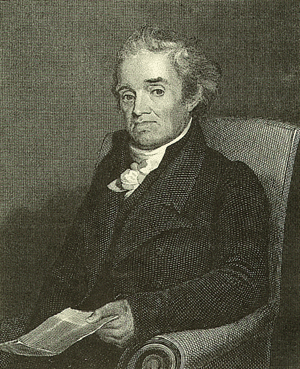
- Below you will find three sketches from a talented artist and friend depicting Noah Webster at work. Please tell us what you think.
Divine Study
 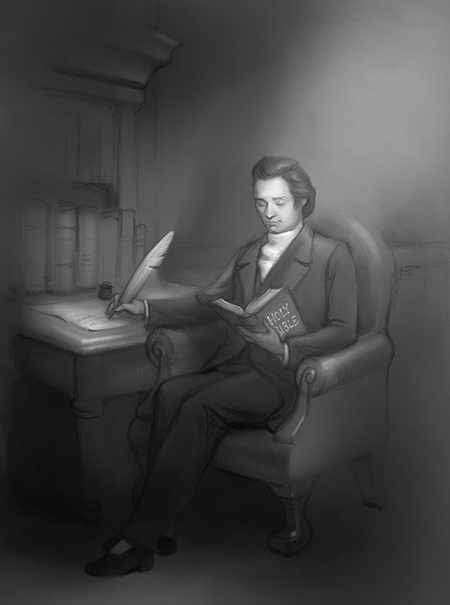
Divine Study
|
Window of Reflection
 
Window of Reflection
|
Enlightening Grace
 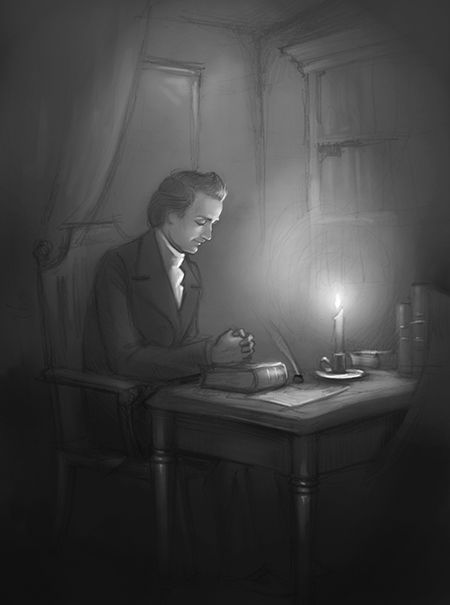
Enlightening Grace
|
164
|
955 |
126
|
1037 |
199
|
1078 |

Catch CATCH, verb transitive 1. To seize or lay hold on with the hand; carrying the sense of pursuit, thrusting forward the hand, or rushing on. And they came upon him and caught him. Acts 6:1. 2. To seize, in a general sense; as, to catch a ball; to catch hold of a bough. 3. To seize, as in a snare or trap; to ensnare; to entangle. They sent certain of the Pharisees and of the Herodians, to catch him in his words. Mark 12:13. 4. To seize in pursuit; hence simply to overtake; a popular use of the word. He ran, but could not catch him companion. 5. To take hold; to communicate to. The fire caught the adjoining building. 6. To seize the affections; to engage and attach to; as, to catch the fair. 7. To take or receive by contagion or infection; as, to catch the measles or small pox. 8. To snatch; to take suddenly; as, to catch a book out of the hand. 9. To receive something passing. The swelling sails no more catch the soft airs and wanton in the sky. Trumbull. To catch at, to endeavor to seize suddenly. To catch at all opportunities of subverting the state. To catch up, to snatch; to take up suddenly. CATCH, verb intransitive 1. To communicate; to spread by infecting; as, a disease will catch from man to man. 2. Any thing that seizes or takes hold, as a hook. 3. The posture of seizing; a state of preparation to catch or of watching an opportunity to seize; as, to lie upon the catch 4. A sudden advantage taken. 5. The thing caught, considered as an object of desire; profit; advantage. Hector shall have a great catch Shak. 6. A snatch; a short interval of action. It has been writ by catches. 7. A little portion. We retain a catch of a pretty story. 8. In music, a fugue in the unison, wherein to humor some conceit in the words, the melody is broken, and the sense is interrupted in one part, and caught and supported by another, or a different sense is given to the words; or a piece for three or more voices, one of which leads and the others follow in the same notes. |

|
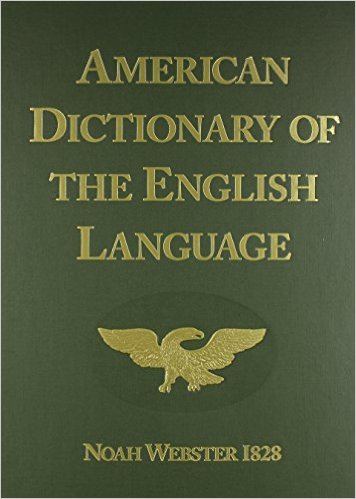
| Hard-cover Edition |
385 |
 |
566 |
|
| Compact Edition |
369 |
 |
259 |
|
| CD-ROM |
326 |
 |
202 |
|
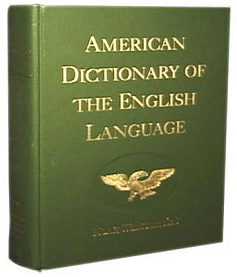
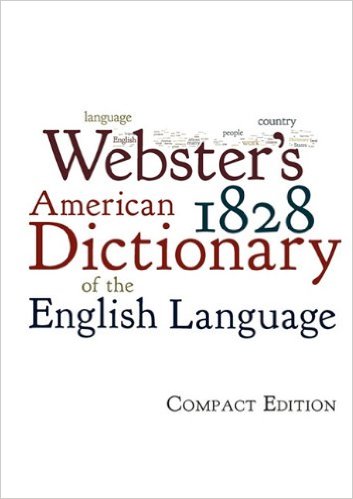
* As a note, I have purchased each of these products. In fact, as we have been developing the Project:: 1828 Reprint, I have purchased several of the bulky hard-cover dictionaries. My opinion is that the 2000-page hard-cover edition is the only good viable solution at this time. The compact edition was a bit disappointing and the CD-ROM as well. |
| [ + ] |
| Add Search To Your Site |
|
|
|