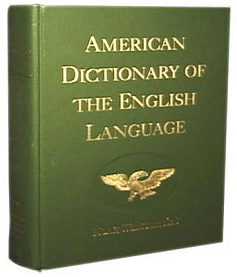
|
Search, browse, and study this dictionary to learn more about the early American, Christian language. 
1828.mshaffer.com › Word [bind]
BIND, v.t. 1. To tie together,or confine with a cord, or any thing that is flexible; to fasten as with a band, fillet or ligature.2. To gird, inwrap or involve; to confine by a wrapper, cover or bandage; sometimes with up; as, to bind up a wound.3. To confine or restrain, as with a chain, fetters or cord; as, bind him hand and foot.4. To restrain in any manner.He bindeth the floods from overflowing. Job.28.5. To oblige by a promise, vow, stipulation, covenant, law, duty or any other moral tie; to engage.If a man shall swear an oath to bind his soul with a bond. Numbers 30.We are bound by the laws of kindness, of nature, of a state, &c.6. To confirm or ratify.Whatsoever thou shalt bind on earth, shall be bound in heaven. Matt.16.7. To distress, trouble, or confine by infirmity.Whom Satan hath bound these eighteen years. Luke 13.8. To constrain by a powerful influence or persuasion.I go bound in the spirit to Jerusalem. Acts.20.9. To restrain the natural discharges of the bowels; to make costive; as, certain kinds of food bind the body or bowels. 10. To form a border; to fasten with a band, ribin, or any thing that strengthens the edges; as, to bind a garment or carpet. 11. To cover with leather or anything firm; to sew together and cover; as, to bind a book. 12. To cover or secure by a band; as, to bind a wheel with tire. 13. To oblige to serve, by contract; as, to bind an apprentice; often with out; as, to bind out a servant. 14. To make hard or firm; as, certain substances bind the earth. To bind to is to contract; as, to bind one's self to a wife.To bind over is to oblige by bond to appear at a court.
|
Evolution (or devolution) of this word [bind]
| 1828 Webster | 1844 Webster | 1913 Webster |
|---|
BIND, v.t. 1. To tie together,or confine with a cord, or any thing that is flexible; to fasten as with a band, fillet or ligature.2. To gird, inwrap or involve; to confine by a wrapper, cover or bandage; sometimes with up; as, to bind up a wound.3. To confine or restrain, as with a chain, fetters or cord; as, bind him hand and foot.4. To restrain in any manner.He bindeth the floods from overflowing. Job.28.5. To oblige by a promise, vow, stipulation, covenant, law, duty or any other moral tie; to engage.If a man shall swear an oath to bind his soul with a bond. Numbers 30.We are bound by the laws of kindness, of nature, of a state, &c.6. To confirm or ratify.Whatsoever thou shalt bind on earth, shall be bound in heaven. Matt.16.7. To distress, trouble, or confine by infirmity.Whom Satan hath bound these eighteen years. Luke 13.8. To constrain by a powerful influence or persuasion.I go bound in the spirit to Jerusalem. Acts.20.9. To restrain the natural discharges of the bowels; to make costive; as, certain kinds of food bind the body or bowels. 10. To form a border; to fasten with a band, ribin, or any thing that strengthens the edges; as, to bind a garment or carpet. 11. To cover with leather or anything firm; to sew together and cover; as, to bind a book. 12. To cover or secure by a band; as, to bind a wheel with tire. 13. To oblige to serve, by contract; as, to bind an apprentice; often with out; as, to bind out a servant. 14. To make hard or firm; as, certain substances bind the earth. To bind to is to contract; as, to bind one's self to a wife.To bind over is to oblige by bond to appear at a court. |
BIND, n.- A stalk of hops, so called from its winding round a pole or tree, or being bound to it.
- A bind of eels, is a quantity consisting of 10 strikes, each containing 25 eels, or 250 in the whole. – Encyc.
- Among miners, indurated clay, when much mixed with the oxyd of iron. – Kirwan.
BIND, v.i.- To contract; to grow hard or stiff; as, clay binds by heat. – Mortimer.
- To grow or become costive.
- To be obligatory.
BIND, v.t. [pret. bound; pp. bound, and obs. bounden. Sax. bindan, gebindan, pret. band, bund, or bunden; Goth. bindan, gabindan; D. binden, verbinden; Ger. the same; Sw. binda, förbinda; Dan. binder, to bind, and bind, a band; also baand, a band; Hindu, bandna; Gypsy, bandopen; Pers. بَنْدَنْ bandan, and بَنْديدَنْ bandidan, to bind; the former signifies also, to apply, to bend the mind; and the latter, to shut, close, make fast. The sense is, to strain.]- To tie together, or confine with a cord, or any thing that is flexible; to fasten as with a band, fillet or ligature.
- To gird, inwrap or involve; to confine by a wrapper, cover or bandage; sometimes with up; as, to bind up a wound.
- To confine or restrain, as with a chain, fetters or cord; as, bind him hand and foot.
- To restrain in any manner.
He bindeth the floods from overflowing. – Job xxviii.
- To oblige by a promise, vow, stipulation, covenant, law, duty or any other moral tie; to engage; as, we are bound by the laws of kindness, of nature, of a state, &c.
If a man shall swear an oath to bind his soul with a bond. – Numbers xxx.
- To confirm or ratify.
Whatsoever thou shalt bind on earth, shall be bound in heaven. – Matth. xvi.
- To distress, trouble, or confine by infirmity.
Whom Satan hath bound these eighteen years. – Luke xiii.
- To constrain by a powerful influence or persuasion.
I go bound in the spirit to Jerusalem. – Acts xx.
- To restrain the natural discharges of the bowels; to make costive; as, certain kinds of food bind the body or bowels.
- To form a border; to fasten with a band, ribin, or any thing that strengthens the edges; as, to bind a garment or carpet.
- To cover with leather or any thing firm; to sew together and cover; as, to bind a book.
- To cover or secure by a band; as, to bind a wheel with tire.
- To oblige to serve, by contract; as, to bind an apprentice; often with out; as, to bind out a servant.
- To make hard or firm; as, certain substances bind the earth.
The uses of this word are too various and numerous to be reduced to exact definitions.
To bind to is to contract; as, to bind one's self to a wife.
To bind over is to oblige by bond to appear at a court.
|
Bind
- To tie, or confine
with a cord, band, ligature, chain, etc.; to fetter; to make fast; as, to
bind grain in bundles; to bind a prisoner.
- To
tie; to confine by any ligature.
- That which
binds or ties.
- To confine, restrain, or hold by physical force
or influence of any kind; as, attraction binds the planets to the
sun; frost binds the earth, or the streams.
- To contract; to grow hard or stiff; to cohere or
stick together in a mass; as, clay binds by heat.
- Any twining or climbing plant or stem, esp. a
hop vine; a bine.
- To cover, as with a bandage; to bandage or
dress; -- sometimes with up; as, to bind up a
wound.
- To be restrained from motion, or from customary
or natural action, as by friction.
- Indurated clay, when much mixed
with the oxide of iron.
- To make fast ( a thing) about or
upon something, as by tying; to encircle with something; as,
to bind a belt about one; to bind a compress upon a
part.
- To exert a binding or restraining
influence.
- A ligature or tie for grouping
notes.
- To prevent or restrain from customary or natural
action; as, certain drugs bind the bowels.
- To protect or strengthen by a band or binding,
as the edge of a carpet or garment.
- To sew or fasten together, and inclose in a
cover; as, to bind a book.
- Fig.: To oblige, restrain, or hold, by
authority, law, duty, promise, vow, affection, or other moral tie; as, to
bind the conscience; to bind by kindness; bound by
affection; commerce binds nations to each other.
- To bring (any
one) under definite legal obligations; esp. under the obligation of a bond
or covenant.
|
| 1828 Webster | 1844 Webster | 1913 Webster |
|---|
Thank you for visiting!
- Our goal is to try and improve the quality of the digital form of this dictionary being historically true and accurate to the first American dictionary. Read more ...
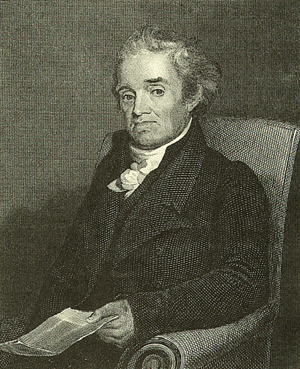
- Below you will find three sketches from a talented artist and friend depicting Noah Webster at work. Please tell us what you think.
Divine Study
 
Divine Study
|
Window of Reflection
 
Window of Reflection
|
Enlightening Grace
 
Enlightening Grace
|
164
|
953 |
126
|
1036 |
199
|
1076 |

Bind BIND, verb transitive 1. To tie together, or confine with a cord, or any thing that is flexible; to fasten as with a band, fillet or ligature. 2. To gird, inwrap or involve; to confine by a wrapper, cover or bandage; sometimes with up; as, to bind up a wound. 3. To confine or restrain, as with a chain, fetters or cord; as, bind him hand and foot. 4. To restrain in any manner. He bindeth the floods from overflowing. Job 28:11. 5. To oblige by a promise, vow, stipulation, covenant, law, duty or any other moral tie; to engage. If a man shall swear an oath to bind his soul with a bond. Numbers 30:2. We are bound by the laws of kindness, of nature, of a state, etc. 6. To confirm or ratify. Whatsoever thou shalt bind on earth, shall be bound in heaven. Matthew 16:19. 7. To distress, trouble, or confine by infirmity. Whom Satan hath bound these eighteen years. Luke 13:1. 8. To constrain by a powerful influence or persuasion. I go bound in the spirit to Jerusalem. Acts 20:1. 9. To restrain the natural discharges of the bowels; to make costive; as, certain kinds of food bind the body or bowels. 10. To form a border; to fasten with a band, ribin, or any thing that strengthens the edges; as, to bind a garment or carpet. 11. To cover with leather or anything firm; to sew together and cover; as, to bind a book. 12. To cover or secure by a band; as, to bind a wheel with tire. 13. To oblige to serve, by contract; as, to bind an apprentice; often with out; as, to bind out a servant. 14. To make hard or firm; as, certain substances bind the earth. To bind to is to contract; as, to bind one's self to a wife. To bind over is to oblige by bond to appear at a court. BIND, verb intransitive To contract; to grow hard or stiff; as, clay binds by heat. 1. To grow or become costive. 2. To be obligatory. BIND, noun A stalk of hops, so called from its winding round a pole or tree, or being bound to it. 1. A bind of eels, is a quantity consisting of 10 strikes, each containing 25 eels, or 250 in the whole. 2. Among miners, indurated clay, when much mixed with the oxyd of iron. |

|
| Hard-cover Edition |
383 |
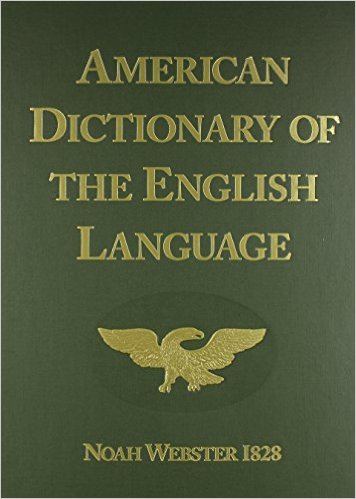 |
564 |
|
| Compact Edition |
369 |
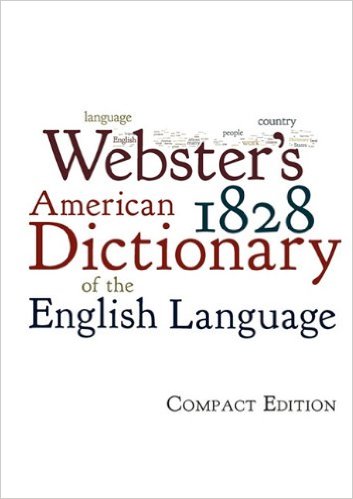 |
257 |
|
| CD-ROM |
325 |
 |
202 |
|
* As a note, I have purchased each of these products. In fact, as we have been developing the Project:: 1828 Reprint, I have purchased several of the bulky hard-cover dictionaries. My opinion is that the 2000-page hard-cover edition is the only good viable solution at this time. The compact edition was a bit disappointing and the CD-ROM as well. |
| [ + ] |
| Add Search To Your Site |
|
|
|