Free Online Color Picker Harmony Tool! http://1828.mshaffer.com
Monday - February 6, 2012

In my view, the Christian religion is the most important and one of the first things in which all children, under a free government ought to be instructed.. .No truth is more evident to my mind than that the Christian religion must be the basis of any government intended to secure the rights and privileges of a free people.
- Preface

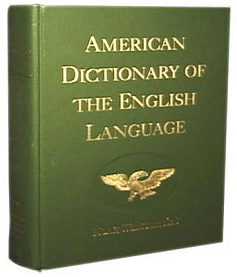
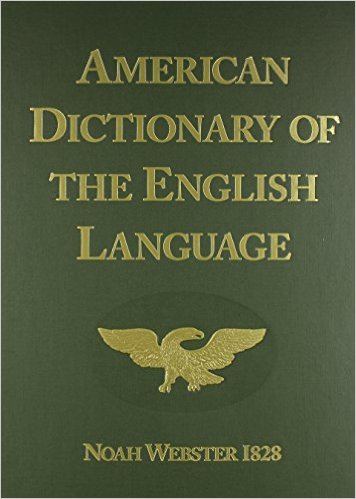
1828 Noah Webster Dictionary
ABCDEFGHIJKLMNOPQRSTUVWXYZ
In celebration of Noah Webster's Birthday (October 16, 2009), we have prepared an updated website.
Please update your bookmarks: http://www.1828-dictionary.com/d/search/word,disparage

Your search [word => 'disparage' ] returned 4 results.

disparage

DISPARAGE, v.t.

1. To marry one to another of inferior condition or rank; to dishonor by an unequal match or marriage, against the rules of decency.

2. To match unequally; to injure or dishonor by union with something of inferior excellence.

3. To injure or dishonor by a comparison with something of less value or excellence.

4. To treat with contempt; to undervalue; to lower in rank or estimation; to vilify; to bring reproach on; to reproach; to debase by words or actions; to dishonor.

Thou durst not thus disparage glorious arms.

disparaged

DISPARAGED, pp. Married to one beneath his or her condition; unequally matched; dishonored or injured by comparison with something inferior; undervalued; vilified; debased; reproached.


disparagement

DISPARAGEMENT, n.

1. The matching of a man or woman to one of inferior rank or condition, and against the rule of decency.

2. Injury by union or comparison with something of inferior excellence.

3. Diminution of value or excellence; reproach; disgrace; indignity; dishonor; followed by to.

It ought to be no disparagement to a stat that it is not the sun.

To be a humble Christian is not disparagement to a prince, or a nobleman.

disparager

DISPARAGER, n. One who disparages or dishonors; one who vilifies or disgraces.


1828 Noah Webster Dictionary

Google
 
Web 1828.mshaffer.com

Why Donate?

Here are a number of reasons:

  • To indicate your approval.
  • To express your appreciation.
  • To help pay for website expenses and keep this website online.

Donate Using PayPal

If you have a major credit card (Visa, MasterCard, American Express) or a PayPal account, donating is easy. Just click the dollar amount below to donate:

Make payments with PayPal - it's fast, free and secure!
$ 5 $ 10 $ 20 $ 50 $ 100 $ Other $
 

Donations from Outside of the United States

We welcome donations from anywhere in the world and in any currency. PayPal accepts a number of international currencies.

Donations by Other Methods

If you wish to donate via direct bank deposit or mail a cheque or money order, please email me .


Please support this FREE service, by making a donation today!

Firefox Plugin
I | S 1828 Webster's 1828 Webster's


Add Search
To Your Site
[ + ]

News: gain

February 06, 2012
[12:09:55 AM] (PDT)


For us to be successful, we need to understand your needs and deliver technologies that meet your needs. This is the essence of co-creation or synergy. We both benefit from having an ongoing relationship. With this in mind, we want to emphasize our commitment to you, our customer. You are the reason we are in business. Lewis' original idea came from working with people like you — people with a desire to better understand how the IP landscape influences business strategy and decision making. our commitment to you. For us to be successful, we need to understand your needs and deliver technologies that meet your needs. This is the essence of co-creation or synergy. We both benefit from having an ongoing relationship. With this in mind, we want to emphasize our commitment to you, our customer. You are the reason we are in business. Lewis' original idea came from working with people like you — people with a desire to better understand how the IP landscape influences business strategy and decision making. Here at IP Street, we believe you belong on a pedestal. Rather than develop technologies and impose them upon you, we are interested in providing a different model. Listening to you, understanding what you need based on our subject matter expertise, and then providing tools that meet those needs. So far, we have heard that you want a simplification of complex patent documents. You want more than search results, you want visual results that have concrete, real-world significance. You want efficient patent search tools, better resources to patent duration and determining patent value. You want business intelligence from IP that is meaningful and actionable. Are we right? For many of you, based on what you have been telling us about what our product can do, we believe we are. However, we are still listening. So if you have further suggestions and wishes, please do not hesitate to contact us.
Here are five common factors that often determine the worth of an invention. (1) Importance of a Patent: For breakthrough patents, a.k.a. foundational patents, the patents are so innovative that they give the owner a complete monopoly over an entire industry and are extremely valuable, often worth billions of dollars. Although most patents never reach these heady heights they are nevertheless valuable in that they can force a competitor to start innovating to keep pace with new and improved technologies and products in the market. Incremental patents, which make only small advances over existing products, are usually the least valuable though this may not be always so. A question that is often asked in relation to endeavoring to put a price on a patent is 'How much would my competitors pay to use my protected product or process?' (2) The Market: Market size, the number of products that are likely to be made and the cost of each product also have a significant bearing on the value of a patent. What sort of sales can the patent be expected to support, and for how long? A good example of an article which has significant market presence is the ubiquitous Intel chip that is reported to have a value estimated in the billions of dollars. (3) The Patent Term: Patents have a maximum life of 20 years and, therefore, a 20-year potential monopoly. Patents that are just beginning their life and which have longer to run on the their potential monopoly position understandably will have more value. It is rare that a patent nearing the end of its term will cause a great threat to its competitors. It is almost certain that they will have devised technologies or products of their own by then that will not interfere with the patent owners monopoly position. In addition, one has to take into consideration the potential business life of a patent, i.e., the duration, which a patent is likely to be economically useful, if other subsequent patents are providing better alternatives to it. (4) Amount of Prior Art: The number of cited documents or patented products populating an area of innovation also has an effect on the value of a patent. Generally, if the particular product is one of many products of a similar type then the consumers' options de-value the patent of interest, yielding a relatively smaller premium than, for example, a stand alone patent with a captured customer base and no adjacent competition. (5) Patent Significance: Every patent has its own significance in a particular area and will usually form part of an overall IP strategy either to maximize its earning potential or to allow other patents to maximize theirs. Examples of such patents are those that are used to block other key players from gaining a foothold in a market. Yet other examples are those patents that are additional to an original patent and rely on the protected matter in the original patent to successfully operate. It is not uncommon for drug companies or telecom companies to take out further patents protecting a strong first generation of patents, thus securing a big chunk of a market and the ability to negotiate licenses and royalties from the protected, but much desired technology.
Myopia is generally what happens when unprecedented opportunities are placed before them. Those in the know generally do better than those in the worry. Consider Cetus, a startup biotech with a focus on a liver drug. The FDA delayed the approval of the drug, and a major funding crisis ensued. Chiron offered to take over the liabilities contingent on the sale of two patents (# 4,683,202 and # 4,683,195) to a third party, Roche Molecule for $300M (in 1993). This sale was stalled because DuPont challenged the validity of the patents, based on the formal claims written by the inventor (not a patent attorney), Kary Mullis. In the end, the soap opera turned out well for the investors with weak constitutions. For $300M, they sold the two patents to Roche, turned the company over to Chiron, and walked away. Kary Mullis won the Nobel prize for his invention embedded in these two patents, known as polymerase chain reaction (PCR) which allows DNA to be cloned. Over 4000 patents in biotech cite these original two patents. In our estimation, $300M represents "pennies on the dollar" valuation of these patents. The shareholders got a payday, and left the game. Roche on the other hand is thriving based on its intangible assets. Let IPstreet.com assist you.
0.081768035888672|February 6, 2012 => 10:42 pm