Free Online Color Picker Harmony Tool! http://1828.mshaffer.com
Thursday - February 9, 2012

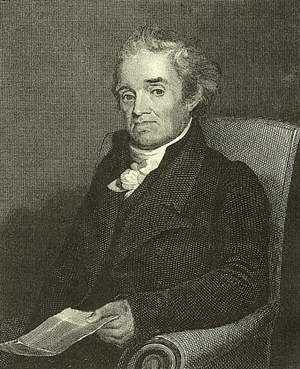
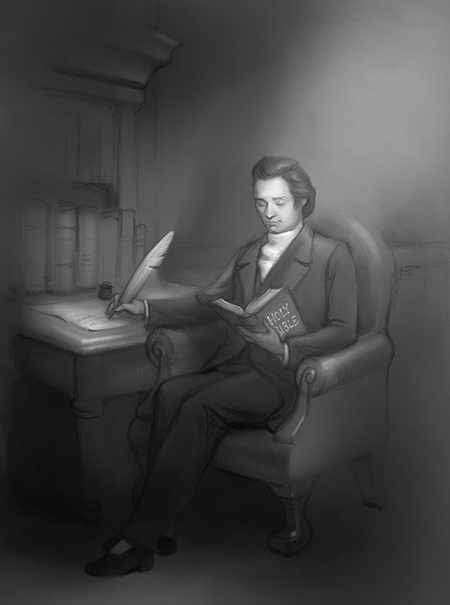
In my view, the Christian religion is the most important and one of the first things in which all children, under a free government ought to be instructed.. .No truth is more evident to my mind than that the Christian religion must be the basis of any government intended to secure the rights and privileges of a free people.
- Preface

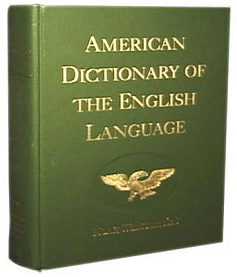
1828 Noah Webster Dictionary
ABCDEFGHIJKLMNOPQRSTUVWXYZ
In celebration of Noah Webster's Birthday (October 16, 2009), we have prepared an updated website.
Please update your bookmarks: http://www.1828-dictionary.com/d/search/word,cold

Your search [word => 'cold' ] returned 8 results.

cold

COLD, a.

1. Not warm or hot; gelid, frigid; a relative term. A substance is cold to the touch, when it is less warm then the body, and when in contact, the heat of the body passes from the body to the substance; as cold air; a cold stone; cold water. It denotes a greater degree of the quality than cool.

2. Having the sensation of cold; chill; shivering, or inclined to shiver; as, I am cold.

3. Having cold qualities; as a cold plant.

4. Frigid; wanting passion, zeal ro ardor; indifferent; unconcerned; not animated, or easily excited into action; as a cold spectator; a cold Christian; a cold lover, or friend; a cold temper.

Thou art neither cold nor hot. Rev. 3.

5. Not moving; unaffecting; not animated; not able to excite feeling; spiritless; as a cold discourse; a cold jest.

6. Reserved; coy; not affectionate, cordial or friendly; indicating indifference; as a cold look; a cold return of civilities; a cold reception.

7. Not heated by sensual desire.

8. Not hasty; not violent.

9. Not affecting the scent strongly.

10. Not having the scent strongly affected.

COLD, n.

1. The sensation produced in animal bodies by the escape of heat, and the consequent contraction of the fine vessels. Also, the cause of that sensation. Heat expands the vessels, and cold contracts them; and the transition from an expanded to a contracted state is accompanied with a sensation to which, as well as to the cause of it, we give the denomination of cold. Hence cold is a privation of heat, or the cause of it.

2. A shivering; the effect of the contraction of the fine vessels of the body; chilliness, or chillness.

3. A disease; indisposition occasioned by cold; catarrh.

cold-blooded

COLD-BLOODED, a.

1. Having cold blood.

2. Without sensibility, or feeling.

cold-finch

COLD-FINCH, n. A species of Motacilla, a bird frequenting the west of England, with the head and back of a brownish gray, the belly white, and the quill feathers and tail black.


cold-hearted

COLD-HEARTED, a. Wanting passion or feeling; indifferent.


cold-heartedness

COLD-HEARTEDNESS, n. Want of feeling or sensibility.


cold-shot

COLD-SHOT, a. Brittle when cold, as a metal.


coldly

COLDLY, adv. In a cold manner; without warmth; without concern; without ardor or animation; without apparent passion, emotion or feeling; with indifference or negligence; as, to answer one coldly; a proposition is coldly received.


coldness

COLDNESS, n.

1. Want of heat; as the coldness or water or air. When the heat or temperature of any substance is less than that of the animal body exposed to it, that state or temperature is called coldness.

2. Unconcern; indifference; a frigid state of temper; want of ardor, zeal, emotion, animation, or spirit; negligence; as, to receive an answer with coldness; to listen with coldness.

3. Want of apparent affection, or kindness; as, to receive a friend with coldness.

4. Coyness; reserve; indifference; as, to receive addresses with coldness.

5. Want of sensual desire; frigidity; chastity.


1828 Noah Webster Dictionary

Google
 
Web 1828.mshaffer.com

Why Donate?

Here are a number of reasons:

  • To indicate your approval.
  • To express your appreciation.
  • To help pay for website expenses and keep this website online.

Donate Using PayPal

If you have a major credit card (Visa, MasterCard, American Express) or a PayPal account, donating is easy. Just click the dollar amount below to donate:

Make payments with PayPal - it's fast, free and secure!
$ 5 $ 10 $ 20 $ 50 $ 100 $ Other $
 

Donations from Outside of the United States

We welcome donations from anywhere in the world and in any currency. PayPal accepts a number of international currencies.

Donations by Other Methods

If you wish to donate via direct bank deposit or mail a cheque or money order, please email me .


Please support this FREE service, by making a donation today!

Firefox Plugin
I | S 1828 Webster's 1828 Webster's


Add Search
To Your Site
[ + ]

News: progress

February 09, 2012
[12:01:10 AM] (PDT)


Myopia is generally what happens when unprecedented opportunities are placed before them. Those in the know generally do better than those in the worry. Consider Cetus, a startup biotech with a focus on a liver drug. The FDA delayed the approval of the drug, and a major funding crisis ensued. Chiron offered to take over the liabilities contingent on the sale of two patents (# 4,683,202 and # 4,683,195) to a third party, Roche Molecule for $300M (in 1993). This sale was stalled because DuPont challenged the validity of the patents, based on the formal claims written by the inventor (not a patent attorney), Kary Mullis. In the end, the soap opera turned out well for the investors with weak constitutions. For $300M, they sold the two patents to Roche, turned the company over to Chiron, and walked away. Kary Mullis won the Nobel prize for his invention embedded in these two patents, known as polymerase chain reaction (PCR) which allows DNA to be cloned. Over 4000 patents in biotech cite these original two patents. In our estimation, $300M represents "pennies on the dollar" valuation of these patents. The shareholders got a payday, and left the game. Roche on the other hand is thriving based on its intangible assets. Let IPstreet.com assist you.
Although most inventions will be concerned with the rights a patent grants during its monopoly or in-force period (from the date the patent issues until it expires (20 years after the filing date)), the law actually recognizes five "rights" periods in the life of an invention. (1) Invention conceived but not yet documented: When an inventor conceives of an invention, but hasn't yet made any written, signed, dated, and witness record of it, the inventor has no legal rights whatsoever, only the potential for acquiring rights. (2) Invention documented but patent application not yet filed: After making a proper, signed, dated and witnessed documentation of an invention, the inventor has valuable rights against any inventor who later conceives of the same invention and applies for a patent. An inventor who documents the building and testing of the invention has substantially greater rights than one who merely documents conception. During this period the invention may also be treated as a "trade secret" this is, kept confidential. This gives the inventor the legal right to sue and recover damages against anyone who immorally learns of the invention, for instance, through industrial spying. (3) Patent Pending - Patent application filed but not yet issued: During the patent pending period, including the one year period after a provisional patent application is filed, the inventor's rights are the same as they are in period 2 above for the most part. Otherwise, the inventor has no rights whatsoever against infringers, only the hope of a future monopoly, which doesn't commence until a patent issues. Most companies that manufacture a product this is the subject of a pending patent application will mark the product "patent pending" in order to warn potential copiers that it they copy the product, they may have to stop later if and when the patent issues. The PTO by law must keep all patent applications preserved in secrecy until the application is published or the patent issues. The patent pending period usually lasts from one to three years. (4) In-force patent - patent issued but hasn't yet expired: After the patent issues, the patent owner can bring and maintain a lawsuit for a patent infringement against anyone who makes, uses or sells the invention without permission. The patents in force period last from the date it issues until 20 years from its filing date, provided maintenance fees are paid. Nearly every patent is guaranteed an in-force period of at least 17 years. In order to assure this 17-year term, the patent will be extended, if necessary, to compensate for delays resulting from failures by the PRO in processing the patent application. Also, once the patent issues, it becomes a public record or publication that can block others who file later from getting patents on the same or similar inventions, that is, it becomes "prior art" to anyone who files after its filing date. (5) Patent expired: After the patent expires (20 years after the filing date, or sooner if a maintenance fee isn't paid), the patent owner has no further rights, although infringement suits can be brought for any infringement that occurred during the patent's in-force period. An expired patent remains a valid "prior art reference" (as of its filing date) forever. IPStreet.com's patent search tools and resources will help you better understand if your idea is patentable, the duration of a patent and complex patent analytics.
0.041118144989014|February 9, 2012 => 7:52 pm