Free Online Color Picker Harmony Tool! http://1828.mshaffer.com
Monday - February 6, 2012

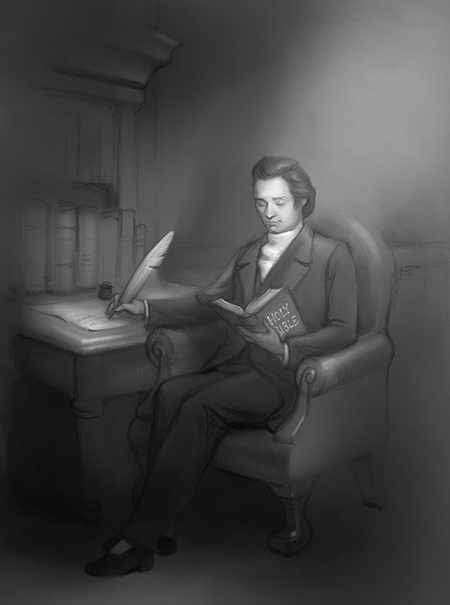
In my view, the Christian religion is the most important and one of the first things in which all children, under a free government ought to be instructed.. .No truth is more evident to my mind than that the Christian religion must be the basis of any government intended to secure the rights and privileges of a free people.
- Preface

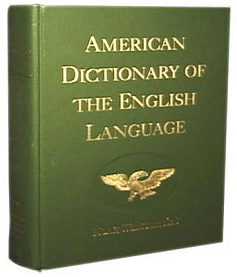
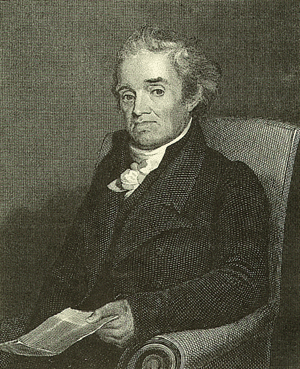
1828 Noah Webster Dictionary
ABCDEFGHIJKLMNOPQRSTUVWXYZ
In celebration of Noah Webster's Birthday (October 16, 2009), we have prepared an updated website.
Please update your bookmarks: http://www.1828-dictionary.com/d/search/word,warrant

Your search [word => 'warrant' ] returned 11 results.

warrant

WARRANT, v.t. [The primary sense of the root is to stop or hold, or to repel, and thus guard by resisting danger; as we say, to keep off. Hence the sense of security. See Guard and Garrison.]

1. To authorize; to give authority or power to do or forbear any thing, by which the person authorized is secured or saved harmless from any loss or damage by the act. A commission warrants an officer to seize an enemy. We are not warranted to resist legitimate government. Except in extreme cases.

2. To maintain; to support by authority or proof.

Reason warrants it, and we may safely receive it as true.

3. To justify.

True fortitude is seen in great exploits, that justice warrants, and that wisdom guides.

4. To secure; to exempt; to privilege..

Ill warrant him from drowning.

In a place less warranted than this, or less secure, I cannot be--

5. To declare with assurance.

My neck is as smooth as silk, I warrant ye.

6. In law, to secure to a grantee an estate granted; to assure.

7. To secure to a purchaser of goods the title to the same; or to indemnify him against loss.

8. To secure to a purchaser the good quality of the goods sold. [See Warranty.]

9. To assure that a thing is what it appears to be, which implies a covenant to make good any defect or loss incurred by it.

WARRANT, n.

1. An act, instrument or obligation, by which one person authorizes another to do something which he has not otherwise a right to do; an act or instrument investing one with a right or authority, and thus securing him from loss or damage; a word of general application.

2. A precept authorizing an officer to seize an offender and bring him to justice. A general warrant to seize suspected persons, is illegal.

3. Authority; power that authorizes or justifies any act. Those who preach the gospel have the warrant of Scripture. We have the warrant of natural right to do what the laws do not forbid; but civility and propriety may sometimes render things improper, which natural right warrants.

4. A commission that gives authority, or that justifies.

5. A voucher; that which attests or proves.

6. Right; legality.

Theres warrant in that theft which steals itself when theres no mercy left.

7. A writing which authorizes a person to receive money or other thing.

Warrant of attorney, that by which a man appoints another to act in his name, and warrants his transaction.

Land warrant, is an instrument or writing issued by the proper officer, authorizing a person to locate or take up a tract of new or uncultivated land.

Search warrant, a precept authorizing a person to enter houses, shops, &c. to search for a criminal, for stolen or smuggled goods.

Warrant officer, an officer holding a warrant from the navy board, such as the master, surgeon, purser, &c. of a ship.

warrantable

WARRANTABLE, a. Authorized by commission, precept or right; justifiable; defensible. The seizure of a thief is always warrantable by law and justice. Falsehood is never warrantable.

His meals are coarse and short, his employment warrantable.

warrantableness

WARRANTABLENESS, n. The quality of being justifiable.


warrantably

WARRANTABLY, adv. In a manner that may be justified; justifiably.


warranted

WARRANTED, pp. Authorized; justified; secured; assured by covenant or by implied obligation.


warrantee

WARRANTEE, n. The person to whom land or other thing is warranted.


warranter

WARRANTER, n.

1. One who gives authority or legally empowers.

2. One who assures, or covenants to assure; one who contracts to secure another in a right, or to make good any defect of title or quality; as the warranter of a horse.

warranting

WARRANTING, ppr.

1. Authorizing; empowering.

2. Assuring; securing to another a right, or covenanting to make good a defect of title in lands, or of quality in goods.

warrantise

WARRANTISE, n. Authority; security. [Not in use.]


warrantor

WARRANTOR, n. One who warrants.


warranty

WARRANTY, n.

1. In law, a promise or covenant by deed, made by the bargainer for himself and his heirs, to warrant or secure the bargainee and his heirs against all men in the enjoyment of an estate or other thing granted. Such warranty passes from the seller to the buyer, from the feoffor to the feoffee, and from the releaser to the releasee. Warranty is real, when annexed to lands and tenements granted in fee or for life, &c. And is in deed or in law; and personal, when it respects goods sold or their quality.

In common recoveries, a fictitious person is called to warranty. In the sale of goods or personal property, the seller warrants the title; the warranty is express or implied. If a man sells goods which are not his own, or which he has no right to sell, the purchaser may have satisfaction for the injury. And if the seller expressly warrants the goods to be sound and not defective, and they prove to be otherwise, he must indemnify the purchaser; of the law implies a contract in the warranty, to make good any defect. But the warranty must be at the time of sale, and not afterwards.

2. Authority; justificatory mandate or precept.

If they disobey any precept, that is no excuse to us, nor gives us any warranty to disobey likewise. [In this sense, warrant is now used.]

3. Security.

The stamp was a warranty of the public.

WARRANTY, v.t. To warrant; to guaranty. [A useless word.]


1828 Noah Webster Dictionary

Google
 
Web 1828.mshaffer.com

Why Donate?

Here are a number of reasons:

  • To indicate your approval.
  • To express your appreciation.
  • To help pay for website expenses and keep this website online.

Donate Using PayPal

If you have a major credit card (Visa, MasterCard, American Express) or a PayPal account, donating is easy. Just click the dollar amount below to donate:

Make payments with PayPal - it's fast, free and secure!
$ 5 $ 10 $ 20 $ 50 $ 100 $ Other $
 

Donations from Outside of the United States

We welcome donations from anywhere in the world and in any currency. PayPal accepts a number of international currencies.

Donations by Other Methods

If you wish to donate via direct bank deposit or mail a cheque or money order, please email me .


Please support this FREE service, by making a donation today!

Firefox Plugin
I | S 1828 Webster's 1828 Webster's


Add Search
To Your Site
[ + ]

News: eve

February 06, 2012
[12:09:53 AM] (PDT)


Peter Drucker said, "Business has only two functions - marketing and innovation." Here at IP Street, we provide the tools for you to succeed in both.
Hello and welcome to our little slice of the World, a place where passion and opinions run high in our niche area, which just so happens to be the world of patents, innovation, technology, business and other areas of intellectual property. Although Lewis Lee, our founder, is a patent attorney, and many of the contributors to our content are IP counselors, the content should NOT be considered to be legal advice, but rather are intended to be informational. No attorney-client relationship is established through your use of IP Street. For more information please check our Disclaimer, Terms & Conditions and our Privacy Policy.
The main type of patent, a utility patent, covers inventions that function in a unique manner to produce a utilitarian result. Examples of utility inventions are VelcroŽ hook-and-loop fasteners, new drugs, electronic circuits, software that is tied to some form of hardware, semiconductor manufacturing processes, new bacteria, newly discovered genes, new animals, plants, automatic transmissions, Internet techniques and methods of doing business (provided physical things are involved), and virtually anything else under the sun that can be made by humans. To get a utility patent, one must file a patent application that consists of a detailed description telling how to make and use the invention, together with claims (formally written sentence fragments) that define the invention, drawings of the invention, formal paperwork, and a filing fee. Sometimes the state of the art, rather than the nature of the novelty, will determine whether a design or utility patent is proper for an invention. If a new feature of a device performs a novel function, than a utility patent is proper. According to the USPTO in 2009, there were 456,106 utility patent applications. Patent law is designed to promote innovation in "science and useful arts." It's right there in the first Article of the Constitution: in order to be patentable, an invention needs to be useful in some way. Utility patents expire 20 years from the date of filing.
0.040395021438599|February 6, 2012 => 10:40 pm