Free Online Color Picker Harmony Tool! http://1828.mshaffer.com
Friday - February 10, 2012

In my view, the Christian religion is the most important and one of the first things in which all children, under a free government ought to be instructed.. .No truth is more evident to my mind than that the Christian religion must be the basis of any government intended to secure the rights and privileges of a free people.
- Preface

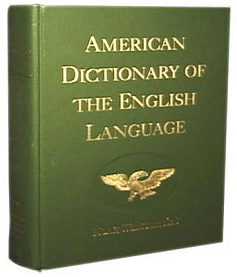
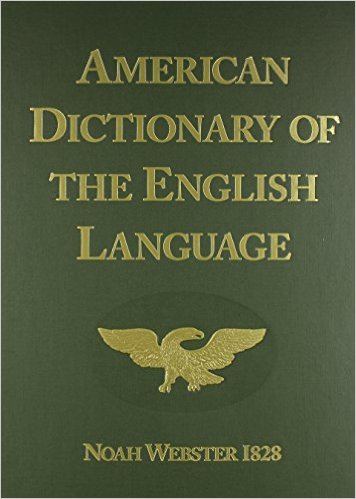
1828 Noah Webster Dictionary
ABCDEFGHIJKLMNOPQRSTUVWXYZ
In celebration of Noah Webster's Birthday (October 16, 2009), we have prepared an updated website.
Please update your bookmarks: http://www.1828-dictionary.com/d/search/word,short

Your search [word => 'short' ] returned 18 results.

short

SHORT, a. [L. curtus.]

1. Not long; not having great length or extension; as a short distance; a short ferry; a short flight; a short piece of timber.

The bed is shorter than a man can stretch himself on it. Is. 28.

2. Not extended in time; not of long duration.

The triumphing of the wicked is short. Job 20.

3. Not of usual or suffifient length, reach or extent.

Weak though I am of limb, and short of sight. Pope.

4. Not of long duration; repeated at small intervals of time; as short breath.

5. Not of adequate extent or quantity; not reaching the point demanded, desired or expected; as a quantity short of our expectations.

Not therefore am I short

Of knowing what I ought. Milton.

6. Deficient; defective; imperfect. This account is short of the truth.

7. Not adequate; insufficient; scanty; as, provisions are short; a short allowance of water for the voyage.

8. Not sufficiently supplied; scantily furnished.

the English were inferior in number, and grew short in their provisions.


short-breathed

SHORT'-BREATHED, a. Having short breath or quick respiration.


short-jointed

SHORT'-JOINTED, a. [short and joint.] A horse is said to be short-jointed when the pastern is to short.


short-lived

SHORT'-LIVED, a. [short and live.] Not living or lasting long; being of short continuance; as a short-lived race of beings; short-lived pleasure; short-lived passion.


short-sight

SHORT-SIGHT, n. Short-sightedness; myopy; vision accurate only when the object is near.


short-sightedness

SHORT-SIGHTEDNESS, n.

1. A defect in vision, consisting in the inability to see things at a distance, or at the distance to which ssight normally extends. Short-sightedness is owing to the too great convexity of the crystaline humor of the eye, by which the rays of light are brought to a focus too soon, that is, before they reach the retina.

2. Defected or limited intellectual sight; inabilaty to see far into futurity or into things deep or abstruse.


short-waisted

SHORT-WAISTED, a. [short and waist.] Having a short waist or body.


short-winded

SHORT-WIND'ED, a. [short and wind.] Affected with shortness of breath; having a quick respiration; as asthmatic persons.


short-winged

SHORT'-WINGED, a. [short and wing.] Having short wings; as a short-winged hawk.


short-witted

SHORT-WIT'TED, a. Having little wit; not wise; of scanty intellect or judgement.


shorten

SHORTEN, v.t. short'n.

1. To make short in measure, extent or time; as, to shorten distance; to shorten a road; to shorten days of calamity.

2. To abridge; to lessen; as, to shorten labor or work.

3. To curtail; as, to shorten the hair by clipping.

4. To cintract; to lessen; to diminish in extent or amount; as, to shorten sail; to shorten an allowance of provisions.

5. To confine; to restrain.

Here where the subject is so fruitful, I am shortened by my chain. Dryden.

6. To lop; to deprive.

The youth-shortened of his ears. Dryden.

SHORTEN, v.i. short'n.

1. To become short or shorter. The day shortens in northern latitudes from June to December.

2. To contract; as, a cord shortens by being wet; a metallic rod shortens by cold.


shortened

SHORT'ENED, pp. Made shorter; abridged; contracted.


shortening

SHORT'ENING, ppr. Making shorter; contracting.

SHORT'ENING, n. Something used in cookery to make paste short or friable, as butter or lard.


shortly

SHORT'LY, adv.

1. Quickly; soon; in a little time.

The armies came shortly in view of each other. Clarendon.

2. In a few words; briefly; as, to express ideas more shortly in verse than in prose.


shortner

SHORT'NER, n. He or that which shortens.


shortness

SHORT'NESS, n.

1. The quality of being short in space or time; little length or little duration; as the shortness of a journey or of distance; the shortness of the days in winter; the shortness of life.

2. Fewness of words; brevity; conciseness; as th eshortness of an essay. The prayers of the church, by reason of their shortness, are easy for the memory.

3. Want of reach or the power of retention; as the shortness of the memory.

4. Deficiency; imperfection; limited extent; as the shortness of our reason.


shorts

SHORTS, n. plu. The bran and coarse part of a meal. [Local.]


shortsighted

SHORT'SIGHTED, a. [short and sight.]

1. Not able to see far; having limited vision; in a literal sense.

2. Not able to look far into futurity; not able to understand things deep or remite; of limited intellect.


1828 Noah Webster Dictionary

Google
 
Web 1828.mshaffer.com

Why Donate?

Here are a number of reasons:

  • To indicate your approval.
  • To express your appreciation.
  • To help pay for website expenses and keep this website online.

Donate Using PayPal

If you have a major credit card (Visa, MasterCard, American Express) or a PayPal account, donating is easy. Just click the dollar amount below to donate:

Make payments with PayPal - it's fast, free and secure!
$ 5 $ 10 $ 20 $ 50 $ 100 $ Other $
 

Donations from Outside of the United States

We welcome donations from anywhere in the world and in any currency. PayPal accepts a number of international currencies.

Donations by Other Methods

If you wish to donate via direct bank deposit or mail a cheque or money order, please email me .


Please support this FREE service, by making a donation today!

Firefox Plugin
I | S 1828 Webster's 1828 Webster's


Add Search
To Your Site
[ + ]

News: birth

February 10, 2012
[12:10:29 AM] (PDT)


Patents to plants which are stable and reproduced by asexual reproduction, and not a potato or other edible tuber reproduced plant, are provided for by Title 35 United States Code, Section 161 which states: Whoever invents or discovers and asexually reproduces any distinct and new variety of plant, including cultivated sports, mutants, hybrids, and newly found seedlings, other than a tuber propagated plant or a plant found in an uncultivated state, may obtain a patent therefor, subject to the conditions and requirements of title. (Amended September 3, 1954, 68 Stat. 1190). The plant patent must also satisfy the general requirements of patentability. The subject matter of the application would be a plant which developed or discovered by applicant, and which has been found stable by asexual reproduction. To be patentable, it would also be required: (1) That the plant was invented or discovered and, if discovered, that the discovery was made in a cultivated area. (2)That the plant is not a plant which is excluded by statute, where the part of the plant used for asexual reproduction is not a tuber food part, as with potato or Jerusalem artichoke. (3) That the person or persons filing the application are those who actually invented the claimed plant; i.e., discovered or developed and identified or isolated the plant, and asexually reproduced the plant. (4) That the plant has not been sold or released in the United States of America more than one year prior to the date of the application. (5)That the plant has not been enabled to the public, i.e., by description in a printed publication in this country more than one year before the application for patent with an offer to sale; or by release or sale of the plant more than one year prior to application for patent. (6) That the plant be shown to differ from known, related plants by at least one distinguishing characteristic, which is more than a difference caused by growing conditions or fertility levels, etc. (7) The invention would not have been obvious to one skilled in the art at the time of invention by applicant.
In the U.S., the inventor has a "first to invent" claim which is different from other patenting organizations throughout the world who generally utilize "first to file." Debate over this issue, and which model best influences economic development is ongoing. Some are concerned that a change in patent rights may harm the small startup and benefit the incumbents with deeper pockets. You can read more about this topic.
0.030059814453125|February 10, 2012 => 6:52 am